


 4,50
4,50
Read me
Million Dollar Baby analysis
A Million Dollar Baby story of Maggie Fitzgerald and her dream of becoming a boxing champion should be studied in the context of child-parent relation with her trainer, Frankie Dunn
MOVIE EXPLAINED

The Moneyball movie is generally misinterpreted as an icon movie for business development ideas rather than a more complex story about mastering failures and rejection
For the twelve years since its premiere, the Moneyball movie has gained a kind of cult-favorite status not only in the circle of those involved in baseball, but the story is favored and cited as an example of visionary thinking and personal growth. Brad Pitt’s character is held up as a model for how unshakable the entrepreneur should be against the naysayers in his tunnel vision in the direction of a definite goal. In fact, similar to dozens of hyperbole ‘stories of success’ in the movies, Billy Beane’s story goes beyond the revolutionary approach in business thinking and the ‘adapt or die’ strategy. Moneyball movie analysis teaches us how to make the most of our own experience, and how to make and overcome multiple failures, each of them thus forming our personality. people are conventionally so hung up on seeing only the final result and success, often diminishing the number of efforts and disappointments, sweat, and blood invested in it. The movie reminds us that every human being makes mistakes and that there are no perfect people, and the question is whether you are open enough to accept this fact.

Every insightful story finds its audience through the perspectives of its characters. Billy Bean, masterfully portrayed by Brad Pitt, has a long and thorny story in baseball to share. A quarter of a century before the main events, he had been a rising star, a young gift who was favored by the Scouts as a new superstar with unique abilities in baseball. The Scouts with decades of experience called him the ‘Five-tools guy’, thus meaning that he could be equally successful in five major baseball characteristics. Being a schoolboy, he was taught to have a great future, a unique chance to become a national star. All he had to do was to ‘pick up baseball’ and accept it as a life-first occupation instead of studying at Stanford. The story leaves us guessing whether Billy was misguided with that long-ago proposition, and was a full scholarship from Stanford University was a better choice for him. You never know for sure until trying, and it took Billy Beane years of disappointment to reveal that he was not supposed to become a national hero and a number one choice for being placed on the orange juice package.
It’s been a while since I’ve seen a five-tool guy that can do everything. I’m hopeful your interest in professional baseball is as strong as ours is gonna be in getting you in this upcoming draft.
Very rarely do you come upon a young man like Billy who can run, who can field, who can throw, who can hit, and who can hit with power. Those five tools, you don’t see that very often.


Two decades later, following a career as a scout himself, Billy Bean works as a General Manager for the Oakland Athletics in Major League Baseball. The book on which the movie is based details his joining the team in 1990 as a scout and his appointment for the highest position as early as 1997. Four years later, another disappointing season of 2001 made up Billy’s mind that the conventional trading practice works poorly for a team with a restricted budget, such as the Oakland Athletics. By being one of the poorest teams in the League, OA has no means to stop the fleeing of prospective players at the end of the season, as well as to attract recognized rising stars, who would not join the club with fainting prospects. Billy loves his job, but he understands that adopting the same strategy as the New York Yankees works badly. At this period of doubts and an unstoppable desire to change the ‘business as usual’ approach, Beane meets a young man, Peter Brand, who has close to zero experience in Baseball, yet has a revolutionary idea on how to build a successful baseball team without being tied up with superstars. Billy is eager to create a team that could win or come close to a win in the 2002 season.
The problem we’re trying to solve is that there are rich teams and there are poor teams, then there’s 50 feet of crap, and then there’s us. It’s an unfair game.


Peter Brandt is shown as an inexperienced young guy from Yale with a degree in Economics. This is a generalized character made of several people among Beane’s aides, first of all, based on Paul DePodesta, who gained his minutes of fame after the Moneyball book emerged in 2003. The exhibit’s inexperience in professional baseball matters provides the audience with such a strong contrast. The General Manager of the Oakland Athletics accentuated Peter’s evaluations instead of scouts and trainers with three decades of experience. Peter’s point of view is a jolt of fresh air for Beane, who seeks a way of unconventional thinking for his team. The scout camp has its own established perception of its players, especially regarding those available for buying. Peter Brandt points out the mismanagement in the Major League and the pathological misjudgment of players. According to his approach, the clubs and General Managers should focus on buying wins and particularly runs instead of buying players. In a wider sense, the movie shows us that people are generally misjudged and overlooked for biased reasons and conventional flaws such as age, appearance, the social surroundings. The new method of Billy Bean and Peter Brandt is based on a realistic way to identify and buy effective players, who may bring wins, based on mathematics and unbiased findings rather than cliché perceptions.


In the first instance, the Moneyball story shows us the way of a scientific approach and rational thinking, which may (not necessarily) make the unobvious look real. Thanks to factual figures, Billy Beane can finally focus on key indicators, which make the difference in the field rather than speculating where the player spends his nighttime, how stressed his relations with a girlfriend are, or how old he is. As it turns out, such biased factors, which had been the source of ‘intuition’ for the scouts’ community for one and a half centuries, influence the pricing for players rather than their value. Billy and Peter are eager to buy underrated players who have been signed off by the majority of clubs in the League. It is remarkable to note the reaction of the other General Managers to Billy’s proposal as they try to find the tricky part, and actually, they are not far from the truth: there is a hidden agenda. Those players are useless for their clubs and vital for the Oakland Athletics.

To bring the level of suspense to an even greater level, the movie intensifies the conflict between the General Manager and his scouts, an institution Billy himself had supported for years. Beane finally makes up his mind that no scout can foresee the future of a young kid based on a few minutes of watching him playing: throwing, battering, and running. Such an established practice has been pathologically underrated by the players based on abstract characteristics. On other occasions, and Billy Bean’s story is a vivid example, a desire to attract a prospective young player to their teams makes scouts exaggerate the talent of a schoolboy, thus setting their expectations high. Such subjective wishful thinking should make a space for objective analysis. Billy knows the flaws of the method, having made these mistakes with young kids over one hundred and fifty years. In the most intense scene of the first half of the story, Grady Fuson, the Head Scout, points out his twenty-nine years of experience and says that ‘Major League Baseball thinks the way I think’, meaning the established way of thinking. The more grim and unobvious reason for saying this is the subjective influence of a man with recognized authority who makes things work like he is used to and wants to.


It is essential to understand that the movie does not tend to reevaluate the institution of scouting in baseball as something that does not work or is outdated. The story shows that the rational factual approach makes you see things from a new angle, to grasp previously unevident possibilities and new means for gaining results. It comes as no surprise that those half a dozen elderly men, who had spent their mature lives scouting players, antagonize, putting lower esteem upon their work and the way they had always done it, and those before them. Conventional thinking means that ‘it has always been done in such a way’. Grady Fuson aggressively confronts Billy Beane and Peter Brandt, and he is presented as a man who goes with the flow by doing the same things in the same way for three decades, and is too self-confident to see new ways. He is more concerned with confronting his authority in favor of a Yale graduate than with what is best for the team. In a more narrow sense, Grady was not ready for to ‘adapt or die’ approach vital in these circumstances. Another powerful scene includes the moment when Billy repeatedly asks the scouts about what the real problem is.
You don’t have a crystal ball. You can’t look at a kid and predict his future any more than I can. I’ve sat at those kitchen tables with you and listened to you tell parents, “When I know, I know. And when it comes to your son, I know.” And you don’t. You don’t.


Another important and exhibiting moment to pay attention to is the conversation between Billy and Peter when the General Manager asks the Yale graduate if he would have drafted Beane back in 1979 in the first round. Peter frankly says that he would not have drafted Beane in the first round back then and that Billy should have chosen Stanford instead of baseball-peaked expectations. This opinion is very different from that of the experienced scouts, who considered Billy Bean a superstar. Billy is now determined never to draft another Billy Beane. When it comes to the new strategy, Peter Brandt not only proposed a theory about the poor effectiveness of the system of evaluation. He masterminded a complex algorithm and an ecosystem of factors, which may indicate the likelihood of success of a particular player. Such a way simplifies management for Beane and allows him to see the League in a way that nobody does. He now relies on the ‘on-base percentage’ (OBP) rather than intuition. He changed the strategy of replacing the gone stars by recreating their results with the help of underestimated underdogs.


One among such underrated outsiders is Scott Hatteberg, the real baseball player depicted at that time, still the rising star Chris Pratt. When he first appears, Scott is depicted as depressed and broken, sitting in front of his TV set. One would say that Hatteberg’s story seems like the conventional ‘success story’ about a second chance. The truth and cinematic narration of ‘Moneyball’ did even more. The player was not only underestimated in baseball: after a painful injury and insufficient recovery, Hatteberg had been dismissed by the scouts and baseball managers as a worked-out material: a finished man with no prospects. At the same time, he was the man Billy Beane and Peter Brandt needed. He had his hidden value regardless of the injury: not able to throw a ball effectively anymore, Scott has outstanding abilities to act as the first baseman and to hit. With Hatteberg, Brandt’s statistical methods proved themselves to renew careers and sports life when hope seems lost. More than that, Billy Bean uses Scott as a moving force and the embodiment of the changes he himself is eager to establish. The stubbornness of Oakland’s manager Art Howe and his decision not to let Hatteberg play at first base made Billy trade out one of his former recognized players. Finally, at the critical moment, Scott blossoms into a prospective first baseman.


Another example of the successful adoption of a new tactic is the story of Jeremy Brown. This character, of course, based on the real player, serves as a reminder of how wrong the assumptions based on prejudices may be. Brown had been dismissed by the baseball scouts for his uncharismatic playing and for being overweight (240 lb) for the game in the general perception. Another Moneyball character that deserves attention is Chad Bradford. He is the player who is laughed at by the scouts for his unusual throwing style. Bradford had already been written off and overlooked for years when Beane and Brandt signed him for only 237 000 $. The player proved himself to be an extremely effective pitcher, one of the best in the whole Major League. Billy Bean and Peter Brandt were indifferent to the way Branford threw the ball too close to the ground; he could give outstanding statistics and surprise any opponent.


The power of the ‘Moneyball’ story, written by Aaron Sorkin, directed by Bennet Miller, and empowered by Brad Pitt’s acting, lies in the unevenness of success, even regarding it as a classical story of achievement. It comes as a surprise to most that the Oakland Athletics did not win the cup in the finale of the 2002 baseball season. More than that, the journey of Billy Beane’s changes is the most interesting in the beginning. It is well-known that the person who stands for major changes faces both failures and antagonism. For the greater part of the story, Brandt’s and Beane’s approach is unpopular among their fellow baseball colleagues, especially among the scouts with decades of years of experience behind their backs. The one who has been taught to use conventional methods adopts changes with difficulty. While Billy Beane is the moving force of those changes, he accepts all the stone throws. When the new strategy is not working at the beginning, he and Brandt are the only ones to be blamed. When the approach proves itself to be prosperous, those two are the last people to be thanked. From a wider perspective, the challenge was not only to make dozens of old men (scouts) change their attitude but to reshape the way of thinking of the whole industry. Going against the river flow requires courage.


When it was applied, the new strategy of Billy Beane and Peter Brandt was rejected and criticized by everyone in the club, including the team manager, Art Howe. He could not influence the trading decisions, but he felt his power in influencing which player was set for each position in the field. Art makes it clear that he wants anyone to interfere with his sphere of work, which reevaluates all the efforts of Beane and Brandt if the chosen player does not get a chance to be in his place. Along with Grady Fuson, Art does hide his dissatisfaction with the ‘adapt or die’ concept when this adapting means taking the ideas of a Yale graduate for granted. As the movie reveals, the poor results at the beginning of the season were, among other things, the result of Art Howe’s resistance. Finally, Billy uses his power to transfer any player who is not allowing the new strategy to work, leaving Howe no other way than to adapt. The decision to move Carlos Pena out of the team finally made space for Scott Hattberg. It is interesting to note that in real life, Art Howe did not get the prolongation of his contract after the successful 2002 series. In the next season, he showed one of the poorest results in the history of the sport with the New York Mets and finished his career four years later.


In contrast to the general interpretation of this movie as an example of unbroken leadership in the business, Billy Beane accepts the initial failures painfully, with emotion. His own baseball experience as a failed superstar makes him doubt. At the same time, despite the devastating antagonism of the whole system and the people around him, Billy tries not to show his inner struggle to his daughter. He estranged himself from watching games and hid in the gym. For years, Billy distanced himself from the close encounters with the players, practically to have some meta-perspective and to make the firing of players easier. At the same time, regardless of the mistakes he had made in the past and makes now, Billy tries to maneuver to get the players he needs, and he succeeds in making the club owner believe that the new strategy would work despite the poor results in the first half of the season.
One would say that Billy Bean was from the very beginning convinced in his vision, and had an assertiveness in gaining the result above the mediocre. The Moneyball movies teach us the importance of making efforts while going through multiple failures. Billy Bean does not need scapegoats to shift the responsibility onto. More than that, he does not seek greatness and general acceptance, and ovations. He makes an important decision, which in the finale gains him respect. He now sees the importance of closer communication with the players to show them the advantages of a new method, which underlines their strong points. This communication gives Billy and Peter feedback, mostly the concerns of the team, which can indeed be mastered together, and conveys the resolutions as a means to improve the results of the game. In contrast to his previous approach of distancing, in the second half of the story, Billy Beane tries to find an individual approach to each player he relies on. The obvious proof of this may be found in the scene with the hardliner David Justice. An experienced player has his concerts, but the fair talk between the two calms it down and makes space for cooperation for the good.


Oakland’s performance in the Major League soon begins to improve and peaks with winning a record-breaking 20 consecutive wins series. One may say that mathematics was the point and that Beane’s character’s merit deserves no appreciation that the movie gives him. Beane’s managerial genius was in his ability to hire prospective specialists even when contradicted by recognized figures. For example, hiring and giving faith in Peter Brandt in the movie was in the end the decisive alternative to running another season in the old manner. More than that, Billy has his own experience as a professional player and a failed star. The point is that neither Billy nor Peter based the Oakland Athletics’ game purely on mathematics, but they used a factual approach and evident statistics to reveal the possible winning strategy and players they needed to achieve it. They identified the means and people who may (not necessarily would) give them above-average results. Anyway, the human factor is still the most important in sports.

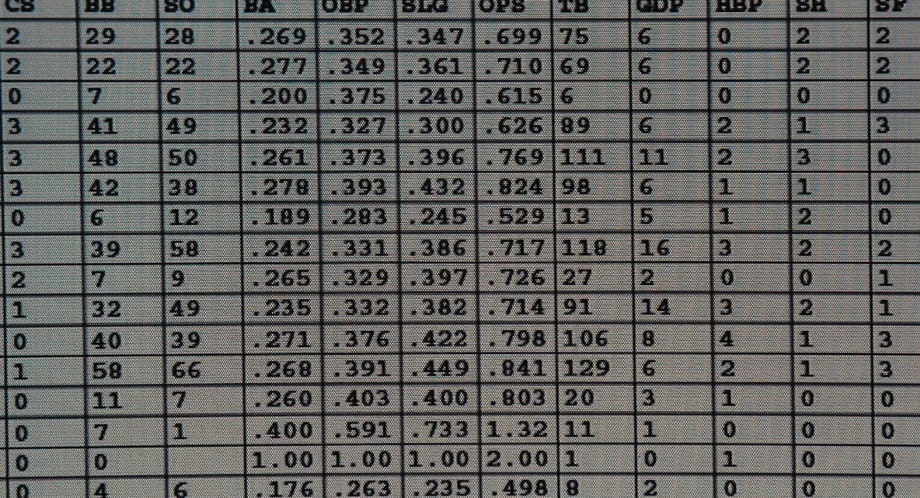
At the very beginning of their work, Billy asks Peter to give his evaluations to three players, and without being asked, Brandt performs evaluations for as many as fifty-one players. In this respect, the character himself serves as a kind of moving force and an example for Billy Bean. Initially, the two were probably too hasty to implement changes that contradicted the established step-by-step approach. They acted against the collar, and the antagonism and misjudgment about their strategy peaked at the highest level. On the other hand, it was their mistake, which the two corrected later by trying to find an individualized approach for every player and the administrative team as well. The virtue of a good manager is to listen to opinions and not just pretend that everyone should follow the chosen agenda. Finally, Peter Brandt and Billy show every player the statistics and a way to play more efficiently. It is natural to get hard knocks when you act as a pioneer in something, and things do not always work as planned. The Moneyball movie teaches us not only to focus on key goals but also to fail and adapt, to ask questions, and to evaluate our journey through difficulties.


The song, which Billy’s daughter gives him in the end, has such words: ‘You’re such a loser, Dad’. One would say that Beane is indeed a loser if he rejected the proposition to become the General Manager of the Boston Red Sox: a job of a dream with a higher budget and thus many more possibilities to build an even better team. Maybe he failed to adapt himself and was too hung up on his own painful experience of the inflated expectations in the past. The critics of Billy Beane’s story and the Moneyball book and movie still claim that during his nineteen years of work as a General manager for Oakland Athletics between 1997 and 2016, and particularly fourteen years after the success story in the 2002 season, Billy Bean never brought his team to trophy despite all his efforts and sophisticated strategy. The Boston Red Sox would triumph over Oakland in the next season, and in 2004 won the League.


There are several strong counterarguments to the critics of Beane’s choice to reject the Red Sox. I believe that this was not indecisiveness but a measured, cool-minded choice. Billy changed the sports and broke some established cliches and thus opened the doors to people who had long been considered geeks and outsiders, to those whom the scouting community had regarded as misfits. People who think outside the box have brought new life to baseball and other sports. In a narrow sense, for the Oakland Athletics, the team managed to gain outstanding results for the club, which has one of the lowest budgets in the Major League. The team uses statistical analysis to improve results, attract underrated players, and to make competition with major baseball clubs. Money in his contract had never been the major goal for Billy Beane, and yes, he probably felt guilt for his failed career as a player and did not want to choose money instead of an idea one more time. More than that, a new position in the Red Sox would have probably left him even less time to spend with his daughter.

My point is that Billy’s choice to reject the proposition was never a failure. As the well-known wisdom says: ‘The man who has not been flogged is not educated’. The journey to achievement is a personal one, individual for each person, and it is never laid with flowers, but rather with stones and knocks. Even Beane’s failure as a player in his youth was a part of his own way, a priceless experience, which made him the man he is today. The man who is portrayed by Brad Pitt in one of the most discussed and praised movies of the year is definitely not a loser.

Read me
A Million Dollar Baby story of Maggie Fitzgerald and her dream of becoming a boxing champion should be studied in the context of child-parent relation with her trainer, Frankie Dunn

Read me
I was fortunate to visit Prague, Czech Republic, and to identify every major Eurotrip filming locations across the city, which acted for Paris, Amsterdam, Rome, and Berlin

Read me
DEUTSCHES FILMMUSEUM (German Film Museum in Frankfurt) is an impressive eye-opening experience that could be characterized as the must-see place for all who have a passion for movies

Read me
All 20 Before Sunrise filming locations, a famous romance movie by Richard Linklater, with Jesse (Ethan Hawke) and Celine (Julia Delpy) walking across Vienna

Read me
An incredible true and dramatic story of the firefighter squad of Arizona comes to be one of the best drama movies of the past few years. Only the Brave story deserves attention
Read me
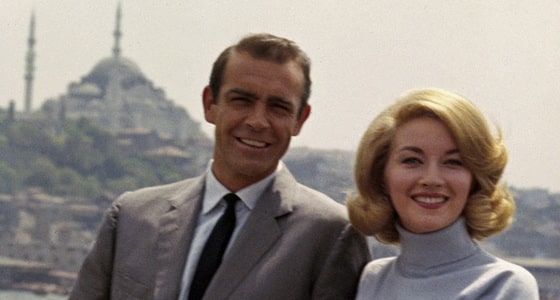
The second James Bond movie takes place in magnificent Istanbul and sixty years after the premiere, many of the original filming locations have slightly changed since filming of the 007 series