


 5,00
5,00
Read me
The Prestige character analysis
The Prestige tells us a vivid story of two men, who delved into rivalry, and who paid the highest price for their obsession with being great and better than opponent
MOVIE EXPLAINED

The Truman Show still gives us a strong metaphor of the modern world, with all its addiction to mass media and the ‘altered’ versions of ourselves, and Truman Burbank has become an iconic character to look at. Let’s go deep into The Truman show character analysis
The life of Truman Burbank indeed seems to be a safe haven amid the chaotic world of the modern age. Toward the threshold of thirty years, the man enjoys an idyll. The tragic loss of his father fell way behind. Truman has all the means to take advantage of not too well-paid and even less exciting, but a ‘steady’ and ‘comfortable’ job, he would never be kicked off. It appears that anyone would feel jealous of Truman and his occupation, which implies no more challenge than pushing papers without fear and risk. His place of work is fairly cozy and comfortable, and his colleagues in no way make difficulties to Burbank. He is safe from a tricky rivalry, envy, and late payments. Truman has no reason to feel anxious about car accidents on the way home, as the car traffic in Seahaven is always tolerant of its inhabitants. The same old familiar faces every morning conceal no hidden motives. The most ‘convenient’ neighbors and bypassers just outside the doorstep provide a high spirit within this cozy neighborhood of an ideal Seahaven, the best place on Earth. Every year, the city is evidently voted the Planet’s top town. Let’s delve further into The Truman Show character analysis.


At home, Burbank is awaited by a pleasing wife, who does her best in every possible way to appease her husband. Despite her job at the local hospital, the paced life in the city leaves no space for some disturbing news, which in other places may be shared with one’s better half. Meryl leaves the outer world with no alternative apart from seeing her dressed with negligent grace and being wise in buying the best home-stuff gadgets and groceries, particularly a dicer, grater, and peeler, all in one, and the best instant сaсao on the planet. The wife is ready to have a baby, a little Burbank, who would draw the family together even more and become a new exciting adventure. Meryl is always nearby Truman to relieve him from his existential doubts and hasteful fixation on the unknown. Truman luxuriates with a best friend named Marlon: the two have been going together through life like salt and pepper since early childhood. Marlon is always ready to cheer up his friend by appearing with a few cans of the best beer. Having experience working beyond Seahaven, Marlon knows how good life is here. Truman’s mother is readily available to switch the conversation from the painful recollections of the past to the viewing of the family albums, full of the best moments of Truman’s life.


Truman does not need to face the challenges of the outer world, neither in Seahaven nor beyond his hometown. The local newspapers and TV broadcasts are always nearby to cheer up the mood with news regarding the prosperity in Seahaven and to protect from the risks of the world beyond this safe place. Truman Burbank is free to leave his homehood anytime, but does not do this because no man would want to leave the best place on Earth behind. Even the local car bridge is kind enough to recommend against crossing the water. Every sensible person would confirm that there is no need to beat your head against the wall of obstacles and elusive dreams when you have the luxury of a comfortable, safe life and many reasons to keep it.


By breaking the fourth wall, the idealistic image of the previous few paragraphs was created not so much for Truman Burbank, but rather for the viewers of THE TRUMAN SHOW. Throughout the movie, we see the extent of the popularity of the TV show way beyond the United States. People share their lives with Truman Burbank in the bars, next to their closest friends on the couch, and even during bath procedures. The Truman Show has become an integral part of the lives of millions to the extent that they do not need some emotional fireworks and spend their time watching while Truman is sleeping next to his ideal wife within his idealistic home with all signs of a perfect life. Inside this made-up version of reality, the multi-billion-dollar corporation managed to invent and build the whole city for the sake of the highly-rated show. The audience of ‘The Truman Show’ feels happy to buy a myriad of branded stuff, from instant cacao to new kitchen stuff and a mower.


Millions of people around the globe appreciate Truman Burbank as one among them, the so-called ‘everyman guy’. He does not have extraordinary talents, the evident spirit of an adventurist or futurist, a notable appearance, as well as an admirable job, or desirable life experience, except the fact that he is the star of the show. His idealistic house was bought on account of credit, similar to the majority of his viewers. Truman has obligations to make monthly payments, fair enough for the continuation of this ‘comfort’ life, yet being an obstacle to fulfilling some adventurous ambitions, such as traveling abroad. Millions of people around the globe used to spend time with the show, made of romanticized images of the United States of the 1950s-1960s of the ‘American dream’, a white house, and a green lawn.

The show’s audience has taught themselves not to have doubts in choosing the TV channel, as ‘The Truman Show’ has long ago become their safe haven, a place to slow down and put the brakes on life. Seahaven has become another place to live for these people, who are in some way desperate to identify themselves with the world of a TV show, the world that would never be possible in reality. They identify themselves with a man who has been led by the hand since his birth thirty years ago. In a wider sense, Seahaven fills in for a desire to have some ambitions and goals, and move to a better version of one’s life. Why should you frustrate yourself with stress and emotional preoccupation when you can always spend time watching a made-up TV show about a man who has a safe and comfortable life? Christof, the inventor of the project and the creator of Truman’s life, does not have any personal life beyond the show, his comfort zone over the last three decades. He is just as much in the thrall of it as Truman and the actors.
By breaking another layer of the fourth wall, The Truman Show movie, with Jim Carrey, twenty-seven years after its release, is still a living metaphor for what can be described as the comfort zone. Anyone can appreciate Truman Burbank as a litmus paper to ask themselves questions regarding their life. To start with, the viewer can be honest with oneself and admit the extent to which we usually try to minimize stressful occasions in our lives, to build a shell of comfort similar to the romanticized images from movies and books. Everyone has his or her dreams, but how often do we give away our conveniences, time, and efforts to gain something? There is always a way to postpone the fulfillment of your dreams for tomorrow, as today’s life is ‘quite well’ enough not to risk. We generally impart negative overtones to the world’s ‘routine’, yet teach ourselves to desire something clearer, more comfortable, routine. Can we be faithful to ourselves when we speak about the influence of advertising on our lives and the habit of filling life with brands, which were ‘suggested’ by somebody else? Do we live our truth enough, with a hand on our heart, to say that we are not trapped in the world of mass media and can fully analyze reality without the beliefs of others and the ‘many’?


How often the society of a friend with a can of beer was a lifeboat for millions of people to evade the painful existential thoughts and dissatisfaction with one’s life. How often were the warnings of the ‘dangers’ on our way toward the new great adventures, and a natural desire to plumb the depths of the world around us? It’s highly likely for the great majority of the audience of this movie to identify themselves in situations when they were deprived of the Republic of Fiji or some other adventure using doubts, the precautions of other people, and the regulations of school times. Getting into the age-old question, of what is best, the book or the movie, the cinematography is frequently criticized for the made images, particular models of behavior, leaving not so much to our imagination and the act of creation. In an even wider sense, probably every viewer of ‘The Truman Show’ movie just once felt like Truman Burbank, a part of the routine, hopeless everyday show. A man trapped in the same pavilion of life, a box difficult to escape from, even with a great desire.


Christof calls Truman the ‘Star’, the key person in the show, who ‘Gives hope and joy and inspiration to millions’. For Christof and millions of people around the globe, Truman is indeed special. The whole city was built for the star, and thousands of people do their work every day to spin this giant wheel of commerce with brand products from the show. Evidently, Christof appreciates Truman as his son, whom he probably never had and would never have. The show’s creator is locked in his creation, and the show, to the extent that Christof is ready to kill Truman and not let him go. The attitude of the actors is even more obvious, particularly of the key performers. The show gives them not only a high-paying job in the industry but also serves as a key to world fame and awareness over the years, even decades. The audience of the show is connected with Truman’s 24/7 presence to the extent that millions of people do not want to let him go, and the illusion of falling apart. The painful truth is that Truman Burbank does not feel special or even an integral person, an accomplished man. He does not appreciate himself as a ‘happy’ person in this artificial world of prescribed scenarios, sets, and actors.

The romanticized images of Seahaven from the opening scenes of the movie conceal the charmless truth that Truman is, in fact, a desolate person, and the clue to this ‘revelation’ lies on the surface of the opening scene in front of the mirror. In the scene, the ‘star’ makes no purposeful appearance on the camera (he does not know the fact of the existence of the show on this stage), but he rather addresses himself. All that comfort, which had been created for Burbank, happened to become his jail, more painful than the physical walls of the pavilion and Christof’s efforts. The things. which are: comfortable, convenient, good, work only up to a point, and while experiencing the world, but never apart from the process. Seahaven resonates with the routine, the comfort zone, and the made path for us since early childhood. Education is conventionally chosen by parents, and the job is inherited from the models of behavior of other people. Mostly the same places and the same people every day. The truth is ANY COMFORT ZONE WOULD MAKE YOU SICK OF ONE DAY AND WOULD BECOME A PRISON WITH A LIFE FAINTING.


Truman had a burning dream of being a path-breaker and was depressed by a school teacher. He had cultivated a dream about a girl to get in love with on the spot, but now had to live with ‘wooden-emotions-like’ Meryl. He finds excitement in visualizing Fiji, yet always pleasing Seahaven leaves no time without reminding him of itself as the best place on Earth. Regarding all this, not every emotion and feeling of the main character could be driven into the limits of the script, even so sophisticated as in ‘The Truman Show’. YOU NEVER HAD A CAMERA IN MY HEAD. Similar to millions of people around the globe, Truman is constantly self-frustrated with a feeling of unhappiness, unachieved ambitions, and dreams, which could not be satisfied with a cup of cacao, a can of beer, or a new grass-mower. In the aftermath of revealing the ‘Sirius’ star, the key character asks himself an increasing number of questions. The surrounding world does not have the means to give answers, and Truman now has to break out of his paced comfort zone to respond to these vital emotive challenges, to answer for his own life.


The show begins to show signs of strain once Truman mistrusts the surrounding reality, and as he makes efforts to disengage from the shackles of the ‘regularity’. To gain answers for the never-solved-before challenges, you have to face the things you have never done before. Truman now sees behind the curtain of this giant scenery by confronting the people around him, in fact, actors in their falsity and inadequate behavior. By closing his eyes and depressing the car’s pedal, for the first time in his thirty years of life, Burbank crosses the bridge, which used to separate Seahaven from the ‘outer world’ in his understanding. Truman would not be satisfied with slogans like WHO NEEDS EUROPE! anymore. Making small talk with Marlon, Meryl, or his ‘mother’ would not afford consolation anymore: all of them want to cut down the dreams of Truman.


In the course of the last twenty years, this young man was creeped out by the mere sight of a semi-drowned boat, and in the climax of the story, Truman Burbank faces the storm to overcome this obstacle, similar to the pioneers of the past. He is ready to die for the sake of his dream: exposing the truth and feeling about the limits of his world. Years before the current events, evidently all his life, people around Truman were motivated to please the main character, to become an integral part of his world and thus of the top show on Earth. He is now sick with all those false images and emotions. An idealistic and romanticized world of tomorrow now turns out to be something that you want to escape from, even facing the pain of death. Truman chooses the steps, which are beyond the courage of most of the viewers of the show. After the termination of the broadcasting, they just prefer to find another TV channel, a new comfort zone. Truman now sees a chance to gain a new life experience,e more than some pretended comfort.

Since his birth, Truman has had to live in an artificial world. With Christof’s arguments, it’s easy to be imposed regarding Seahaven as a whole world, made exclusively for the greater good of Truman Burbank. The truth is that it is the show that has made him special and was probably capable of making any child a star, apparently any of those five orphans. This world is operating for the sake of the ambitions of Christof himself, to gain multi-millionaire investors, finally as a means of competition in a world that is so saturated with information, particularly by the TV conglomerates. This world under the giant dome, similar to any other commercial show, serves to please the needs of its audience. YOU’RE THE STAR. In many senses, the show is not practicable without Truman, yet his ‘star’ status was made artificially for the outer world and should be interpreted in the context of this project. No matter how his story ends, Truman Burbank would be under instant scrutiny from the public until the end of his life, chased step by step outside the pavilion, just in the same way he was supervised inside.


The creator of the show, Christof, himself confesses that the world of Truman Burbank is counterfeit. At the same time, he claims that THERE’S NOTHING FAKE ABOUT TRUMAN HIMSELF. This statement is true to a point until we take into consideration the colossal influence that the surroundings impose on every living human. Apart from some extremities, we never live in the vacuum of selfhood. Our perception of this world is constantly fostered in the context of cooperation with other people, particularly the closest ones. The truth is that the world around Truman is fake. He is constantly surrounded not only by the most ambitious fake sets in history, made of wood, stone, and metal. Seahaven has its radio broadcasting station and even a TV world and newspapers: all for the sake of depicting the made-up picture of the world, which the creator of the show finds acceptable from time to time. Truman is constantly driven by omnipresent advertising for the sheer reason that his world is full of brands and groceries that are indeed better and superior to others or provide world-class emotions. The character is 24/7 surrounded by the infinite product placement, chosen for the highest-paid contracts. A whole world of information and human beliefs is made up of lies.

Even regarding all the above, any advertising banner or a radio announcer has the same level of influence on Truman as his closest people (as he regards them). In the opening scene of breaking the show’s fourth wall, the actress who plays Meryl repeats carefully rehearsed text with the same falsity as she does with Truman every day. Ten years before, she took advantage of the situation with self-assertion and put herself playing the central stage next to the key character. ‘NOBLE LIFE’ was obviously not her primary ambition, but it was a chance to obtain the most recognizable women’s part in modern history and mass culture, accompanied by an extortionate salary and dividends from selling the product placement. For her, a life with Truman is no more than a prestigious top-paying job, and as she is not sincere with him, she faces hard times when Truman confronts her ‘trueness’. Her role is reduced to a stereotype-like image of the pleasing wife in the clothes of the 1950s and to recitations, which are aimed at promoting the outputs of the project. In the same manner, she used to feed her fake emotions toward Truman to the audience. She is ready to go to even greater lengths and to give birth to a child from a man she does not love. To doom her child to live in a fake world of the TV show, as his father had been for all his years.


Another actor, who despite his more ‘agreeable’ nature in the movie, could not be regarded as an altruist of Truman, is his best friend, Marlon. He is a human being who always has a can of beer and a portion of ‘decompressing’ small talks on how good life without risk is and how comfortable it is to stay in Seahaven. Probably the most self-explanatory scene, which reveals the actor’s tragedy, is the moment when we understand the puppet-talking role of Marlon next to Truman. It is evident that the role of Truman’s best friend has long become a burden for the performer, and he, in his way, sympathizes with Burbank. In a wider sense, he is indeed his friend. The tragedy of this character, as opposed to actress Hannah Gill, Louis Coltrane has been in the show since his early childhood. Marlon has made himself a hostage of the project, and all the options in the world for him are no more than an illusion. Christof had likely used the same ‘he can leave at any moment’ argument toward the young actor.


Another painful illusion of the human relations in Truman’s life could be found in his made-up parents and actors as well. The Mother, who, in fact, never backed Truman’s undertakings and dreams, was an integral part of his personality. The Father, whom Truman had to lose due to the lines in the masterminded script for the sake of the most-well-rated episode of that time. The key character is surrounded by fulsome actors in his made-up work, by insincere neighbors in the street, and even by multiple bystanders, who express contradictory reactions, once Truman wants to ‘check’ them. As opposed to some individuals who want to reveal the truth to Burbank, the absolute majority of the human beings around him are either actors or the film crew. They have their motivation to be closer to the key character, the ‘star’, for the sake of prolonging their contracts by pleasing Christof’s desires and the script. At present, the Truman Show movie with Jim Carrey is still here to serve as a metaphor for the whole modern world. The world makes it difficult to draw the line between the real person and the image that he or she uses for the outer world on the internet.


Christof’s representation of his argument, that the artificial nature of the surrounding world does not affect Truman, is a half-truth. Since his early childhood, quite literally since his very birth, the key character has been directed by those ‘rails’, which were preferable for the sake of the show and applicable to its creator. Back in his first years of life, little Truman evinced curiosity and a vital desire to grasp the world around him. By being no more than a pavilion on Hollywood Hill, this fake world is restricted to the extent that it may not allow a young kid to climb a pile of sand in order not to reveal the true nature of the backdrops. As far back in time as the school setting, Burbank was excited by geography and a hankering toward new places, but he was depressed by the half-truth that there was nothing left to be discovered. When a young man, Truman, was animated with the idea of going to Fiji, all the people in his intimate circle used to discourage him from fulfilling this dream, which was, in a more practical sense, impossible within the pavilion. When he tried speaking his truth to Meryl, the so-called wife showed fussiness and found no way except to repeat the advertising slogans. Marlon was used to voicing the pleasing arguments that Seahaven is the best place on Earth.


In the course of these thirty years, the creators of the show actually kept Truman away from being himself; they used to do their best to restrict his identity, sometimes by perversely harsh means. In practical terms, they have been preventing Truman from breaking the grey social behavior of the many, seeing that in this case, he would not be an ‘everyman guy’ for the audience. The girl, who indeed sank deep into the mind of Truman, was roughly expelled from the project under the pretext of leaving for Fiji. The show has constantly nuzzled Truman into the restrictions, which are hard to overcome: school, a fear of water, liabilities within a loveless marriage and grey work, real estate mortgages, and even an incepted idea of having a child. The key character has never been fully backed in his endeavors, which confronted the script and could make Truman in some way exceptional, maybe, who knows, even outstanding. The show was harsh in convincing a young kid that he was responsible for the loss of a father and fostered a fear of water supplies to restrict Truman from discovering the outer world.


For so long as he was a child, Truman had more means in Seahaven itself to answer the questions of the surrounding world. Toward his thirties, the age when the great majority of people face existential thoughts, Truman could not settle himself with this tiny fake world anymore. The main character is a polite man with a kind heart, who taught himself to smile at other people to make them feel better. The painful part of this truth is that by being surrounded by pleasing actors for years, Truman has to hide his loneliness and emptiness behind the mask of his smile. It could be easily revealed in a scene with family photos and two actresses next to Truman Burbank, the made Mother and his fake wife. The photos of the youth depicted him as joyful and smiling, yet the current reconsideration of the events draws sorrow on his face. The burning mistrust that his life is being guided, yet he does not realize the scale.


A human lives his or her truth only by taking responsibility for one’s life. The show never considered this argument, which was inevitable one day or another to become the means that would destroy the illusion. Only the person can choose who he or she is. These thirty years of supervision made Truman desolate and made the need to find his way even more relevant. The truth relevant to the real world is that it’s always easier to follow the beaten trail when the choice is made for the person. At the same time, it’s always more challenging and demanding to take responsibility for one’s life, and to live your truth, sometimes painful as well. As Truman holds on to the search for truth and is confronted more and more, the world of lies is starting to crack at every point, as the show has been built on falsehood from day 1. YOU NEVER HAD A CAMERA IN MY HEAD.


As the illusion breaks down, the actors, who have been an integral part of this show for years, for the first time in decades, reveal their personalities. Hannah Gill finds no way except hysterics, once her comfort zone comes to an end: she shouts that she cannot keep on. For Louis Coltrane (Marlon), Truman’s escape would probably become an easement, which can be justified by watching one of the deleted scenes (he helps his friend to break through). For the first time, we could see Christof desolate, later bloody-minded, once Truman abandons the whole matter. In the final, the mighty creator of the project seems to feel lonely and helpless: a blow to a man who considered himself a God. As for Truman himself, he finally manages to break through the wall of the world of falsehood and cultivate TV cliches. He always had affection toward Sylvia as she was herself, and to some extent, true with him. Christof’s statement that Seahaven is the best place for Truman is not enough for the main character anymore. He wants to look into the world, to make his judgments. As the story comes to an end, Truman Burbank becomes himself: an explorer, the man who is ready to lose his life while exploring the world around him. By being restricted neither by the creators nor the audience’s opinion, Truman makes his life-changing step beyond the door.


Read me
The Prestige tells us a vivid story of two men, who delved into rivalry, and who paid the highest price for their obsession with being great and better than opponent

Read me
While mainly set and filmed in Florence, Venice, and Istanbul, the third adventure of Professor Robert Langdon, Inferno, was mostly filmed in Budapest, Hungary

Read me
An unlooked-for inspirational romantic story of the Passengers movie correlates with SCI-FI origins and a space odyssey by those ‘lost in space.’

Read me
One of the best sci-fi movies of recent years worths being thoroughly examined and explained through the lens of three main characters: MOTHER, DAUGHTER, and WOMAN.
Read me
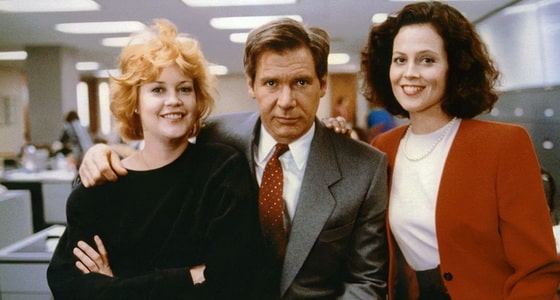
Five years from its release in 1988, the ‘Working Girl’ story is still relevant to people outside New York, in different spheres, men or women, young or experienced. The universality of the story makes Working Girl Tess McGill a reaching character

Read me
DEUTSCHES FILMMUSEUM (German Film Museum in Frankfurt) is an impressive eye-opening experience that could be characterized as the must-see place for all who have a passion for movies