


 5,00
5,00
Read me
Bridge of Spies filming locations
The filming crew of ‘Bridge of Spies’ took great advantage of Berlin not only as a key story site but also as a primary filming location
FILMING LOCATIONS

Mark Watney is a man of action, a can-do attitude who faces the challenges of alien planet and loneliness with a smile on his face and his story, though a fictional, has so much to teach us in our everyday life
Being a sophisticated science fiction story, the Martian, both Andy Weir’s book and Ridley Scott’s movie, touches more universal themes of loneliness, friendship, a common cause, a sense of purpose, and even the power of positive thinking. Mark Watney, a NASA biologist who was unintentionally left alone on Mars, went through unprecedented challenges and not only survived for some time but also succeeded in coming back to Earth. His story captivates both readers and movie enthusiasts with its mix of science language and classic features of the adventure genre. In this detailed research, I will explore Mark Watney’s character analysis, what personality traits helped him to survive 561 sols (Mars days), and the importance of the support of other people and a sense of commonness.
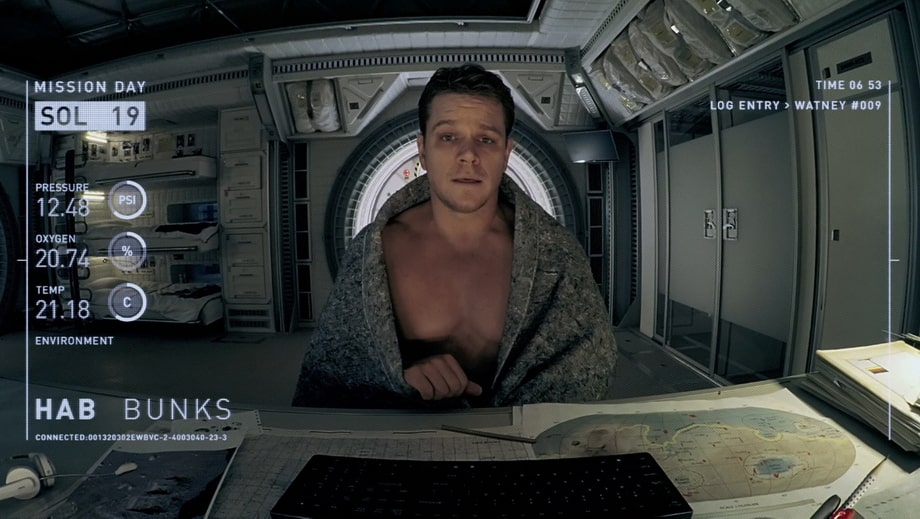
Let’s face it: most of us would not have found the strength to get up and try to rescue ourselves after what Mark went through during the Mars windstorm, which resulted in a hole in his body. While a scene of self-medical surgery with white-faced Matt Damon is obviously not the most pleasant to watch, it reveals Mark Watney’s overpowering inner strength to move forward, not give up, and overcome extraordinary challenges with extraordinary means. What the main character does after dealing with a life-draining injury is calculate his chances and means to survive on Mars. We see him recording a video diary entry, the first one on his own, and after only a brief rehab, Mark moves to a plan on how he can survive four years without enough food supplies and get to the landing site of the next Ares mission. In a wider sense, from day one, being left on another planet, he is looking for a way to come back home. Sitting on a chair and dying from starvation or a lack of oxygen was not on his agenda.
I’m still alive. Obviously. But I’m guessing this is going to be a surprise to my crewmates. And NASA. And… the world. So… surprise. I didn’t die on Sol 18. Best I can tell


What makes Mark Watney’s story so involving is the universal elements of the stories generally known as ‘Robinsonades’, which put the protagonist in a wild environment with restricted means for survival. Not far to seek, The Martian has so much in common with Daniel Defo’s Robinson Crusoe, though many differences as well. An isolated island in the ocean looks no closer than Mars if you have no boat to get to civilization and no one comes to your rescue. In contrast to Crusoe, who spent months collecting useful things from the wrecked ship and years building a safe shelter, Mark has a sophisticated modern living module with temperature control, computers, and entertainment such as music collections. On the other hand, living on Mars is a bit more of a challenge than a bounty-like island, and Mark could not live without a module with an air supply and heat. While Cruso had vivid flora and fauna, Mark must survive in completely desolate surroundings without food, water, or proper shelter once he leaves his module or a rover. He has to cover large distances to get to other meaningful locations and many weeks to get to the rescue ship.
I’ve still gotta figure out how to grow three years worth of food. Here. On a planet where nothing grows. Luckily, I’m the botanist.
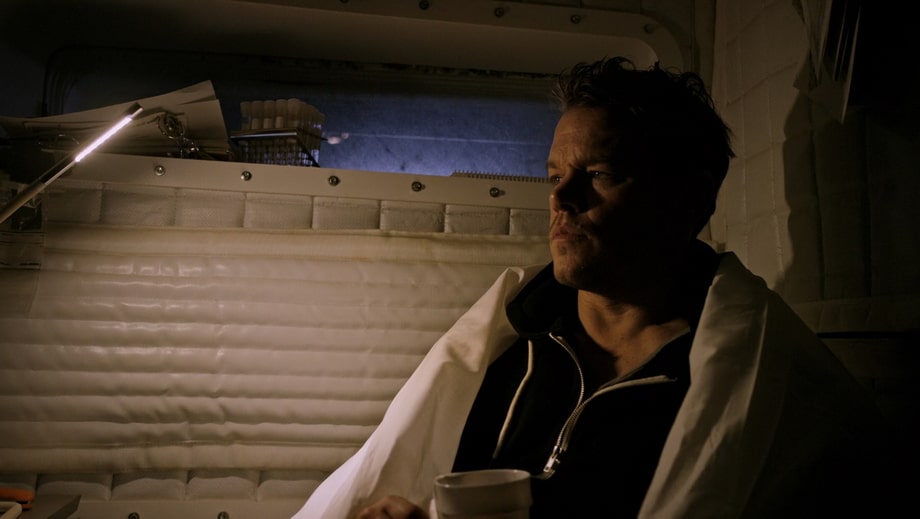
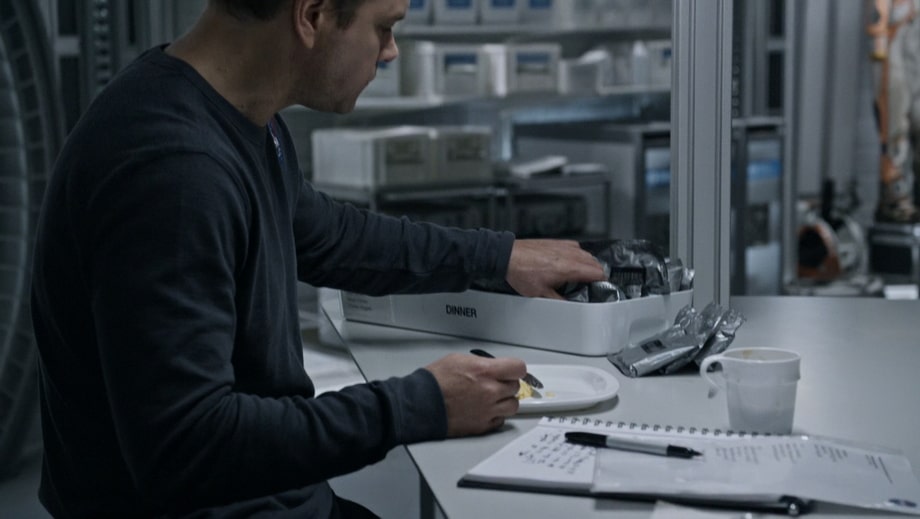
While the island fed Daniel Defo’s character, all Mark had were food supplies for several months and vitamins. Once he finished with his immediate medical needs, he made a plan for how to create enough water and grow food, which would hold him up for years. Robinson Crusoe was a farmer and a might-have-been English lawyer, while Mark Watney was a brilliant scientist and a biologist with unique knowledge and skills. When discussing the Martian character analysis, people often ignore the fact that, considering the Ares crew’s job differentiation, Watney was the only man in the team who could survive alone on Mars. Commander Lewis, Martinez, Johanssen, Beck, and Vogel were outstanding pilots and scientists, but biology was essential to growing food on the dead surface. Through knowledge and hard work, Watney manages to create a vegetable patch where he can grow potatoes, thereby prolonging his life and waiting for a rescue operation. Defo gave his Crusoe a companion and friend, Friday. Watney was millions of miles away from Earth, but he managed to restore communication, initially primitive but later a lettering with his friends and colleagues.
Thirty-two-minute round trip communications time. He can only ask yes/no questions, and all we can do is point the camera. This won’t exactly be an Algonquin round table of snappy repartee.


Both Robinson Crusoe and The Martian glorify the idea of physical labor and mental work, which can literally save your life and make it better with every single day. Another well-known example and reference here is Jules Verne’s ‘The Mysterious Island’, whose characters had only a few seeds in their pockets and managed to build a colony. In a broader sense, even the most modern and expensive NASA equipment is just a pile of boards and screws, and to squeeze the maximum possible benefit out of their use, you need to apply extraordinary skills and efforts. Mark Watney, first of all, creates a detailed inventory of everything he has available because he cannot expect any replenishment from the environment, except for crushed Martian rock. As the main character of the book, The Martian notes with nervous humor, if at least one of the fundamentally important systems of his dwelling fails, he will die, and with many unforeseen possibilities, too.
If the oxygenator breaks, I’ll suffocate. If the water reclaimer breaks, I’ll die of thirst. If the Hab breaches, I’ll just sort of… implode. And if, by some miracle, none of that happens… eventually I’m going to run out of food. So… yeah.

Some people find the book narration boring, but both in the novel and Ridley Scott’s adaptation, we see the daily, painstaking work of a persistent and incredibly patient person. Mark Watney simply cannot afford to relax, sit on a soft spot, and wait for help from the outside. In addition, constant, intense work helps Mark not to go crazy and occupy his mind with efforts to survive on Mars. Watney is constantly in a fight with the world around him. It should also be taken into account that Mark Watney does not always succeed in his endeavors, to put it lightly. An error in calculations leads to an explosion in the living module, but even this does not stop him in his struggle with the unpredictable nature of Mars. His work does not end with covering basic needs of oxygen, water, and food: Mark invests his mind and abilities to figure out how he can get back home. For example, one of his first challenges after inventory reconciliation was a task to let NASA know that he was still alive to initiate actions for possible rescue.
And it’ll happen to you, too. You should know that going in. It’s space. It’s filled with chance, circumstance, and bad luck. It doesn’t cooperate. At some point, I promise, at some point every single thing is gonna go south on you, and you’ll think: this is it. This is how I end. (then) And you can either accept that… or you can get to work.

When a person fights for survival, often things go from bad to worse, and often you have to choose between bad and awful decisions. Another movie reference that I want to draw on is the story of survival from ‘The Edge’ (1997). Like I said in the meticulously detailed character analysis of that outstanding movie, Life Praises Doers. You can either sit down, stop making efforts, and die of shame, or you can alternatively overcome challenges, face the failures, move forward, and do something to make the situation slightly better with every next step. Mark Watney crosses the bridge when he comes to it, thus treating things and problems as they come into his life. If he had focused on the whole heap of difficulties of surviving on Mars from the very beginning, he would probably have gone crazy, or at least would not have been as effective as in the case of setting short-term, realistic goals. This is even though at the very beginning, Mark sets himself the goal of being at the landing site of the new ship in 4 years. That is, he takes one big task and divides it into many small ones by day. Here, the Martian story teaches us an important but so important superpower: working on the problems as they come up, portion by portion, step by step.
That’s all it is. You simply begin. Solve one problem. Then the next one, then the next. (then) You solve enough problems… and you get to come home.
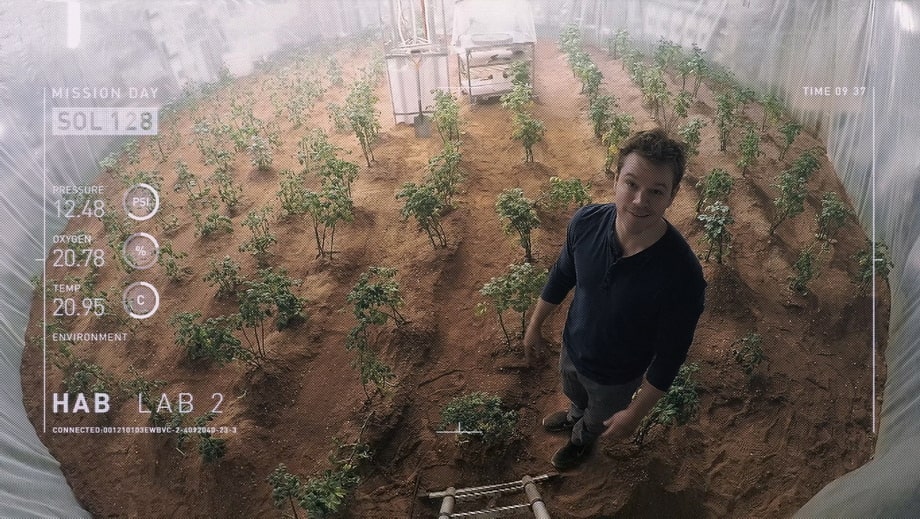

Thanks to an objective assessment of the situation and sober reasoning, Mark Watney does not lose his vigilance and easily makes a plan of action for the next sol (a certain period on Mars). Rationing supplies, particularly potatoes, serves as a metaphor for the resources we have or the circumstances we live in. In his condition, Mark Watney is not shy about using previously dehydrated excrement for his new vegetable garden. In a wider sense, he takes advantage of any potentially useful things around him to survive and come closer to his final goal. In situations when most people would have given up, Mark never lets himself be overwhelmed by his failures. The loss of a garden discourages him for a while, but he reconsiders his potato storage to live on it. When the supposed supply mission fails and the starship explodes while leaving Earth, Mark faces new realities. When Rich Purnell comes up with his plan of rescue, Mark alters his grand plan of getting home for a new possibility. It demands a hell of discipline and patience to systematically cut your ration for months, eating less and less potatoes.
He can still eat the potatoes he has, he just can’t grow any more. We estimate they’ll give him about 200 sols.

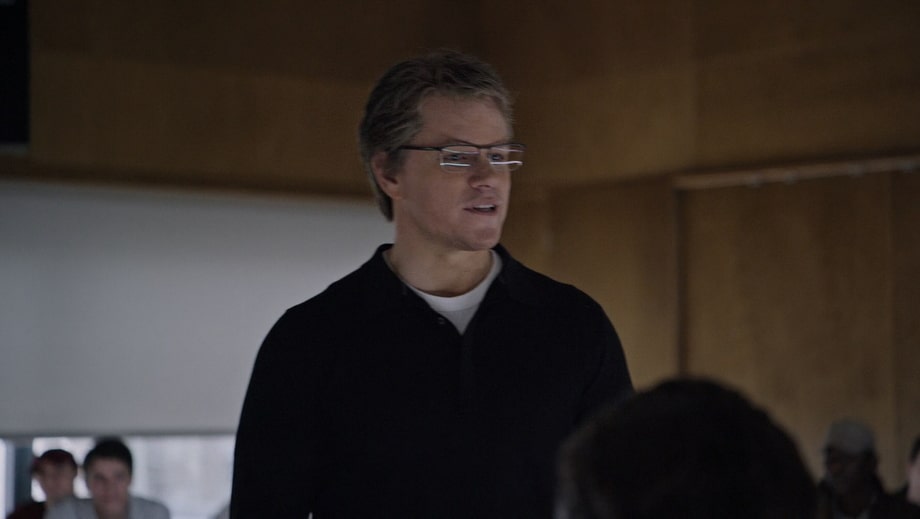
One of the explanations for Watney’s ability to move forward with Mars’s challenges and survive was his ability to learn, particularly from his mistakes. Not every scientist possesses this ‘learning experience’ attitude, but Watney does. He tries to multiply variants before he succeeds, and this is the core of scientific exploration. Mark has both curiosity and a desire to work hard and to learn. He is not dispirited by the fact that no one before him has experienced the same, and there is no role model to follow, leaving him a reality to become such a model for the next generation. His video diaries would serve astronauts and scientists, and toward the finale, we see Mark as a lecturer for a new generation of curious men and women. He teaches them how to use materials and things in unexpected ways they were not meant for. This reminds me of another space movie, Apollo 13, where NASA made the most of the uncharted objects on board to create something new.
“How to Make a Bathtub Using NASA Tubing and an Old RTG.” “How to Cook a Potato Six-Thousand Different Ways.” “How to Make Water Out of Rocket Fuel. To Keep You Alive. For Just A Little Longer.”


We should not forget that having a plan and implementing a can-do attitude on an everyday basis also helped Mark Watney cope with a dispiriting feeling of loneliness. A routine of work helps us not only to divert our minds from stress but to deal with solitude in any form. It was Mark’s creativity and persistence that made communication with NASA and Ares possible. He covered dozens of miles to get to the abandoned Pathfinder’s communication module. Then it took time to reprogram his rover’s computer to perform lettering with Earn, though with a delay. Mark desperately wanted to tell his former team that it was not their fault for leaving him on Mars. On the other hand, Watney is not interested in becoming a star back at home: he just wants to communicate with NASA and his team. Unlike Passengers (2016), where Jim could not count on ever communicating with a human being again under the current conditions, the desire to return home, first to the team and then to Earth, gave Mark strength on Mars in significantly worse conditions than on Homestead with its restaurants. Another daily routine that saved Mark’s mind was keeping a video journal, though not have the means to send them to Earth. In a wider sense, similar to Andy Dufresne in Shawshank Redemption, Mark turned a daily routine into a means of survival and keeping his spirit alive.

In a parallel universe, The Martian could have been a completely different movie: extremely serious, sad, and even depressing. Thanks to Ridley Scott and Matt Damon, the film gives a kaleidoscope of emotions, among which humor is not the last. Endy Weir made his Mark Watney not only intelligent but life-affirming as well, and the movie adaptation explored not only his determination to survive on Mars and get back home but also his incredible ability to face challenges with a smile and encourage other people, even millions of miles away. Because the Ares crew cooperated for several years before and during the voyage, Mark has established himself as a man of the people with a resourceful sense of humor and an ability to make everyone laugh, even a straight commander Lewis. We can safely assume that Mark’s character made the crew first so depressed on leaving him, and then so enthusiastic about rescuing Watney, even at risk for their own lives.
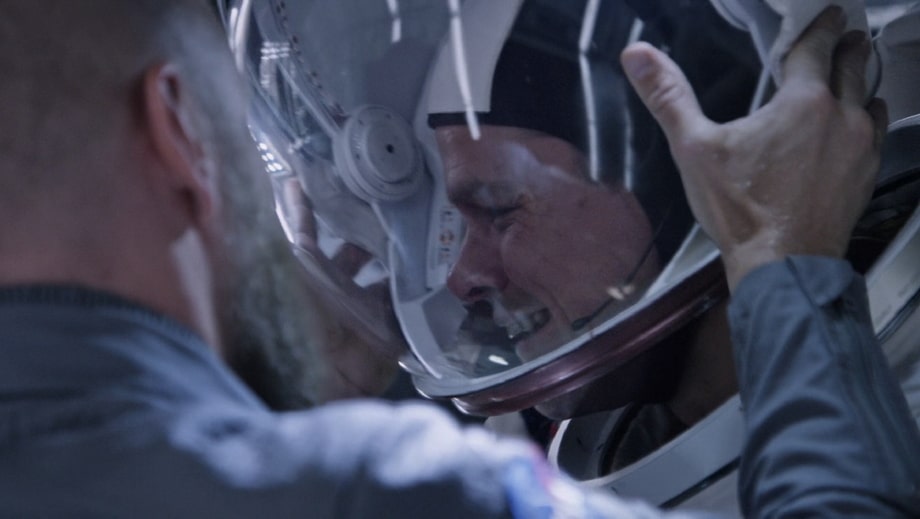
The original novel and Ridley Scott’s The Martian made us believe that you can’t survive on a desolate planet without focusing on positive thinking. Mark Watney is a living example of that truth. He prefers humor and sometimes sarcasm, often laughing at himself to avoid falling into despair and losing hope. He had a thousand reasons to sit in the corner and spare himself, but he faced challenges with a smile and even managed to make significant failures look not as bad as they actually were. The miscalculation while making additional oxygen could have killed Mark and devastated the whole living module, but a scene with a smoky Matt Damon has become one of the funniest in the whole movie. He turns the process of making fertilizer into a joke, and toward the end, a man-made hole in the space suit leaves space for a reference to Iron Man. As we know, human beings can not fear and laugh at the same time, and Mark compensates for the alien environment with a bit of a joke.
Okay, let’s see if I can get some of your questions out of the way up front. Yes, I did, indeed, survive on a deserted planet by farming in my own shit. It was even more disgusting than it sounds. Let’s never speak of it again.


What Mark does to keep his spirit high, apart from daily work step-by-step achievements and communication with his team and NASA, is finding happiness in the little things of life. He performed the inventory reconciliation of not only potato storage and instruments, but also of the crew’s possessions such as music records and movies. While not very enthusiastic about Commander Lewis’s music preferences from the 20th century, Mark listened to every single file. He uses video recording journals to compensate for the lack of communication, often makes jokes on camera, and takes funny photos to deal with solitude on Mars. Like in Groundhog Day, Mark Watney’s every new day, while looking similar to the previous one, gives him a chance to make his life and the surrounding world better. Not only does knowledge and hard work help the main character fight loneliness, but also humor and unwavering love of life. Thanks to a developed sense of humor, Mark Watney looks at his situation with irony and does not lose faith in a quick rescue. A man is alone on Mars, there are no proper live communications and close connections, and there is not enough food and water. It would seem that there is nothing positive and foreshadowing a quick rescue, but the Martian is a man with a saving sense of humor, so that he does not feel lonely. Mark Watney’s life position makes him forget about his loneliness and teaches us not to attach much importance to our everyday problems. Mark Watney is a lonely hero, a man with an active life position and unwavering faith in people. Due to his preparedness, frantic desire to fight, and positive life position, he achieves his goal – to survive, and finally, he comes back home.
Can you even imagine what he’s going through? He’s fifty million miles from
home. He thinks he’s totally alone and that we all gave up on him. What kind of effect does that have on a man’s psychology? What’s he thinking about right now?


Read me
The filming crew of ‘Bridge of Spies’ took great advantage of Berlin not only as a key story site but also as a primary filming location

Read me
Despite its extended geography, the 2004 adaptation of ‘Around the World in Eighty days’ was mostly filmed in Berlin, Germany.

Read me
Five years from its release in 1988, the ‘Working Girl’ story is still relevant to people outside New York, in different spheres, men or women, young or experienced. The universality of the story makes Working Girl Tess McGill a reaching character

Read me
An incredibly detailed cinematic guide across Angels and Demons filming locations in Rome, based on a book of the same name by Dan Brown

Read me
Let’s deepen into the character of Richard Kimble, a semi-iconic movie protagonist from ‘The Fugitive’ movie with Harrison Ford

Read me
Whether some find inspiration in this story and others are frightened by its villain character, Whiplash characters test the line between ambitions and making sacrifices for success