


 5,00
5,00
Read me
The Fugitive character analysis
Let’s deepen into the character of Richard Kimble, a semi-iconic movie protagonist from ‘The Fugitive’ movie with Harrison Ford
MOVIE EXPLAINED

The Prestige tells us a vivid story of two men, who delved into rivalry, and who paid the highest price for their obsession with being great and better than opponent
Christopher Nolan rarely chooses ‘knights’ as the protagonists for his movies. In most of his stories, from ‘Memento’ and ‘Insomnia’ to ‘Oppenheimer‘, from ‘Batman’ to ‘Inception’ and ‘Tenet’, he steals our attention and breath by introducing morally gray characters. Most of them pay a solid price on the way to their goals. Leonard mercilessly retaliates for his wife. Detective Will Dormer hides the accidental murder of his partner. Bruce Wayne makes no bones with criminals on the streets. Cobb opts for a crime to see his children once again. Cooper leaves his children on Earth to try to save mankind. The Dunkirk characters kill and die on the beaches of WW2. Characters in Tenet engage in dangerous and mysterious play, and ultimately, Robert Oppenheimer loses himself in the pursuit of creating an atomic bomb. Each of these characters offers a great sacrifice; in this sense, the story of ‘The Prestige’ fits perfectly into Nolan’s traditional agenda. Based on the book of the same name by Christopher Priest, the story of Robert Angier and Alfred Borden shows not just rivalry between two opponents, but the scale of sacrifices, an inner compromise with the still small voice inside us, that some people are ready to shut their eyes to.
From the beginning, Nolan plays with the audience, as we later find out, drawing us into the narrative and cinematic trick. Let’s face it, the introduction explains the three classic steps of making a good trick, and Nolan does this with his audience. In the Pledge section, the movie shows us something ordinary: two magicians, who desperately want to make a name and earn money in 19th-century London. They wear shabby clothes, talk sense into concert hall owners to give them a chance, and try to solve the mystery of an old magician. Does it seem that these two characters can achieve something extraordinary and, more than that, thrill the audience with their stories? Like with the classic Pledge, everything here starts as ordinary. In the movie’s second half, Angier and Borden disengage themselves from mediocrity, earning fame beyond England. Each of them has a unique magic trick and a secret, which comes to light toward the end of the story in the step called The Prestige. Angier and Borden paid grim prices for their greatness and secrets, each in his way, and they paid even more to get a payoff from their opponents. Let’s delve into The Prestige character analysis.

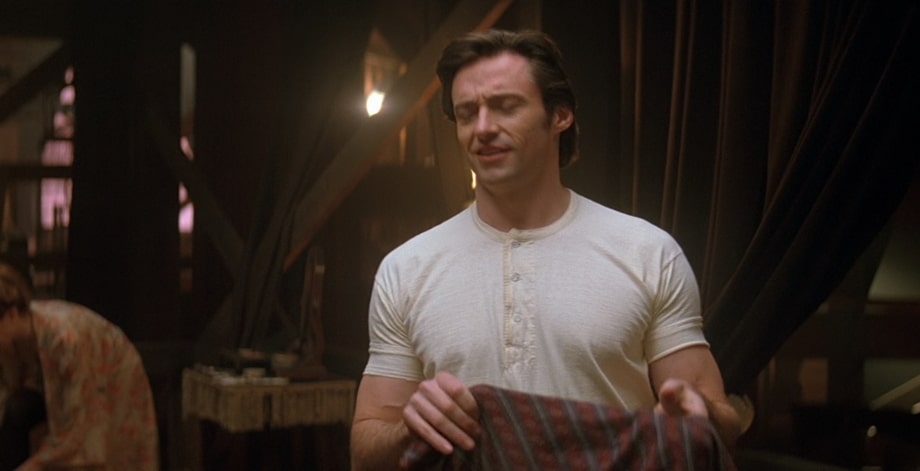
The narration structure of The Prestige gives us clues way before the story’s climax by providing a vivid and at the same time unevident metaphor. The story shows us the cage-bird trick several times throughout the story, when the magician makes the audience believe that a bird disappears and then reappears a few moments later. Early in the movie, we see Borden do this trick in front of the audience, including Sarah and her nephew. A boy starts to cry as, despite his age, he intuitively grasps the fact that the bird was killed, and another one is shown later. Borden tries to comfort the kid, but a boy asks about the fate of the bird’s brother. While children are generally an easier target for magicians’ persuasion and trickery, Sarah’s nephew catches the core of this trick. The scene is unappreciated, since it refers to both Angier and Borden. As we find out later, the secret of Borden’s magic lay in the existence of his twin brother, thus a ‘bird’s brother’. While for years they shared stage and fame, in the end, one brother was sacrificed to the second one could live with his daughter. This metaphor with a bird works even better with Angier, who initially shared his appreciation with an alcoholic actor, and later killed himself, day by day, to allow the ‘bird’s brother’ to become a Prestige. The bird in the trick dies in the process, but there is always her brother to receive admiration. When we later see how Borden throws the bird’s body into the garbage, it is easy to draw a reference line to Angier’s bodies in the water tanks.


The theme of obsession and destructive passion runs through the story like a golden thread. What started as Angier’s revenge on Borden for the supposed guilt in the death of his wife later transforms into a destructive rivalry, which does not shy to harming the people who surround both men. One of the evident motives in ‘The Prestige’ deals with love and attitude towards women. Angier loved his wife Julia, and her tragic death set up the process of self-destruction, but later on, he neglected this love with his further actions. He was deprived of his own family and decided to destroy Borden’s life and happiness. It was now not just about being a better magician, but about depriving his opponent of love and family. Angier used Olivia, who cared about him, to steal Borden’s diary, and he actually treated her more like property, an asset he could use against an opponent. The dubious life of Borden and his brother destroyed their relationship with both Sarah, who committed suicide, and Olivia. Alfred and Fallon wanted love, and they appreciated their respective partners, but the concealment of their secret destroyed that relationship and those women. As Janathan Nolan, Christopher’s brother and the co-writer, said in one of his interviews: These guys aren’t interested in love… they’re obsessed with something very different. This conflict and the aspect of self-destruction, which influence other people, give the story additional depth.


Despite the tragic death of Julia Angier, neither Robert nor Borden became sworn enemies immediately after the accident. Angier rightfully blamed Alfred for at least using the unapproved tie-knot. Frustrated by the woman’s death, Borden ignores Robert’s question about which specific knot he had tied during the trick. Borden’s visit to the funeral made the situation even worse, but this was not a tipping point between the two men. Angier hated Borden for the accident, and he blamed him for making his wife die, not to mention killing her. It is important to note that when he came to Borden’s show with a bullet and the latter lost his two fingers, we saw confusion in his eyes. At that moment, he was not ready to harm Borden or kill him, but probably just to make him answer the painful question. When Borden got hurt, Angier did not pursue the rivalry between the two until Alfred later came to spoil his bird-cage trick, and finally, until Angier saw Borden’s happiness with a new family. The death of Julia was the first step in his transformation, but not the tipping point, which turned Robert Angier into a merciless opponent. His path of dehumanization took years to turn him into a fully-fledged Lord Caldlow.

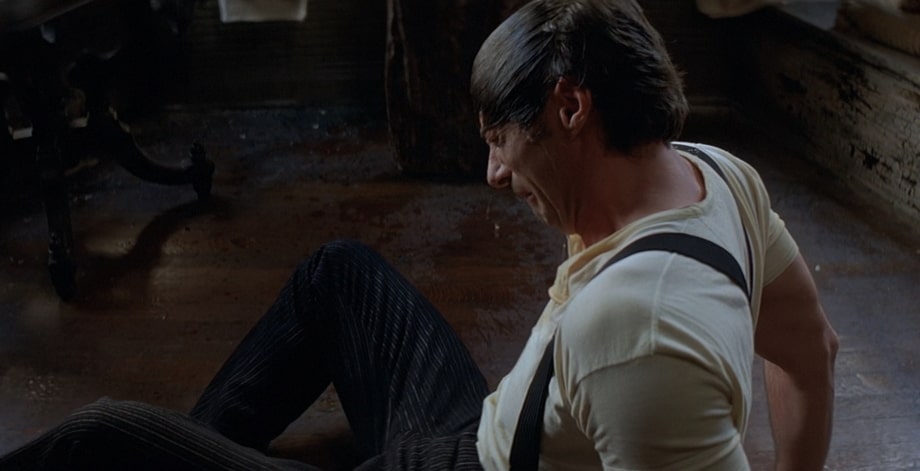
As I have stated above, Robert did not make up his mind to kill Alfred for years to come, and soon after harming Borden with a bullet trick, Angier was still confused with the idea of killing a bird. In contrast to Borden, who understood the cost of a good trick and the necessity of a sacrifice long ago, Robert did not want to kill a bird when Cutter (Michael Caine) presented him with a new version of the old trick and a cage. In a new version, the magician did not need a table, which hides the body of the killed bird, but a sophisticated engineering design hidden under his cloth. At the beginning, Angier expresses protest about the idea of killing a dove, but a few moments later, it appears that Cutter’s new machinery does not demand this sacrifice. It is important that Robert was ready to get his hands dirty if needed, and Cutter needed to know if he was. The old man adds that one day Angier would have to get his hands dirty one way or another, though he never expected the scale of this readiness. In a wider sense, at that moment he decided to kill a dove to make a trick and get a show, and years later he would kill himself every time to make ‘the New Transported Man’ work. Thus, ‘getting hands dirty’ may take on an unexpectedly cruel form.
While toward the end of the story we perceive Robert Angier as an antagonist and a villain, in the first half of The Prestige story, he looked like a victim and a sympathetic character, who was deprived of his wife and career by Borden. We also know that he lacked a family, being an outcast and an underdog, and Julia was his sunlight. To understand his transformation into an obsessed, cruel man, we must see that at the beginning of the story, he was more a victim and a person we should express compassion for. More than that, by knowing the end of the story, during the rewatches, most of us distort our perception of Angier at the beginning. He was not a cruel narcissist at the beginning: it took years of rivalry between him and Borden, and his obsession with fame, to turn him into a monster.


Getting closer to the tipping point, I want to point out three moments that turned Robert Angier’s antagonism into an obsession. The first tipping point comes when Borden introduced his ‘Transported Man’ to the London audience. Robert Angier is completely devastated by the magnificence and ease of the trick and the audience’s reaction. He even described the trick as ‘the most amazing magic trick I’ve ever seen’. Here starts his obsession with Borden’s secret, which will pull Angier’s actions further toward the very end of his life. The secret of Borden/Fallon transportation pushed Angier to get his hands dirty multiple times, to harm other people, to bribe and lie. When Angier and Cutter made up ‘The new transported man’ trick by attracting an alcoholic actor, Root, the solution was always next to Angier’s nose as he copied Borden’s secret, even without realizing it, leaving himself frustrated with the supposed lack of a real solution. Unfortunately for Angier and Cutter, Root was an undisciplined man without a devotion to the art of the scene, and Robert had to sacrifice his minute of fame, leaving Root to receive the applause of the audience. Angier was anxious to serve as a pledge rather than a prestige: this feeling probably only intensified his obsession with Borden’s trick, since Angier was sure that Borden was both the pledge and the prestige.


I would mark Borden’s sabotage against the ‘New Transported Man’ trick and Angier’s broken leg as the second tipping point in the latter’s transformation. Robert indeed hated Root and the necessity to share the spotlight with this man and to spend the most important part of the show under the scene. It is true that he was obsessed with Borden’s secret and considered his show inferior to Borden’s. At the same time, he would probably continue with his show, trying to rival his opponent in other ways than confrontation. The trauma that broke Angier’s leg left him unable to act fully-fledged on the scene, thus depriving him of a complete magician’s career. The situation mirrors Borden’s loss of two fingers, which made him unable to perform some basic tricks. It is reasonable to say that in both cases, the sabotage made by the opponent made each character push the edge of their tricks. Borden invented the ‘Transported Man’ show, and Angier departed for the United States, eager to find Nikola Tesla.

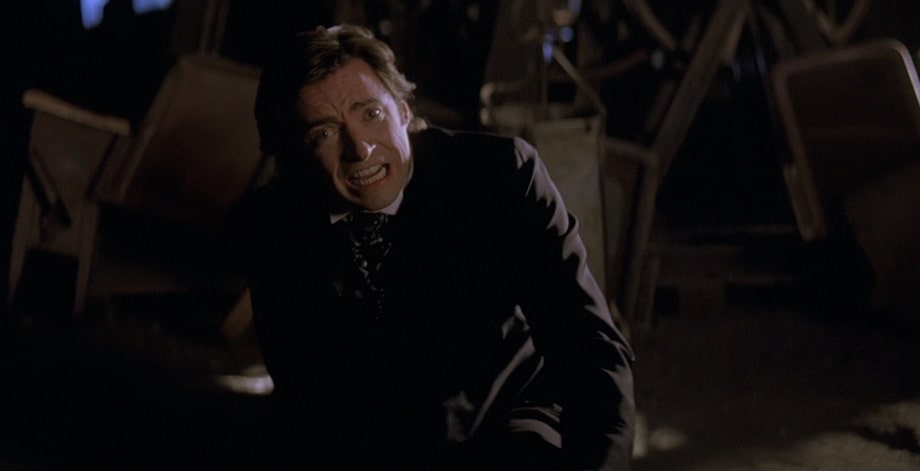
Reason three, or the most important trigger of Robert’s ominous transformation, came from Borden’s happiness with his new family. There is an illustrative self-evident scene when Robert comes across Borden/Fallon, Sarah, and their daughter on the street. Toward this moment in time, it looks like Angier was no longer guided by the loss of his wife, Julia. His hatred toward the antagonistic Borden is fueled not so much by his family drama, but by the fact that Borden is happy, and his happiness is an advantage over Angier. The latter could have created a new family with Olivia or someone else and matched or even surpassed his rival in this aspect. Unfortunately, Robert Angier became more interested, not to say obsessed, with depriving Borden of his happiness than in gaining his own. This destructive model means that a person sacrifices his/her own life just to make the life of another person worse.


Robert sends Olivia to Borden/Fallon in pursuit of stealing the notebook with secrets, and he loses the young woman, who admired him. He is frustrated and disappointed that Borden’s notes were codified, but simply because not get the solution he had been obsessed with. He does not care much that he lost Olivia for such a half success. The lack of a code word in the notes pushes him to kidnap Fallon, and dig him under the ground to blackmail Borden. Angier’s obsession with harming his opponent and getting his secrets finally pushed him to get his hands dirty. By getting the code word TESLA, Robert Angier left London for America in a pursuit to find Nikola Tesla and make him build a new machine. Robert thought that the secret of Borden’s trick was backed by Tesla’s unique inventions, and he was ready to give all his money to surpass the rival in his field. With all his obsession with beating Borden, Angier gets the machine that does not in the way he expected. In a wider sense, The Prestige reminds us that despite the intensity of our desires, we don’t always get what we want, or better to say, what we expected to get.


Robert expected Tesla’s machine to transport him a longer distance than in Borden’s ‘Transported Man’, but the reality made him face a higher price. In his obsession with beating Borden and becoming the greatest magician, Robert made up his mind to be ready to kill himself again and again. Two decades after the movie’s release, there are still debates, whether the man transported, the Prestige, is real Angier, or if he was the pledge and died every time. Both the movie and the original novel made it clear that Robert willingly killed himself every time, and his words about uncertainty only emphasize how accurate the copy was. During the first probe of the machine, Angier shoots his copy from the pistol he left nearby inside the machine. He understood that there could be no other Roor in his trick and life, and one version of himself should be killed. He likely thought that he was transported, and the duplicate version remained on the spot. Anyway, the real Robert Angier was dead long ago, and the price of a new trick was to kill himself.


As we find out later, Angier even used his secret to set up Borden and have his rival be killed by the court. Robert could have killed Borden and Fallon long ago with his own hands, but setting up his opponent was another trick. Borden regarded Angier as someone ordinary, who now made something extraordinary (Real Transported Man), but the Prestige Lord Caldlow tricked Borden. The latter became curious about Angier’s secret, and like his enemy before, he paid the highest price for getting the solution. In a wider sense, Angier wanted not only to attract more audience to his show, but to make Borden look and feel foolish and tricked, thus establishing himself as a better magician. Robert, now in his new identity of Lord Caldlow, even came to the prison and revealed to Borden that he was still alive. After getting his hands dirty to the extreme by letting Borden be hanged, Robert Angier gets his paycheck later, when Fallon shoots at him. After so many sacrifices, he loses his life one last time, leaving dozens of bodies in the water tanks.

While delving into Robert Angier’s character analysis earlier, I identified four key trigger points that turned him into an unsympathetic, manipulative, and obsessed Lord Caldlow. For those who rewatch The Prestige, we tend to regard Alfred Borden as a protagonist and Angier as a villain, which did not look as such during the first watch. It is obvious that Borden did not want to hurt Julia Angier, and he was sincerely devastated by her tragic death. On the other hand, he lacked the courage to admit to Robert what kind of a knot he had used, and his dubious answers made the situation look even worse. It is reasonable to say that Julia’s death launched the destructive chain reaction, which turned two magicians into cruel rivals and monsters to some extent. Along with that, both men had always been eager to become great magicians, and it seemed that the tragic event only gave fuel to their ambitions. Speaking in the words of Joker from ‘The Dark Knight’, also with Christian Bale in a leading role, ‘What would each of them do without the opponent? In a wider sense, Robert Angier and Aldred Borden were destined to become rivals and were destined to die in the process, which we see at the end of the story.

Getting back to the tipping point topic, the one with Borden/Fallon comes early in the story, and it is easy to underrate the importance of the revelation. Cutter (Michael Caine) sent Robert and Alfred to visit a local magician show, where an old Chinese man performs a breathtaking trick with a gold fish. While Angier perceives the trick as banal and not for him, not as glamorous and prestige-like as he expected, Borden’s reaction is more involving. Early in the story, he grasps the truth that a good trick demands sacrifice and living through it. It takes your whole life not to reveal your secret to anyone and not to ruin the illusion. The old magician lives pretending to be another kind of person, and his trick does not end behind the theater doors. Borden takes this revelation so personally, since he has been living a similar life with his twin brother, and now he is ready to show even deeper devotion to becoming a great magician. Like the Chinese, Borden and Fallon hide from each other like a golden fish at any cost. Both brothers understood that sacrifice is the only way to become great.


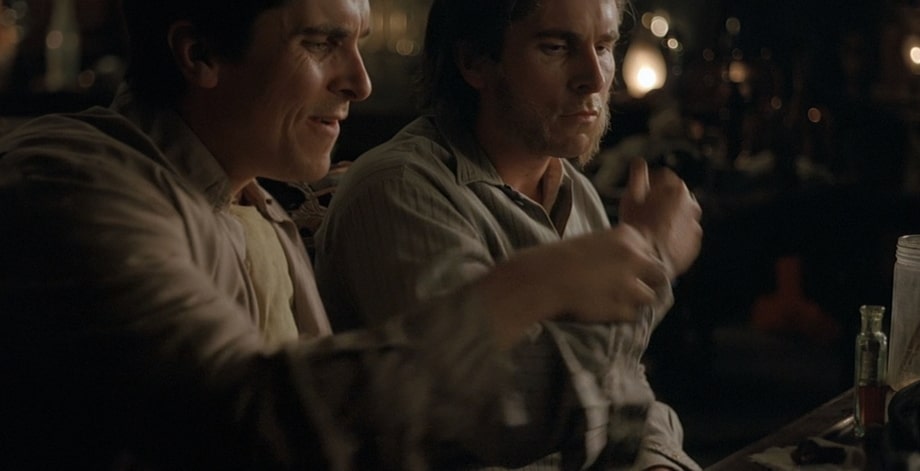
The topic of keeping secrets at any cost is essential in the story. Early in the movie, Borden tells Sarah’s nephew that he should never give his secret to others, as then the trick will mean nothing. The boy caught the secret by taking the life of one bird to make the second one a prestige, and this metaphor works well not only with Angier’s duplicates, but with Borden/Fallon as well, who have devoted themselves to living only half of a life. It is also interesting to note that in other instances, when Borden reveals his secret to Sarah, Angier later uses the same trick to hurt Borden. It is obvious that Sarah had no connection to this accident, but maybe it triggered Borden/Fallon to become more estranged from other people, when dealing with their tricks, to go further under the veil of secrecy and sacrifice. As the story shows, the secret of ‘Transported Man’ demanded the career, family, and wife, and even the life of one of the brothers. Fallon reveals his secret only at the very end of the story to a dying Robert Angier, who would take it to the grave.


For years, Angier craved to find out Borden’s secret, and he always meant something extraordinary, while Cutter gave him a simple and exact solution at the beginning. What impresses the dying Angier is not the fact of simplicity, but the level of sacrifice that both brothers took for the sake of the trick. They both lived half a life; they loved different women, but the nature of their secret devastated both relationships. They acted as pledges and prestiges in sequence, sharing the audience’s admiration. If needed, they took two fingers to make the illusion live. In his diary, Borden/Fallon speaks about two young magicians who never intended to hurt anyone and were devoted to the illusion. While we naturally see here a reference to Borden and Angier, most likely the diary means two twin brothers, Borden and Fallon. The brilliance of a great trick lies in the simplicity, and when one brother was hanged, the other one came to avenge Robert Angier and killed him, which the latter had never expected. Only in his last minutes of life, Angier understood that the simplest solution was right, and that makes Borden and Fallon better magicians than Angier. But, as the whole story of ‘The Prestige’ tells us, simple does not mean easy.


Read me
Let’s deepen into the character of Richard Kimble, a semi-iconic movie protagonist from ‘The Fugitive’ movie with Harrison Ford

Read me
Despite the story taking us to Vienna, Berlin, Paris, Amsterdam, and Prague, most of the European sequences were filmed in Budapest and I invite you to search for The Spy Who Dumped Me filming locations

Read me
National Lampoon’s European Vacation has made its place in history as one of the best travel movies, and this time they came to blend in the crowd of French people in Paris.

Read me
Charles Morse from The Edge movie grants us one of the most sophisticated and intelligent characters in movie history, and his power of doing is worth the Edge character analysis

Read me
DEUTSCHES FILMMUSEUM (German Film Museum in Frankfurt) is an impressive eye-opening experience that could be characterized as the must-see place for all who have a passion for movies

Read me
More than thirty years after the premiere, ‘BIG’ family movie by Penny Marshall still has so much to teach us, especially the grown-ups