


 5,00
5,00
Read me
The Fugitive character analysis
Let’s deepen into the character of Richard Kimble, a semi-iconic movie protagonist from ‘The Fugitive’ movie with Harrison Ford
MOVIE EXPLAINED

Despite comedian nature, the story of Viktor Navorski can teach us kindness to others and an ability to take life as it is, with all its challenges and setbacks
It is not a coincidence that we do not see the protagonist’s character for a few opening minutes. Alternatively, the movie starts with wide panoramic views and high camera angles showing crowds of nameless extras, all in a hurry, and each of them is just someone in the crowd. We see people of different nationalities and skin tones, tall and short, men and women, young and elderly, poor and rich, with excellent English knowledge or those stuck in memorized phrases. The most relevant cinematic reference I may suggest to you is the opening scene from Working Girl, with a nameless crowd rushing to New York every morning, or the opening sequence from ‘The Social Network’ with bird’s-eye view angles and Jesse Eisenberg’s character shown as one among many. In The Terminal’s introduction, Steven Spielberg shows the airport as a never-stopping mechanism, an everyday world of routine, where any particular human being serves as a brief flash of light, a spot on the camera records. Stanley Tucci’s Frank Dixon routinely states that every passenger gets a procession time of about sixty seconds. In a wider sense, every passenger is a part of statistics and not an individual, especially those with peanut bars and pure language skills like Viktor Navorski’s character.


When Viktor Navorski comes to the stage, his story gets the spotlight to be told. Broadly speaking, every person in the crowd has an incredible story, and we are often too busy and in too hurry to listen to other people and help them. Referring to ‘Forest Gump’ also with Tom Hanks, the life and the airport as a metaphor for life is like a box of chocolates, and we never know what we’re going to get. The hidden allegory in The Terminal character analysis presents our life as a waiting process. For some people, waiting means the anticipation of the fruits of their actions and taking advantage of the little things in life. For others, waiting becomes a self-frustrating limitation, which keeps them away from living life fully: they are so stacked with the possibilities of the future and the ‘best option’ that they forget to live in the present. The third category among many possible others is people like Viktor Navorsky, who faces the waiting as a tangible obstacle. They are stuck with health limitations, incarcerated in prisons, experiencing wars, and this may last for years, unless your whole life.

Many of us had the privilege to travel, looking out the plane window, and those several hours in the airport looked like an adventure in most cases. Just imagine that you are stuck not for hours but days, weeks, and months in the terminal like Tom Hanks’s character is. The initial adventurism will do a vanishing act and obviously, any of us wants to follow the steps of Viktor Navorski. His story, while referring to the real experience of a man who had lived in the Paris airport for decades, is grotesque and superlative. On the other hand, we had that remarkable monologue in the toilet, when an accident guy was shaving next to Navorski and philosophically asked whether Viktor got the feeling of just living in the airport. Viktor’s invented experience with canceling his country in the eyes of US officials is next of none but so many people are stuck in their lives, and the airport serves as a broad metaphor. Victor is physically restricted in space and actions, but how many people among those he sees here every day live a full life in all senses and are not limited?

Another less obvious allegory of Viktor’s story deals with his unique burden of being in the same place while thousands of people move forward next to him. Similar to Bill Murray’s character in ‘The Groundhog Day’, in some sense, Viktor gets god-like forces to see other people from a meta point of view. They spent just hours in the terminal, and the local staff for even a third of their lifetime here, but it is Navorski who serves as a wise observer. Above all, the movie reminds us that we are all waiting for something or even someone in our lives, but it should not be a never-ending process without a purpose or our efforts put into it. Against all odds and setbacks, whether you are stuck in the airport building, have boring work, toxic relations, or a feeling of self-nothingness, there is always a way out. Except for some extremities, we can always make life better and adapt ourselves to the dynamic environment.


At the beginning of the story, we treat Viktor Navorski as a comic lyrical character, whose setbacks and failed interactions with Customs officials make us fun. Further down the story, we understand that it was Viktor’s limited English skills and natural modesty that made him stuck in the terminal building. All he could explain was the name of the NY hotel and the address. It would be naive to think that a story of his real purpose of visit could change the attitude of people like Frank Dixon, but Viktor’s persistence in keeping his promise to his father touches us when we finally find out his motives as late as the 98th minute of the movie. Until that revelation with Amelia, Viktor never shared his promise with other people in the airport, though he confessed that the peanut could contain Jazz. The real purpose of his journey to the United States was too personal for Victor to share with strangers.


Anyone who is reading this text may ask him/herself, would you sacrifice so much for the sake of keeping a promise to your close one? Probably not the extent of spending at least nine months as a homeless person in a foreign country, being stuck in the airport with no support, food, or money. We should also consider the nature of the promise Viktor made to his deceased dad: to get the signature of a jazz performer. One would say such a banal goal is not so much worth going through such challenges as Navorski did. The point is that his determination to fulfill his father’s last will against all odds at the expense of his own money, time, and comfort makes Viktor Navorski the man he is. There are many versions of what a ‘real man’ should be respected for, and one is sticking firmly to your word, and Tom Hanks’ character did it admirably.
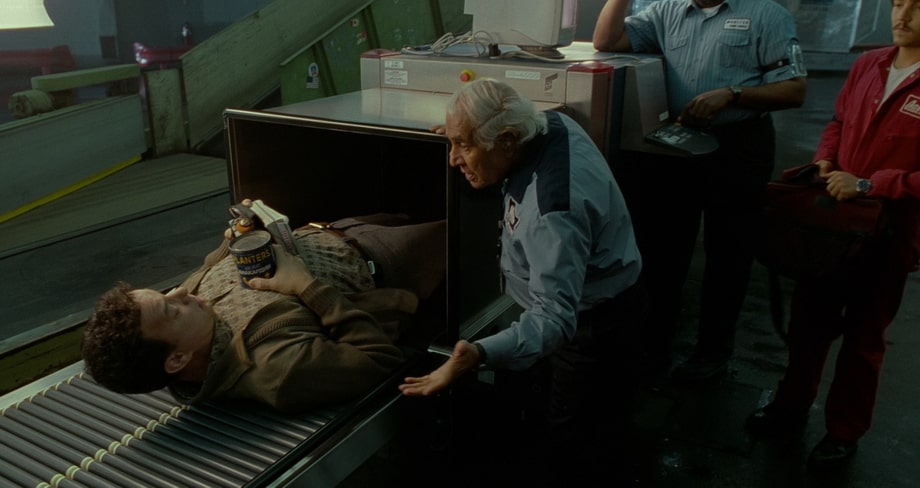

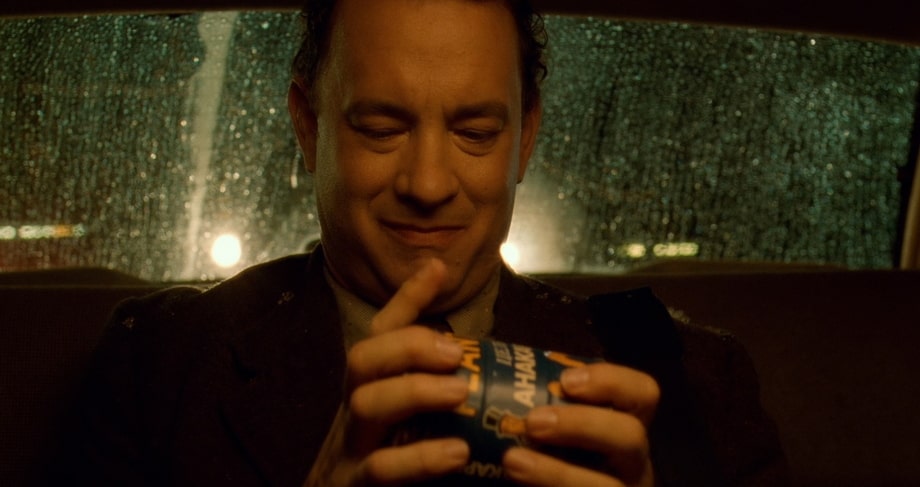
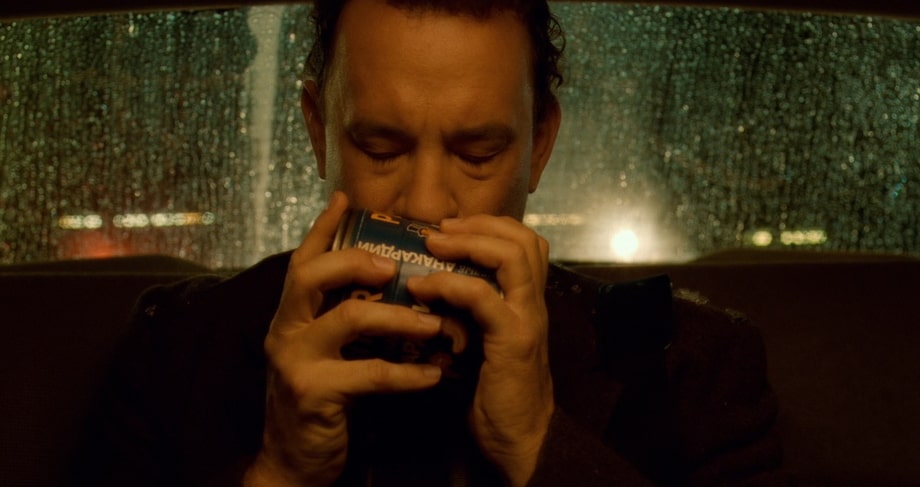
The other aspect of Victor’s determination is his unconventional attitude to visiting the United States. The movie, of course, makes fun of some people’s craving to get to the country to bite a piece of the ‘American dream’, like cab driver Goran, or simply to run from problems like Gupta Rajan. In the opening scene, we see people saying either ‘pleasure’ or ‘business’ while coming to one of the largest air gates in the US. One of the reasons why the audience is so sympathetic to Viktor is his altruistic purpose of visiting, especially when we find out his father’s story. In contrast to the absolute majority of passengers, the protagonist does not seek any profit in New York, nor does he want to stay in the United States. In one underestimated scene, Navorski refuses to claim that he is afraid of going back to his country in exchange for a chance to stay in New York. Staying close to the idea of getting back home is his other superpower. No matter how hard you may work, it is essential to be devoted to your home and be close to people. In broader terms, Viktor promised not only to get the last signing from Benny Golson but also to get the peanut can back to Krakozhia and maybe even to the grave of his father.


One may say that in the end, Viktor took delight in visiting New York, but he was happy to fulfill his promise and the purpose of his visit to the United States. While in many ways, breathing the cold New York air and not being limited to the walls of the terminal was itself a recompense for months of challenges, Viktor visited only one location in New York. He does not go to the Empire State Building or Central Park, and all his social interaction in the city ends with the cab driver and an old jazz musician. His behavior outside the airport one more time shows us how unselfish Viktor is and to what extent human relations are more important than any material acquisitions. Above all, such non-financial altruistic purposes generally give people much more impetus to keep moving forward compared to any economic reasoning. Viktor’s journey was a bit of a challenge, but sticking close to his purpose, his promise, and his home motivated him to go through all the severities.


Even extremely polite and reserved people would most likely be driven crazy by the attitude Viktor had experienced from Frank Dixon and the bureaucratic procedures backing him. Dixon is the head of the security service, who throughout the entire film cannot put himself in Victor’s shoes and give him a helping hand. Even toward the end of the story, despite Viktor getting relevant visa permission, he tries to stop him from visiting New York. This is evidently due to very bright, pedantic character traits that border on pedantic accentuation. It is difficult for Dixon to deviate from the rules. The rules make up his life, and without them, he can go into depression or hysteria. His pedantic traits help him be an excellent employee, but do not help him be a part of a team and be sensitive to airport visitors. He, as a pedant, lacks empathy and sensitivity; he replaces this with punctuality and strict adherence to the law. When Dixon unleashes his anger on Viktor, abusing him verbally and even physically, his promotion is on the verge of stagnation in the eyes of both Dixon’s boss and the commission. In the movie, Dixon is shown as a classic villain who tries to find any pretext to be above the protagonist and not let things happen in Viktor’s way. The story exaggerates the character, but Dixon is only a personification of cold-blooded bureaucrats and people with poor empathy for others. They may rule over other people, but never be a part of the team.


On the other side of the social spectrum, we have Viktor Navorski. A man of a big heart, modest, sincere in his deeds, and kind to other people, even to those who do not deserve it. From the very beginning, Viktor expresses no aggression or even frustration toward the Customs and Border Protection Officers. He accepts his situation patiently and acts as he is told by Dixon, thus waiting for a beeper signal. Despite all the obstacles and poor attitude he gets from Frank Dixon, Viktor never blames him or other officers or the United States for his situation or hard times. More than that, he never turns his severity into violence or even unrefined manners towards other people in the terminal. Navorski does not make a devil out of a cleaner, Gupta, who swept his vouchers for food and later broke an appointment promise. He later befriends the staff of the stores, who had previously rejected him as a potential employee when Viktor needed money so much. He never stole anything from other passengers nor demanded better conditions from CBP officers. These unique features of the character not only make Viktor Navrski a sympathetic protagonist but also move the movie off from being a banal man vs system story. Viktor’s story is more about self-dignity, empathy, and inner justice; it shows that the world has much more important things than ourselves and our egos. Despite all odds, Viktor is in balance and peace with himself.


Viktor doesn’t shy away from people who do their job in the terminal, even though initially they reject his needs. Officer Dolores Torres, played by Zoe Saldana, routinely denies Viktor light-green forms due to his invalid Krakozhia passport every single day, day by day. For all that, Navorski feels no negativity against her and even helps another terminal employee, Enrique Cruz, find love with Officer Torres. In the beginning, Enrique offers a deal to Viktor: food for information, which may sound frustrating, but as time is extended, the two become friends, and Navorski befriends other staff. The point here is that Viktor grants his time and good attitude to people who feel stuck in the terminal with low wages, generally ungrateful passengers, and dictatorial bosses like Frank Dixon. While being himself, not in a brilliant position, Viktor gives other people more than they give to him and more than they usually get from others. In a wider sense, many of them have enough freedom and abilities (compared to Navorski) to complain about their lives.


The first character who deserves a few words to be said is Gupta. For years, he had been keeping his head down not to be identified as a criminal suspect in India and not to be deported. As we found out, there were several problems with such an attitude. First of all, Frank Dixon and probably other CBP officers knew about Gupta’s shaky situation, and when the moment came, Dixon tried to take advantage of this knowledge regardless of how unnoticeable Gupta had been before. Second, Gupta assaulted a police officer in India as far back as 1979; thus, his fear of being imprisoned for seven years sounds awkward compared to twenty-five years without a home and his family. More than that, his ‘keeping his head down’ philosophy made him extremely lonely and black-hearted to most of the people around him. His favorite entertainment in his spare time is watching other people hurt themselves after not seeing the ‘wet floor’ signs.


In the beginning, Gupta treated Viktor Navorski with suspicion and hostility, considering him either a Dixon spy or a man who could take Gupta’s mop and then his work, thus his only way of living in the United States. After Viktor is checked by an X-ray machine, Gupta relents, and with time, they become friends. Navorski became not only another man with a miserable life but a man Gupta respected for his big heart, sincerity, and, most importantly, his sticking to who he was. Living his truth is what Gupta Rajan lacked for twenty-five years, and Viktor’s persistence inspires the old floor cleaner. Hell of a coincidence that Gupta got into frustration and rage once Navorski abandoned his purpose of visiting New York. When Gupta finds out about Viktor’s protectiveness of his friends, he decides to finally go home to his family. Throughout the movie, the character is more like a source of fun, but his story and encounter with Navorski make Gupta a dramatic persona.


When it comes to Amelia Warren, she has the opposite situation compared to Viktor, as she can go anywhere in the world, but in reality, she is stuck with her life, career, and relationships. She criticizes Viktor for living next to Gate 67, but her life looks chaotic with traveling between countries, staying in hotels far from home, and waiting for a married man to call her on weekends. In contrast to Navorski, who without doubt knows where his home is and wants to come back, Amelia has neither a destination point nor a place where she feels at home. Her never-ending state of being on the road does not let her be satisfied with her life, and she regards Viktor just as another person who travels a lot. Unfortunately for the audience, from the beginning, their relations were doomed to lead to nothing. The point here is not in Viktor and his hobo-like state of living at the moment or in his nationality. Amelia would need to change her life dramatically to feel joy, except for her chaotic relations with a married man.


Finally, a more minor character than Amelia or Gupta, but whose interaction with Viktor tells us enough about Navorski, is Milodragovich, another man from Eastern Europe. In this situation, Viktor sacrificed his chance to get Dixon’s permission to go to New York to help Milodragovich deliver the pills to his dying father back at home. Viktor’s choice not only skyrocketed his image in the eyes of the terminal staff but even brought him the recognition of the character of Eddie Jones, the chief of security of the whole airport. The old man openly admitted they all had something to learn from Viktor Navorski. In a wider sense, such an appreciation of people with power, even without immediate outcome, makes sense. Tom Hanks himself once commented on his character and the movie in a way that the world is full of wonderful, kind people, and we only have to look better, see, and appreciate each other.


As I mentioned above, Viktor Navorski never accused Frank Dixon, the Security system, or the United States of his situation. We may call it naivety, but Viktor untrusted his faith in CBP officers and his new concern was how to live through this waiting process. Dixon did not give Navorski appropriate means for living in the terminal, except for several ration coupons. Since Viktor does not blame anyone, he does not expect other people to create conveniences for him. Navorski started to adapt the surroundings to his situation and adapt himself to the new realities. Despite finding out a terrible truth about the events in his native Krakozhia from the news, the protagonist does not sit on a pity pot feeling sorry for himself. Viktor discovers a desolate section of the terminal near Gate 67, organizes a self-made bed made of dismantled airport seats, and even turns off the light by taking the electrical plugs off. As the story goes on, we see him accommodating a living space near the empty gate.


Let’s be honest, in a situation when most people from the Western world would have expected Hilton conditions, Viktor starts his day routine in a public toilet, washing himself in the sink. After losing his ration vouchers, he does not come to Frank Dixon or any other airport staff worker begging for food. Instead, Viktor first tries to appease his hunger with crackers and sauces and soon discovers a way of earning money by delivering baggage trolleys for 25 cents each. Even with such a restricted budget, Navorski left the change to the Burger King cashier. When such a temporary paycheck was intentionally discontinued by Dixon, Viktor did his best to find a job in the terminal facility. His lack of documents and poor English became a problem, but Navorski did not become disheartened and did not give up. Even when Enrique settles a food issue, Viktor finds motivation to keep doing something to make it possible to invite Amelia for dinner. The local cleaner Nadia informs him that he would need forty American dollars to afford two portions of cannelloni in New York.


After multiple failed attempts to be admitted to a job, Viktor finally got hired by a local construction unit for a fee higher than Frank Dixon had in his responsible and all-powerful position. The situation is even more nuanced if we consider that Viktor worked for the whole night performing carpentry work on a wall without a chance for recognition. The fact that a local construction boss saw Viktor while working and later admired him was a coincidence. Viktor spent hours and invested his skills and sweat because he knew he could do it. In a wider sense, business comes before pleasure, and you must invest something to get something from life. Investing does not always mean money; it could be your time, knowledge and skills, emotions, ideas, or giving a helping hand to someone. Similar to Forrest Gump, another of Tom Hanks’ iconic characters, Viktor is not hung up on the outcome, but he is focused on the process of doing things well, whether it implies doing carpenter work or being kind to other people. Later on, this income from construction allows him not only to invite Amelia for dinner but also to buy a Hugo Boss suit and books to improve his English skills.



Viktor’s ability to adapt to the environment is notedly admirable in his successful English-learning efforts. As we see in the beginning, his English was limited to a few phrases and an ability to read paper notes. Poor English was one of the reasons why Navorski got stuck in the terminal for months, and he could not even get enough information about Krakozhia from the English-speaking news. It is worth noting that Viktor bought his first book in the BORDER store on his limited budget from the baggage trolleys way before earning 19 dollars an hour as a carpenter. While having only a few dozen bucks in his pocket, Navorski invested some into learning, and getting language skills is only a metaphor for something more. This new knowledge allowed him to make friends with Enrique, Gupta, and Mulroy, to speak to Amelia, to ask questions to Officer Dolores Torres, to position himself better with Frank Dixon, to get a job as a carpenter, to find out more about the situation in Krakozhia, and finally to read books on Napoleon; the latter is hard to call average accomplishment.


Summing up, Viktor’s great power lies in being kind to other people and not giving up hope even in bizarre situations and uncomfortable surroundings. He reminds us that people need to adapt and learn to live better in this world, and the laws of nature are still relevant regardless of our technologies and the size of the cities. The world is not finished when our plans are ruined or delayed. Let’s say it frankly: we often prefer to escape from inconveniences, from the intrusion into our comfort zone, and in today’s world of multiple choices, we often just shift our focus from really important things and people. Viktor Navorski did not have much choice while being stuck in the terminal building, and he did his best with what he had and with people around him. Above all, he managed to make the lives of those people better than they were before him.

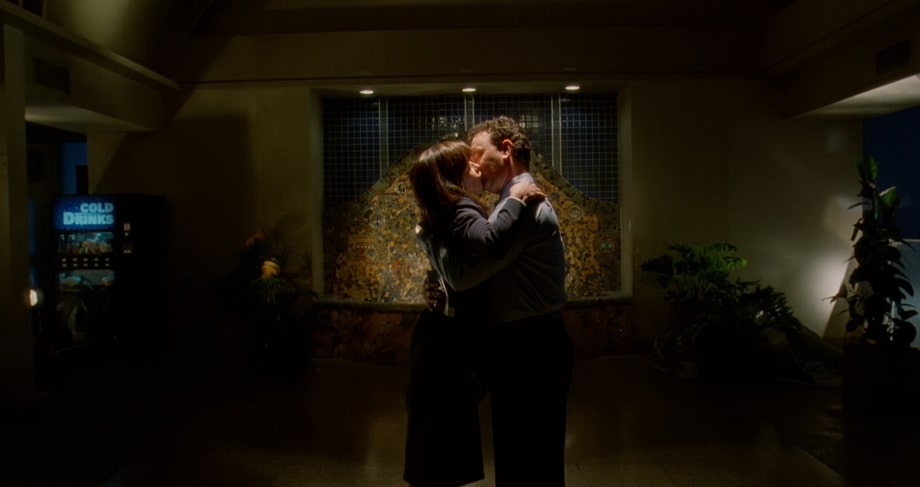
Making the world a better place than it was is indeed a superpower in our times. In most cases, we have enough spare time to put in learning, making efforts, and helping other people. Even in the most challenging times, a bit of hope and perseverance in the face of obstacles is what we need to make our lives better, like Viktor ‘The Goat’ Navorski did. It is important to regard life as it is, and even in the moments of severity, try to find positive aspects and the way out. ‘The Terminal’ by Steven Spielberg is a movie about the greatest values of human life, which are almost lost today: one’s home and homeland, decency and sincerity, attention to other people, and self-esteem.
Read me
Let’s deepen into the character of Richard Kimble, a semi-iconic movie protagonist from ‘The Fugitive’ movie with Harrison Ford

Read me
Detailed movie and psychological analysis of the Good Will Hunting movie and defining the protagonist by means of his social environment: Sean, professor Lambeau, Skylar, Chuckie and his friends

Read me
Sophisticatedly detailed walking tour across the Da Vinci Code Paris filming locations with the history of the places and Robert Langdon’s journey in finding the truth

Read me
The driving force of the movie makes an incredible sense in viewer’s own inner world, reflecting the experience of Walter Mitty and adopting to ourselves

Read me
While not a movie of primary importance in Marvel Universe, Black Widow Budapest locations take us on an incredible cinematic journey across the streets of Hungarian capital

Read me
Enthusiastic movie walking tour along the Casino Royale filming locations in Venice for your personal travel with photos, map, history of the historical sites.