


 5,00
5,00
Read me
The Terminal character analysis: Viktor Navorski
Despite comedian nature, the story of Viktor Navorski can teach us kindness to others and an ability to take life as it is, with all its challenges and setbacks
MOVIE EXPLAINED

The story of Eddie Edwards is a new brilliant and, in fact, underestimated cinematic reinterpretation of the underdog rise, which has lessons to teach us beyond ski jumping
Almost five decades after being astonished by the first Rocky movie, the world still has faith in sports stories, particularly when they come to underdogs who rise from their knees every time despite unbearable obstacles and a lack of support. An old and written-off poor boxer from Cinderella Man who fights for bread and milk for his family. A third-class fighter named Rocky Balboa from a clumsy district of Philadelphia is running in a scuffed old duffle. A young kid from Los Angeles finds a coach in an elderly Japanese man to fight the local karate hooligans back in ‘Karate Kid’ (1984). The two sisters are baseball players who show the league that the sport is not only for men in A League of Their Own (1992). Two sons of an alcoholic father, each of them tries to become triumphant in the local mixed martial arts tournament in Warrior (2011). A not very successful General manager introduces a revolutionary new approach in baseball in Moneyball (2011). Many of them had the abilities, and some even had a moment of glory in the past, but the hero of today’s essay, Eddie the Eagle character analysis, is Eddie Edwards, who seems to have always been a misfit and an underdog from his early childhood.
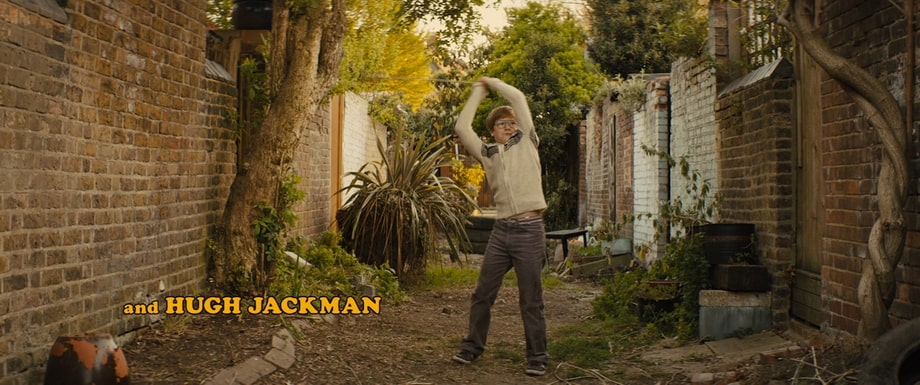
It is no surprise that Eddie’s story has many communities with ‘Forrest Gump’, including the early problems with legs and the orthopedic shoes, naivety, non-conformism, a supportive mother, and devotion to sports. From the beginning, Eddie is depicted as having no actual abilities in any sports, which is not true. The opening sequence shows him as an innocent, simple-minded British boy who builds his life based on the old sports magazine from the 1972 Olympics. He spends his childhood in numerous attempts to be good at something, and toward being twenty-two, he has no perspective other than living with his parents, working as a plasterer, and being a written-off outsider at the British ski team, an object for ridicule. He drinks milk in a bar and lacks any sexual ambitions as well (later turning down the proposal of a German bar owner, Petra). That distinctive feature of Eddie Edwards, despite all odds, laughing and not supporting, is his determination to chase his dream, to live his truth.


While most of the audience would regard Eddie as a daydreamer, a forever kid, and a loser, only a small percentage of people around have the strength to be always faithful to themselves and to stick to one specific line for years. His father, Terry, always wanted Eddie to follow him in a plastering business—a reasonably respectable and predictable job, which he (as we later found out) had always dreamed about. At the same time, Eddie has never paid enough regard to the plastering, not because he lacked respect for his father, but because he has always had his dream: to become an Olympian contestant. He was nine years old (born in 1963) when he, for the first time, came across a 1972 Olympic brochure. The movie explores the idea of setting a clear vision for the rest of one’s life: to take part in the Olympic Games. Naturally, a nine-year-old kid has no definite devotion to one particular sport, so he makes numerous efforts to find a way that may bring Eddie to his goal. Participating in the Olympics was his fixed idea, the core one, and all other ideas and means were initially to serve this primary objective.


The point is that the prologue does an excellent job of explaining that Eddie Edwards has wanted to become a sportsman and an Olympic contestant since he was nine. Despite his poor health in childhood, weak legs, and vulnerable knees, despite his father’s skepticism and determination to turn his son into a plasterer, despite Eddie’s multiple failures and setbacks on his way. In the long run, such a determination and an out-of-the-box way of thinking, even if naive, a fixation on one’s goal, would make Eddie Edwards special, an outstanding personality. For years, he used downhill skiing as a guiding star for his dream, and since the unfair play of the British Olympic committee, Eddie just shifted the focus to ski jumping after seeing a poster on the wall. A much more challenging and scary choice, of course, for anyone, but for Eddie, it is only a new instrument for achieving his primary dream. He looks far from being discouraged by the fact that there had not been a single ski jumper in the UK Olympic team since the late 1920s. On the contrary, he is so enthusiastic to be the first and only candidate who has the guts to go this way.

In contrast to his non-supportive father, Eddie’s mother, Janette, played by actress Jo Hartley, acts as a definite backing of his efforts to chase a dream. One would argue that it should come as no surprise that every mother should keep faith in her child, yet the reality is conventionally different in such situations. With an understanding that Eddie is not recommended to implement sport in his life, Janette has always supported her son in trying to find his way. Whether she saw Eddie as an Olympic champion or not, it was his choice and her backing to work in tandem. It is not about pragmatics or logic, but faith and support, and being a great believer in the person you love the most. Later on, Eddie finds another mother-like image in Petra, not the young restaurant owner, who provides him with shelter, a job, and care for his wounds.


Eddie Edwards’ story celebrates the importance of having a vision for your life, a childish dream, and hopes you live for despite setbacks, challenges, broken bones and glasses, and even the humiliating attitude of most people. Eddie’s story is a classic example of hard work plus time rather than waking up successful, rich, or popular one day. Edwards has never been a passive expectant, a pure dreamer who mistakenly takes favorability for an inner burning desire. He wants to become an Olympic contestant more than anything in his life, even at the expense of his health and life itself. Since being a nine-year-old kid, Eddie has not waited for a breakthrough moment, a favor of destiny. He made numerous efforts to find his sport, an activity in which he has some abilities and perspectives. In contrast to the absolute majority of dreamers, he took hard knocks, made mistakes, bent over backward, and listened to naysayers and critics (including his father), but also enjoyed small wins. By practicing every single day tirelessly from a young age, he encouraged himself to take specific actions toward his goal and strongly believed that one day the sum of those efforts would make him closer to his dream. A strong and unobvious metaphor for the ‘Eddie the Eagle’ movie may be found in the box of BLAKES BISCUITS and Eddie’s habit of seeing the broken glasses only as a minor failure and one step forward. This box with glasses, which his mother would later give him to take to the Olympics, is a symbol of human nature to suffer hard times and setbacks to get more in the end. Every broken pair of glasses gave Eddie a precious experience.


For those who watch Eddie’s story for the first time, it is a great temptation to regard Edwards as a complete loser in the sport. It is, of course, not true in the movie as well as with the real Eddie Edwards. The comedic nature of the prologue makes the impression that the protagonist had no merits in physical activity, but how many successful young sportsmen do you know who are nine years old and do not even have a coach? Of course, the cinematic approach simplifies Eddie’s journey across different activities. Nevertheless, towards his early twenties, Edwards was a member of the British downhill skiing team, a great achievement if taken seriously. It is only one among Eddie’s virtues that should not be underestimated, specifically considering the lack of money and social backing. A brief time-lapse kind of scene reveals the fact that Eddie gained dozens of trophies for skiing. For example, he came in second place in the 1983 Downhill Skiing Slalom event and won first place the next year, thus showing consistent progress and being superior to other boys.



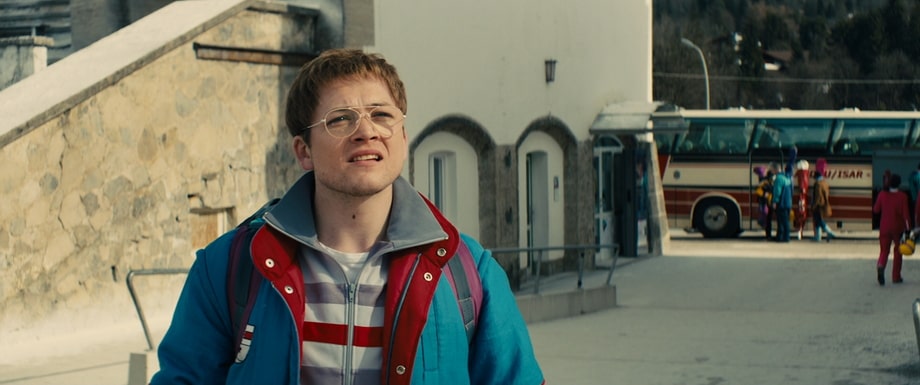
For Eddie Edwards, participation in the Olympic Games was never a rainmaking, and he always took it seriously. He made his first attempt to take part in the competition while a boy. His mother’s words that he is going to the Olympics again symbolize that Eddie did make regular attempts and actions toward his dream. Though for years his ending point was a bus stop at arm’s length from home, it has always been only a matter of time. Finally, at twenty-two years old, Eddie fled for the training facility in Garmisch-Partenkirchen in Germany, a pretty far destination for a boy who probably had never been abroad. This is another remarkable virtue of Eddie’s character: a desire and readiness to travel to other countries to follow the Olympic games, regardless of both the distance and the challenges ahead.


Another example of Eddie’s virtue is the lack of fear to ask for help. He was indeed a self-made believer in his dream, but it is all about faith rather than self-confidence. When he needed assistance, he asked his mother for a solution. On the first night at Garmisch-Partenkirchen, Eddie did not mind Petra’s proposal to help her in the restaurant to get a sleeping bed. Upon his first encounter with the Norwegian ski-jumping team, Eddie asked for advice in the sport where he was a total newcomer. He was absorbed by books about ski jumping, particularly one written by Warren Sharp. Once Eddie encountered a former champion, Bronson Peary (a fictional character played by Hugh Jackman), he made up his mind to convince an alcoholic to provide teaching lessons. In real life, Edwards indeed worked different part-jobs to earn money for training: working at kitchens and hotels, mowing lawns, and even babysitting.

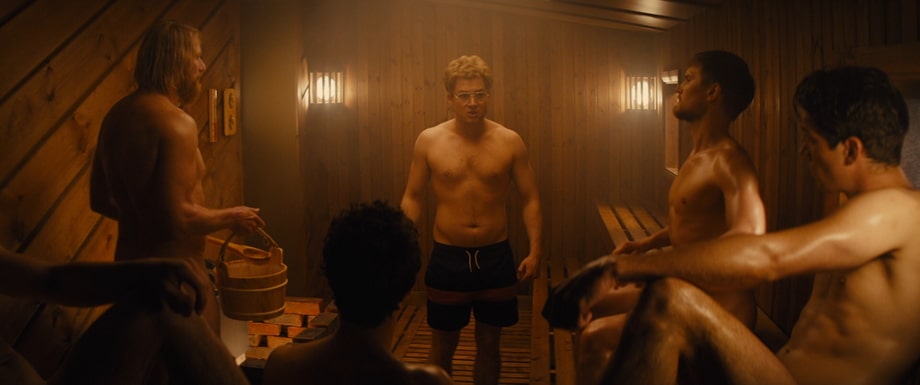
Eddie Edwards is depicted as a man who lacked the fear of failure, so he was always ready to attempt. The movie makes us laugh when Eddie successfully masters the 15-meter jump and is ready to deal with the 40-meter challenge after only one jump. To onlookers, it may seem ridiculous to try such a dangerous obstacle without hundreds of successful jumps from the previous in an almost automatic manner. Eddie was never illogical, and all his actions strictly correspond with his inner mindset. ‘If I can do this easily, why should I stop and not try the next step?’. When Eddie finally overcomes the 40-m jump, he is ready to go for the 70-m objective. Peary and all the others laugh at Eddie, considering him not ready and ‘not stupid’enough to make such a thing, but Edwards takes it seriously. He got injured badly in his first attempt to jump from the 70 meters, but even after being nearly dead, the boy says he would try again once he leaves the hospital. Fortunately for him, Bronson Peary finally agrees to give his knowledge to a crazy Englishman.

Following Peary’s agreement, Eddie once again shows his unshakable commitment to becoming a better sportsman, and he immerses himself in everyday training. In the following months, Edwards faces hard coaching methods, sometimes odd exercises, and goes steadily through hard work until he manages to deal with the 70-meter jump successfully. We never see him saying he is tired or has no faith in Peary’s words. When Bronson claims they need some money and four wheels to travel to the competition sites, it takes Eddie little time before taking his dad’s car and asking for money from his mother. Remarkably, Eddie’s devotion to his dream leaves him no other choice but to disagree with Peary when it comes to an invitation to take part in the Olympics. It has never been Edwards’s goal to fit the sports establishment, to show remarkable results, and to look great for the audience. In contrast, participation in the Olympic Games and being a representative of his country has always been his goal. This commitment pushes him to jump from the enormous 90-meter height: indeed, a tremendous achievement in this sport. Eddie did not want to wait another four years for a better chance, a perfect moment: for him, the present is always the best chance.
“I’m not deluded, I know there are plenty of athletes more deserving of publicity than me. And I would like to apologize if my silly antics have cast a shadow over their achievements. I also know I was messing around after the 70-meter jump the other day. I was very excited. But I take jumping very seriously. In fact, I love it. I love it very nearly as much as proving people wrong.”

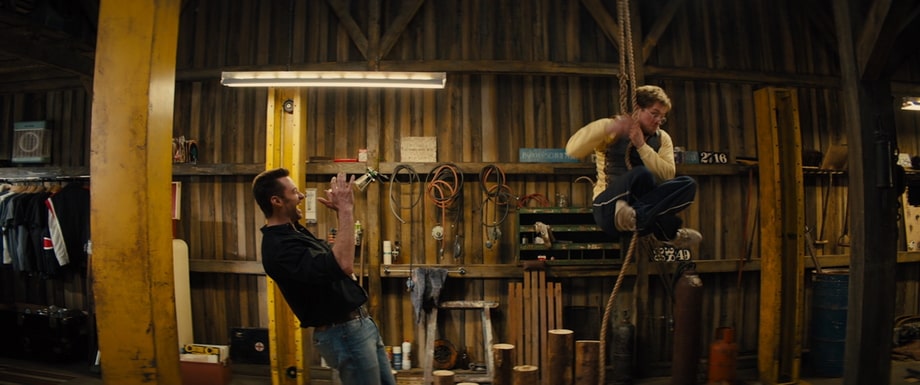

EDDIE
I was in a hospital for a year when I was a kid. Dodgy knees. All the doctors told me to forget about sports and take up reading.
It is our nature to attach labels to other people, what abilities we think they have or lack, and what (to our considerations) they should do in their life or stay away from. Eddie the Eagle does a good job of setting multiple so-called ‘obstacle characters’, naysayers whom the protagonist has to overcome, learn something from, or change in the process, giving them reasons to grow. From early childhood, people around Eddie used to say he was not good at sports, even to try, and that his ‘dodgy knees’ did not fit the dream of becoming a sportsman. Eddie took this challenge seriously, as well as a piece of advice to focus on reading: he came across ‘Moments of Glory’, the official 1972 Olympics photo album, which made him realize what he could do to prove them wrong. Such a story opening bears a reminiscence and reference to Forrest Hump and his childhood problems with legs and naysayers, which would later evolve into running across the United States several times.
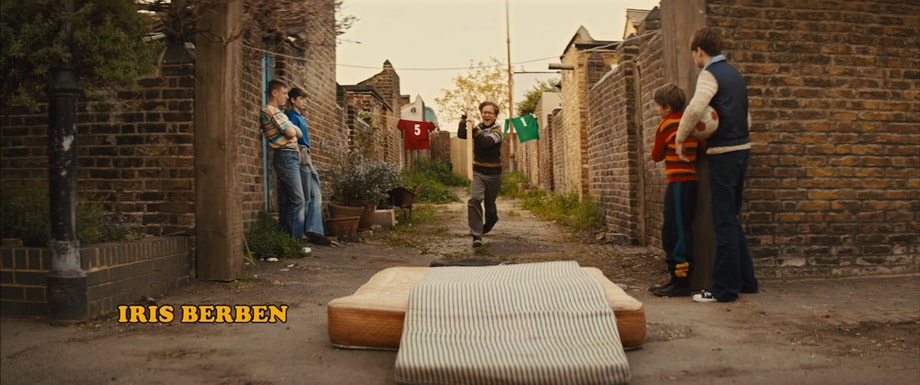



EDDIE
I like clowning around, I admit it. But I like proving people wrong better.
While doctors were the outsiders, a more challenging opinion originated from Eddie’s father, Terry. Mister Edwards, a British plasterer from a working-class neighborhood, never considered sports as a reliable job, where you get insurance and a pension. Terry Edwards is not a villain or an antagonist to Eddie; he is just a man who has never challenged his faith with unreasonable possibilities to gain something more beyond his mediocrity. Each of his days looks the same as the previous, and it is ok for him: watching television with beer instead of helping his son to become an Olympic champion. He never intentionally harmed his boy but rather acted in his own logic, which is not far from the truth. Bird in the hand is worth two in the bush; it fits well with Terry’s worldview, but is not the way for Eddie. Even facing a non-supportive father trying to give a rap on the knuckles of his dreams, Eddie’s inner faith and ambitions lead him through this opposition, when the father used to take his son back home for years from the bus station, a metaphor for a dream. In one of the early scenes, he proclaims: ‘You are not an athlete.’


Going to Garmisch-Partenkirchen and leaving home is only a half-solution. A German restaurant owner, Petra, initially does not regard Eddie as a sportsman but rather as a homeless person. He is ridiculed by the young sportsmen from Norway and their coach. They say that conventionally, a ski jumper should start his career as early as six years old or even earlier, and Eddie would go nowhere but a land of injuries and disappointment. This comes as no surprise to Edwards, who is used to humiliation and facetious comments behind his back. He is going to prove them all wrong and ruin a pearl of conventional wisdom about the age for the start in the sport, a cliche that has not met Eddie Edwards yet. Later on, a non-conformist Eddie avoids fighting with the Norwegian boys in the bar and stays close to his belief that milk is better than beer. His British teammates would later cheat Eddie to make him drunk and miss the opening of the Olympic Games.
PEARY
You do realize the time to start jumping is when you’re five or six.
EDDIE
Thanks. The Norwegians already told me that.
PEARY
Did they also tell you you look ridiculous in that gear?


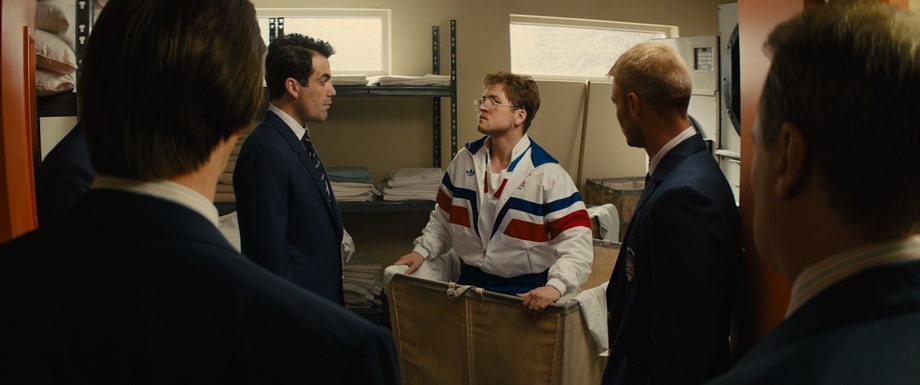
Age is not the defining argument when people tend to judge Eddie Edwards. He looks like an outsider in any social surroundings, a white crow, who looks far from some established conception of what a young Olympian contestant should look like. Bronson Peary underlines Eddie’s age, yet he regards him as not having a talent or a ‘good body shape’, whatever that means. A twenty-year-old guy has more chances to become a ballerina than a ski jumper at the Olympics. At the beginning of their interaction, Peary diminishes Eddie’s abilities and gives him the advice to give up. For months, Edwards has had to face this half-humiliating attitude from a half-drunk snow cleaner. He is, of course,e a misfit to Peary’s idea of a ski jumper, yet Eddie persists and keeps coming back to overcome the stereotypes and standards with his persistence, patience, and passion for the sport.
PEARY
And one more thing. You got the wrong skis.
Oh, and one more thing. There’s no such thing as British ski-jumpers. They don’t exist.


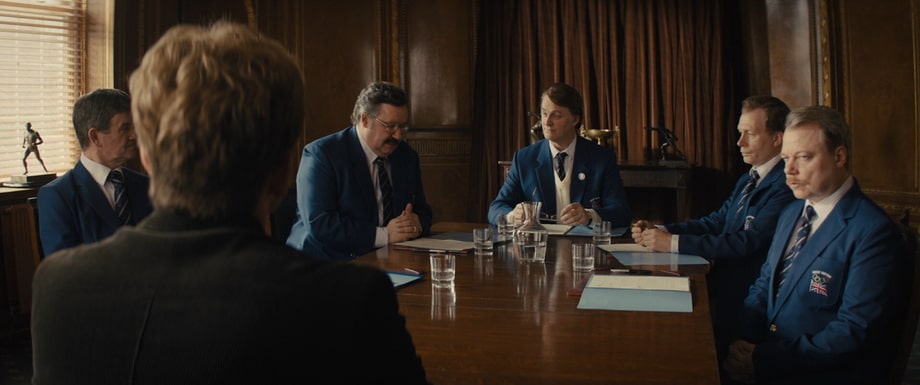
If not, consider teenage boys as villains of the story; the movie provides us with one definite antagonist: a British Olympic Committee official, Dustin Target. Considerably a cliche, grotesque character, Target confronts Eddie with the very idea of Edwards being in the British team. Regardless of Eddie’s winning history in downhill skiing, the bureaucrats have their vision of how a British sportsman should look, and sports results are not the first point on their agenda. The movie shows Target being more concerned with sponsorship and prestige than performance. He proclaims that a new era requires a new kind of athlete who should inspire business, and Eddie Edwards is a misfit for such an idealistic portrayal.
EDDIE
You know, I have got run times just as good as any of that lot
TARGET
It’s not all about speed
EDDIE
it’s about what school you went to, is it?
TARGET
Frankly, Eddie, you will never be Olympic material. Goodbye
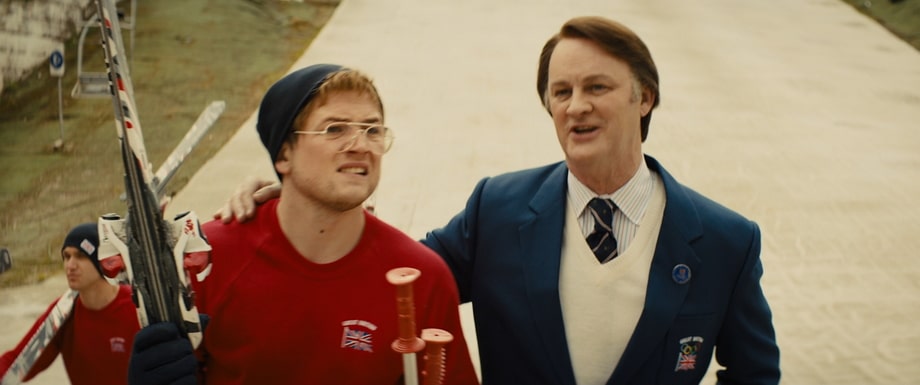
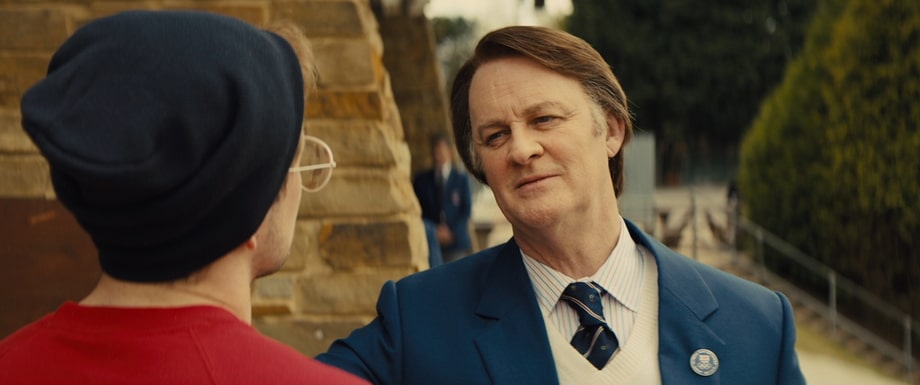
The Committee officials regard Eddie Edwards as lacking ‘good Olympic material’ for representing a British team despite his boys’ results and deserved qualification. On the other hand, such an unfair play made Eddie swift the sport from downhill skiing to ski jumping, where there had not been a British ski jumper for six decades. In the situation when the committee should have been proud of such an initiative, officials, who look like snobs in their suits, invent a precondition for Eddie’s participation: a barrier of 61 meters. Edwards takes this challenge not only as an obstacle to reaching his goal but also as a means to prove the bureaucrats wrong. The committee created a bubble image of a sportsman and how he or she should look to attract sponsors and admiration, and they distorted the concept of what is good and what is bad for the team based on their power. In the final scene in the airport, we see Target frustrated with the ovation Eddie gets, as he still does not understand what the point is with Edwards.
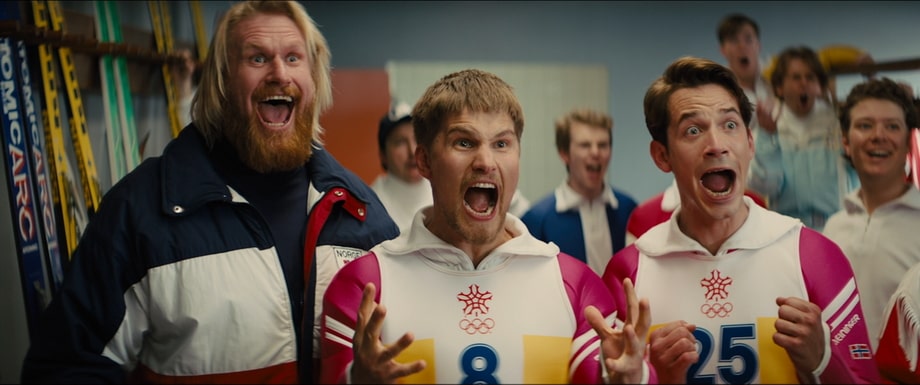
Such vulnerable characters as Eddie Edwards also have an irresistible inner strength to keep going, to face challenges, and to fail, but to have their triumphs as well. His character’s arc lies not only in persistently achieving his goal against all odds and critics but also in changing the lives of people around him by changing their attitude toward an outsider. The scornful Norwegian team shows their unspoken respect to Eddie after his failed attempt to deal with the 70-meter jump, and they even cover him with a blanket in the traditional colors of the Norwegian flag. Despite a bullying attitude from his fellow British teammates, Eddie does not disclose the real reason for his absence at the opening ceremony and thus gains respect from a troublemaker. While Eddie’s mother has been supportive from the start, restaurant owner Petra puts faith in Edwards when faced with his determination and stubbornness. The games’ chief executive admits that: “You have captured our hearts. And some of you have soared like eagles”, and the BBC commentator played by Jim Broadbent expresses his pride for Eddie and appeals to be kind to a boy. Even a Norwegian champion, Matti Nykänen, expressed his respect for Eddie in the elevator scene: an outstanding shift of mind to a boy who had previously refused to give Edwards an autograph. During Eddie’s 90-meter jump, the camera shows the admiration of the former critics in a slow-motion manner, including one of the British committee members.




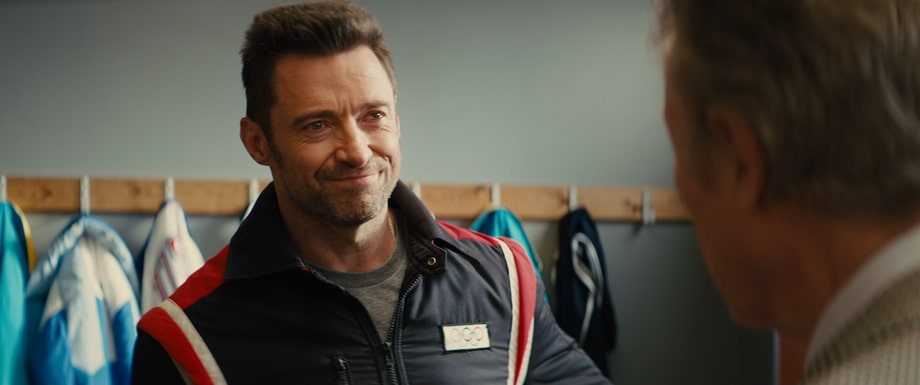
The key life changer in the story is Bronson Peary, depicted by Hugh Jackman. In less than two hours of watch time, he covers the journey from a constantly half-drunk snow cleaner to a coach who himself attracts the attention of the Titans in the sport. While the character is fictional and inspired by several coaches who trained Edwards in the late 1980s, from the narration point of view, Peary serves as a litmus paper for Eddie’s ability to change people for good. After being initially skeptical and even bullied, Bronson is overwhelmed by Eddie’s inexhaustible persistence and energy, a desire to learn from him, wherever difficult it may be. At the beginning of the story, Peary is shown at the bottom of his life. A former rising star came nowhere other than cleaning snow at the ski jumping camp and starting his day with alcohol. The fact that many know about his past and missed opportunities only adds oil to the flame of humiliation and self-pity, which he tries to hide behind rudeness and a flask.



A meeting with Eddie Edwards touches on the long-ago suppressed feeling of self-respect and a love for ski sports. It is not an exaggeration to say that Edwards gives Peary a purpose, a meaning in his life after years of stagnation and self-destruction. It is not only about coaching, which lies on the surface of a journey to change for this character. It is about working with an underdog, a loser who loves to prove to people they are wrong about him. Bronson Peary still has something to say in this life and also proves to others, especially his old coach Warren Sharp, that he is not a finished man. For a time, he imitates Sharp’s approach (particularly using a book) when teaching Edwards, yet later goes even further, not leaving Eddie alone with his problems as Warren Sharp once did. For the first time, he stands for the underdog Edwards in the bar scene, trying to stopthe bullying of Edwards by the Norwegians. It bears repeating that Peary’s improvised jump from a 90-meter ski ramp with a cigarette in his mouth was the starting point of his journey toward regaining self-respect.
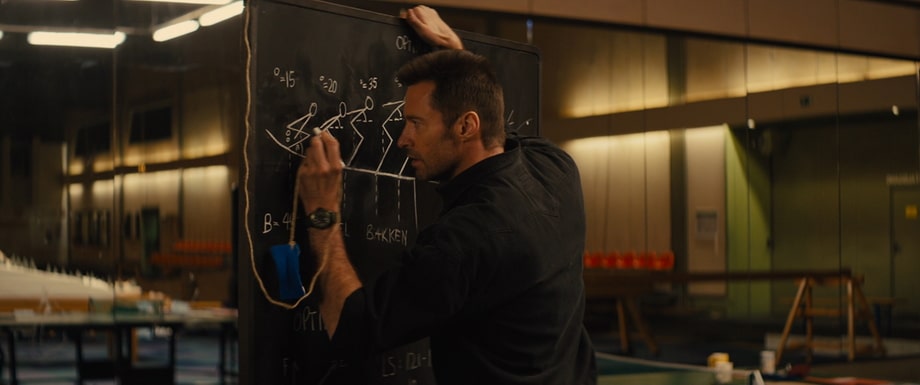

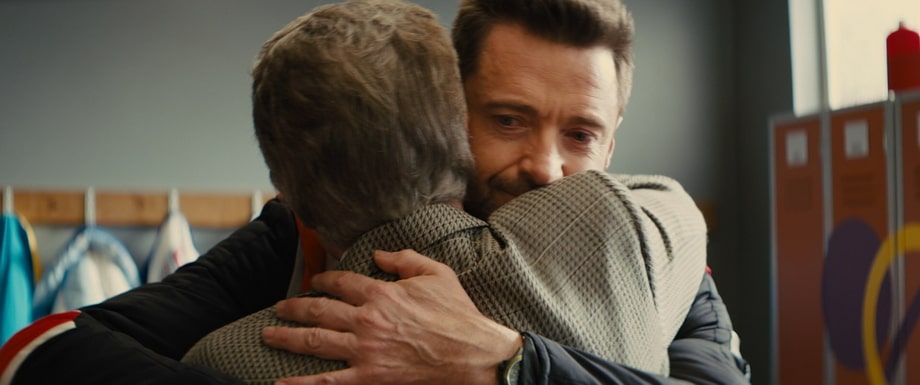
Unexpectedly for Peary, he starts to regard Eddie with respect for his determination, inexhaustible energy, dealing with failures and criticism, and readiness to make mistakes. With all this, Bronson reduces his intake of alcohol and finally goes on the water wagon. There is a little semi-comic metaphor with his jacket. In the late scenes, he finally puts on a warm jacket, thus symbolizing his rejection of hard liquor, and even shares a glass of milk with Eddie. Before the 1988 Olympics, Bronson Peary voiced his plans to teach Eddie for another four years—a great achievement in time management for yesterday’s loser. His metaphoric journey to the land of self-recognition comes to its peak while encountering Warren Sharp, also a fictional character. The two coaches have very different backgrounds and sports achievements, yet Sharp shows his respect to both Eddie and Bronson. Warren Sharp is another unobvious example of just how Edwards positively influences other people, making them admit their mistakes and misjudgments toward others. The elderly coach is himself inspired by Eddie’s respect and love for the sport, which he thought Peary lacked in the 1960s. After an intensive pause in the dressing room, Sharp says, ‘I was wrong about you, champion’ to Peary, which brings their relationship in the movie to a climax.
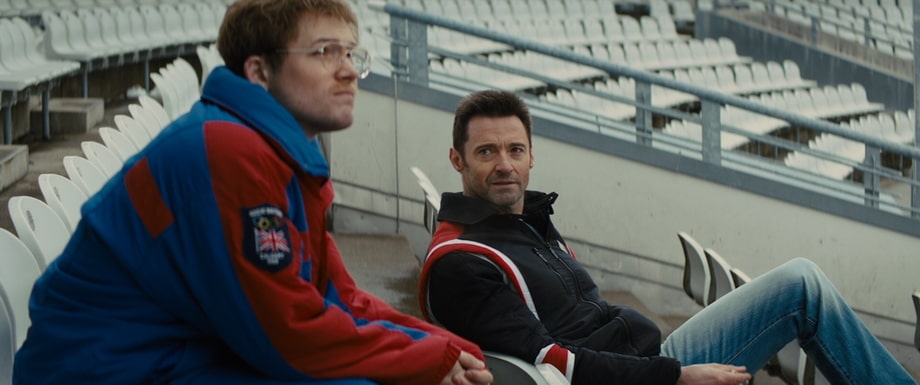

Another character who makes his long journey of changing his mindset is Eddie’s father, Terry. I have already mentioned his years of naysaying to his son, but as it turns out, he has always been devoted to Eddie and just lacked the courage to voice his pride. For years, he considered teaching Eddie a plastering business a good favor, being himself a kind of coach. When he used to warn about injuries, it was not a means to diminish Eddie’s abilities in sports, but a fear for his son and his future. Toward the end of the story, and particularly in the airport scene, Terry finally finds the courage to say important words to his son. As opposed to the ‘Forrest Gump’ story with no father at all and a supportive mother, Terry has a chance to support his son, next to Jannette. They both wear pullovers with ‘I am Eddie’s mom’ and ‘I am Eddie’s dad’ respectively. In a wider sense, after decades of being a mediocre plasterer, Terry feels self-respect as well, that he has such a son he can be proud of.
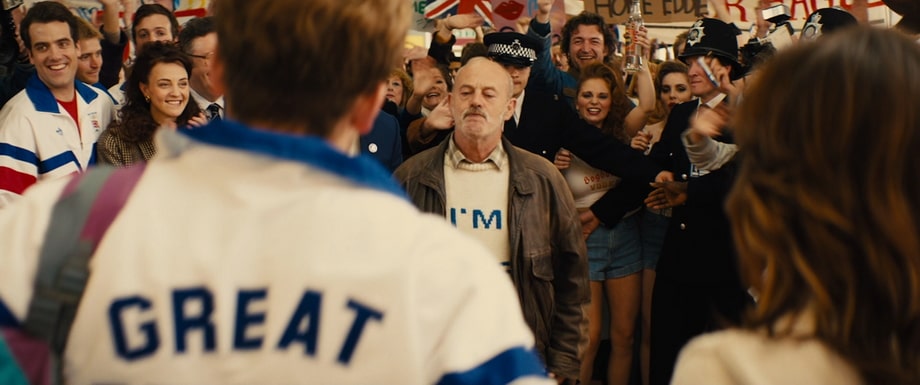

The temptation is to regard public recognition of Eddie Edwards during the Olympic games in the vein of his freaky image. The audience indeed craves a sensation, but people also find inspiration in the stories of the underdogs, who get their chance to make a statement. As it turns out, Eddie is a more desired speaker for the press than conventional sportsmen. The movie draws a vivid contrast to the Committee’s agenda to point out distinguished ‘Olympic materials’, which they used to think would attract public attention and admiration. In real life, it is difficult for millions of people to regard champions as role models, and in contrast to the genetically unique representatives, the audience treats Eddie as an example to be proud of.
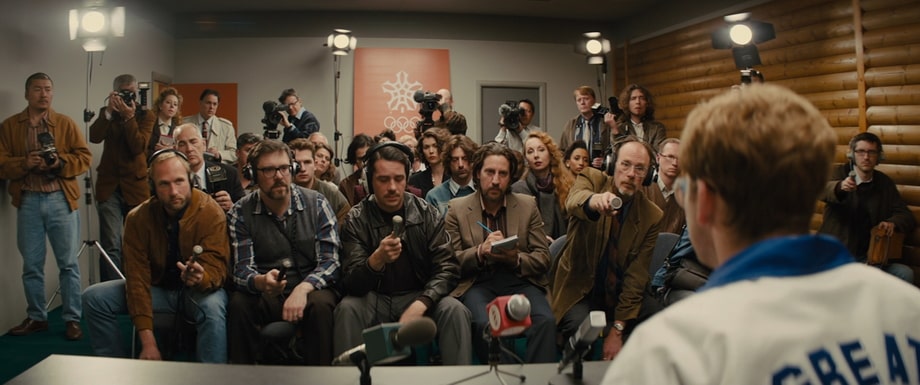

Edwards finally comes last in the row of established stars in the sport, yet even a poor performance (when compared to others) captures the hearts of millions, especially when Eddie openly admits his weak points and setbacks. Like many others in Great Britain and beyond, he is just an ‘average guy’ who managed to overcome a lack of fitness superiority with his persistence and a kind heart. Back in the airport at home, he is greeted by hundreds of people as a national hero, leaving, at least for some time, the polished image for investors, a white crow. Eddie may probably inspire thousands of boys around the UK to have their shot at the sport, which is generally seen as dominated by coddled athletes. Because of Eddie the Eagle, many discovered such a sports activity as ski jumping, particularly the British people, who had not had their ski jumper since the late 1920s. Eddie Edwards won no medals or prestige in the Olympic sport, but he won millions of hearts.
“I think I was exemplifying that whole Olympic spirit – a true amateur sportsman coming to a sporting event just because he loved his sport and loved doing it”
“The most important thing in the Olympic Games is not winning but taking part; the essential thing in life is not conquering but fighting well.”
Pierre de Coubertin, founder of the modern Olympics

Read me
Despite comedian nature, the story of Viktor Navorski can teach us kindness to others and an ability to take life as it is, with all its challenges and setbacks

Read me
Scent of a Woman analysis presents two memorable characters in movie history. Lieutenant Colonel Frank Slade and Charlie Simms gave us one of the most prominent monologues ever acted

Read me
Whether some find inspiration in this story and others are frightened by its villain character, Whiplash characters test the line between ambitions and making sacrifices for success
Read me
While most of the story takes place on the Mars surface and in the United States, The Martian filming locations are geographically limited to Budapest in Hungary

Read me
Blade II was one of the first Hollywood projects set its production in the city of Prague in the early 2000s and several locations are still accessible and slightly changed after two decades

Read me
Let’s deepen into the rhetoric of Ex Machina, one of the best SCI-FI movies of the recent years and try to find the answer what it is to be human