


 5,00
5,00
Read me
Jason Bourne Berlin locations
Bourne Supremacy took great advantage of Germany and particularly Berlin as the key filming location. Let’s study Jason Bourne Berlin locations
FILMING LOCATIONS

Both Carl Sagan’s book and Robert Zemeckis’ Contact movie are examples of captivating science-fiction and its key character, Ellie Arroway, is worth attention as one of the most recognized female protagonists in mass culture
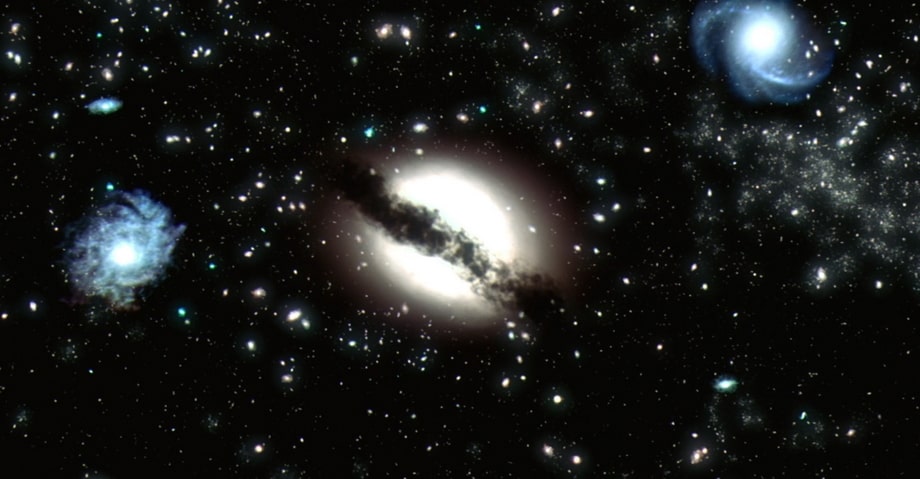
The opening three-minute sequence of Contact does something more than just boost our interest with CGI visualizations of space adjusted for the level of cinematic technology in 1997. The zooming-out odyssey starts from the orbit of the Earth and moves into the pattern of space until it finally ends in the eye of a child. If you didn’t rewind these three minutes to avoid boredom, you’ve just witnessed one of the most unusual character introductions in world cinema, which gives us a more profound piece of information about Eleanor ‘Ellie’ Ann Arroway than meets the eye. It’s true that half a century ago, millions of children worldwide, and in the US in the first instance, dreamed of becoming an astronaut, an aerospace engineer, or a data scientist. The point here is what percentage of those children did outgrow pure dreams and transform them into a profession or passion related to discovering space. How many of them carried this passion throughout their lives? Not many, and this is why I suggest delving deeper into the Contact movie explained.
“There are 4 hundred billion stars out there just in our galaxy alone. If only one out of a million of those had planets, and if just one out of a million of those had intelligent life, there would be literally millions of civilizations out there.”

When we first meet Ellie Arroway, she is just nine years old. In contrast to a natural desire to regard her enthusiasm as childish excitement, I would rather say that Ellie has been thinking outside the box since her early days. Her pattern of reality went beyond dolls and boys from the neighboring farm, and she was more interested in spending time at the radio transmitter than playing outside. When most of her classmates did not leave De Pere in Wisconsin (Ellie probably among them), with a population of only around 15,000 people at that time, a little Miss Arroway used to fill the map of the USA on the wall with markings. A telescope gave her a window to the world, which no other child saw as clearly as Ellie did, and she was wholeheartedly supported by her father. It is reasonable to say that Ellie was not a ‘mediocre’ child when she was nine years old and grew up into a creatively different woman. She became someone who would not be satisfied with conventional beliefs and would ask questions. Even though the movie leaves us with a time gap of almost two decades in Ellie’s life, it is safe to assume that her need for answers grew with Ellie.

Amid the story, when Ellie meets S.R. Hadden, the billionaire/genius/philanthropist shows her a file with a dry rundown of dates and events. Even though it does not reveal her inner system of values and motivation, Hadden came to the crucial point when he touched on Ellie’s loss of her father at the age of nine. When it comes to Ellie Arroway’s character analysis, there was no more important variable in her life than the death of Theodore Arroway (performed by David Morse). This secondary character has less than ten minutes in the movie, but defines the protagonist. Mr. Arroway not only took up the reins of bringing up his only daughter from day one, but his wife tragically passed away when she gave birth to Ellie. He became Alpha and Omega for this little girl: her space, her window into the world, her support, and motivation. She was not born an astrophysicist. Ellie was guided and inspired by her loving father. She did not know her mother, but Mr. Arroway was her everything.
On the surface, after the loss of her father, Ellie Arroway just kept going with her adorable passion for astronomy to commemorate his memory. Scratching beneath this plot’s surface, she blamed herself for his death all these years. What if she kept the pills on the ground floor of their house? Would that have saved her father? Not, but Ellie retains that guilt, pain, and shame throughout her life. To some extent, she failed to build long-standing intimate relations with other people, including her colleagues, because of that guilt. It is safe to assume that Ellie subconsciously feels incapable of taking care of and protecting people who are important to her. It’s essential to remember that Ellie’s mother died during childbirth, and such children often blame themselves for killing their mothers. Summing up these two fundamental losses, Ellie Arroway may feel guilt for killing or, at least, not being capable of saving both of her parents. This crucial double loss formed her personality in her adult age and forged her standoffishness for years—a kind of stranger in this world. On the surface, Ellie rose to be a confident and bright woman, but inside, she has always felt loneliness and cultivated it herself.


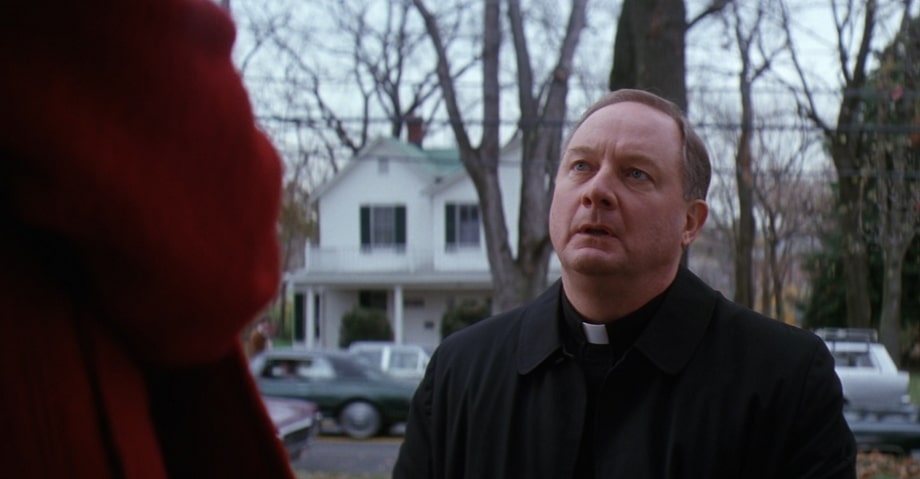
Another important issue closely related to the death of her father is Ellie’s disengagement with the concept of God and faith. It is reasonable to assume that Mr. Arroway draws his distance with religion after the loss of his beloved wife, and the movie does not give us a clue that he ingrained anything related to it in her only daughter. Arroway Senior taught Ellie to find answers on maps, in books, and tables of figures, in the lens of the telescope, and communicate with other people, rather than waiting for a blessing. When he died, Ellie drew an even more solid wall between herself and the concept of God. When the priest approached the girl to try to comfort her with his own belief about the need to accept ‘God’s will’, Ellie rejected that idea in her adult life. She turned the idea of not knowing the reason why things happen upside down and devoted her whole life to finding out the answers, the facts, and the evidence for everything in this world. When she becomes a bright scientist and astrophysicist, Ellie Arroway forms a different kind of faith in her strength and the laws of science rather than in God.
“Ellie, I know it’s hard to understand this now but we aren’t always meant to know the reasons why things happen the way they do. Sometimes we just have to accept it, as God’s will.”

We find out that the protagonist character was the brightest student and, more importantly, she preferred a practical experience in the jungles of Puerto Rico rather than being an admirable lecturer in university and cabinet work. In this vein, Ellie followed the steps of path-breakers of this world, the adventurers, who are courageous and resolute, enthusiastic about discoveries regardless of the challenges such a path can bring. In the mostly man-made world of science and particularly astrophysicists, she is known among her colleagues as a brilliant scientist. In a wider sense, the character of Ellie Arroway from Contact is universal since she uses her intellect rather than her physical abilities. Jodie Foster’s character seems fanatical and completely dedicated to her work, and it is precisely such people who move science and our civilization forward, not by minor steps but by huge leaps. Such dedication and hyperfixation on the work make her incapable of building intimate personal relations with people, apart from her loss of her parents, which I analyzed above. It’s safe to assume that Palmer Joss was not her only one-night adventure in the sense that the next morning, Ellie found a pretext to leave a man by shielding her loneliness with work. It is a kind of loneliness when a person needs only occasional relationships and spends most of her life in the privacy of her mind. She spends more time alone in the field with telescopes than with people, and in the second half of the story, Ellie feels no remorse about the idea of leaving the Earth for half a century. She chases life outside the Solar system while feeling herself a loner in our world.


Ellie’s relationship with her former mentor, David Drumlin, reveals her years-long struggle against prejudice and other people’s vision of her life. He regarded her as his brightest student who, in Drumlin’s worldview, went the wrong way. In many ways, being eccentric, being a woman among scientists, and being brilliant took Ellie enormous efforts to live her truth. When Arroway is confronted by Drumlin based on her devotion to finding new life under the SETI program, she says, ‘So what? It’s my life.’ After the financing was halted for Arecibo, Ellie showed another of her virtues: a readiness to make sacrifices for the sake of what she believes. She not only obeyed the idea of returning to the university as a paperwork scientist. Ellie spent more than a year searching for a new investor to proceed with her vision and experienced many setbacks and rejections in large meeting rooms from people in suits and ties. On her last chance to find financing at the building of S.R. Hadden, Ellie explodes with probably the most powerful monologue of the whole movie. She asks her examiners to have a tiny bit of vision, while she has a big one, and an eccentric billionaire Hadden puts a high esteem on Ellie and even becomes what Drumlin failed to be: a kind of father figure.
Look, all I’m asking is for you to just have the tiniest bit of vision. You know, to just sit back for one minute and look at the big picture. To take a chance on something that just might end up being the most profoundly impactful moment for humanity, for the history… of history.”.

As the story goes on, Ellie has to experience the situation when other people, David Drumlin in the first instance, try to erode her discovery. As the conventional wisdom says, ‘Victory has a thousand fathers, but defeat is an orphan’. While for many years the SETI program (Search for Extraterrestrial Intelligence) was more like science fiction, with no proof and a contemptuous attitude from talentless technocrats such as Drumlin, Arroway’s finding arose competition. She has been criticized, ridiculed, and ostracized for all these years, and now people who vetoed financing have formed an orderly queue to present their importance and expertise. Unfortunately, with all her fervent zeal for science and work, Ellie lacks toughness and insolence in fighting back against those parasites. It is not because she is a woman. Ellie is just a better person among all those collective Drumlins, and she has always been. She is honest with herself and other people, and she still believes in the good virtues of other people and in making our world a better place. She believes that scientists should be driven by their professional responsibility rather than by political ambitions and love of fame in the pursuit of social climbing.


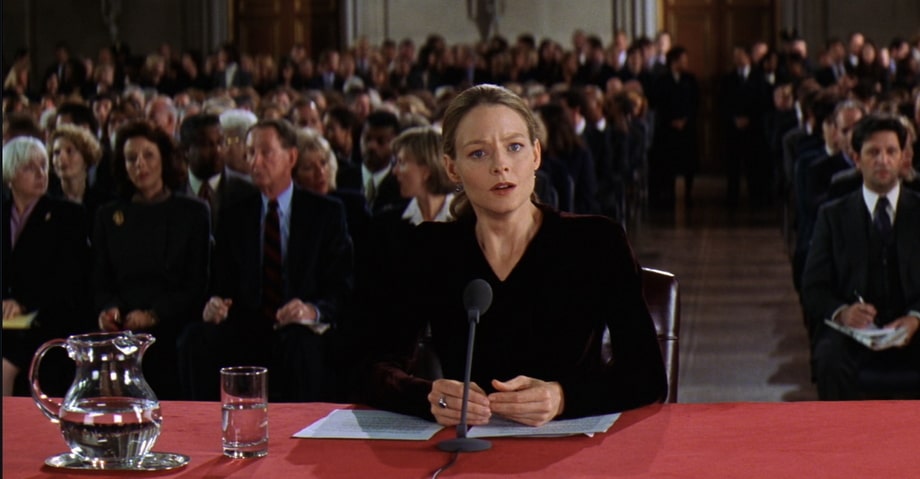
As I have mentioned above, Ellie’s rationalization of faith resulted in her estrangement from the concept of God when she lost her father at the age of nine and dug into her system of belief during years of scientific work. When, during public hearings regarding her potential participation in the program of space travel, Ellie is confronted with the question about being a spiritual person, she tells the truth. In contrast to David Drumlin, a master of saying what other people want to hear, Ellie speaks her truth. She does not hide, mask, or distort her system of values and stays honest with herself and other people. Ellie says that she does not understand the relevance of the question, and her candidacy is being rejected. Leaving the issue of faith, it was Ellie who made this discovery; she is the most competent specialist in this sphere; she is courageous and diligent, but she is not a part of 95% of the society that believes in some mighty force. In this vein, the choice of the pilot looks more like political elections aimed at gaining as many votes as possible rather than a search for the most competent candidate. Ellie Arroway has always been unique, an outcast, and not a part of even 5%, but one in a billion, and concerning her achievements, she is the one on the planet. Society preferred David Drumlin, who knew how to pose for the camera, what to say, whose hands he should shake, and what ‘weak’ points of his opponents to use to his advantage.

Even though this mission was Elli’s deepest desire and maybe the most important adventure in human history (like Ellie once said: In the history of history), she remained herself and preferred truth to fulfill her aspiration. When the second attempt became possible thanks to S.R. Hadden and Ellie Arroway finally making her journey across space and time, this was a spiritual experience, in the words of Palmer Joss. Similar to the way that people who believe in God can’t prove his existence, now Ellie has no proof regarding her life-changing journey, the most important in the history of our society. Now, people who have criticized Arroway for the lack of faith lack faith in her words. While trying to explain what she has experienced, Ellie operates in terms of lived experience and faith, like a spiritual person. In other words, an atheist scientist, when describing an experience that has no evidence, argues as a deeply religious person. She lived through this experience in her feelings. The same happens with people in faith: they have an effect from what they have experienced, and it does not matter how it appeared. Ellie experienced such a profound experience that it has changed her perception of the world and people around her, first of all, Palmer Joss. He is a man of faith, and Joss says that he believes Ellie, and this shows the audience that not all in this world can be backed by facts and scientific formulas.


Another aspect that is worth attention is Ellie’s courage to take part in the mysterious project. While initially she is driven by scientific enthusiasm, a craving for something new, and pursuing her beliefs, the whole idea looks at least dangerous. Ellie not only believes that the message from Vega does bear existential danger to Earth, but she also feels that the machine itself is completely safe for its passengers, even though many other scientists voice doubts. It is important to remember that the first erection was destroyed by radicals, and David Drumlin and dozens of people lost their lives in the explosion and under the ruins. There was always a chance that her second attempt might become a target for another attack or sabotage. Quite the reverse: Mrs. Arroway was not only not afraid to use another chance but was ready to take protective measures like a pilot seat out of the cabin. In a wider sense, Ellie entrusts her life to the unknown technology, a dubious person of Hadden, and a society that has not supported her before. She feels the importance of the moment to the extent that she is ready to sacrifice her life if needed and even to lose people she knows after the long trip to Vega and back, which may take half a century for all people left on Earth.


Beyond all doubt, Eleanor ‘Ellie’ Ann Arroway, created by Carl Sagan, adapted for the screen by Robert Zemeckis, and depicted by Jodie Foster, is a new kind of female character who conquers our hearts and minds not by physical force or physical attraction, manipulation, but with the help of her intelligence, honesty, charm, professionalism, and courage. The movie gave the image of Ellie’s feminine strength, a kind of modern emancipation. At the same time, the main character remains an ordinary person, so in need of support, approval of actions, and judgments. She may argue with senior government officials, and she may be shy at the prospect of going to a ball in a new dress. Ellie can ignore the attention of a man she cares about, and then needs his affection so much. She is capable of standing before the court of public opinion and crying under other circumstances. At the end of the story, Ellie Arroway comes back to the beginning: she spends her life next to radar telescopes in search of new life, and, which is more importantly, she invests her precious time and knowledge in teaching a new generation of people she now has faith in.

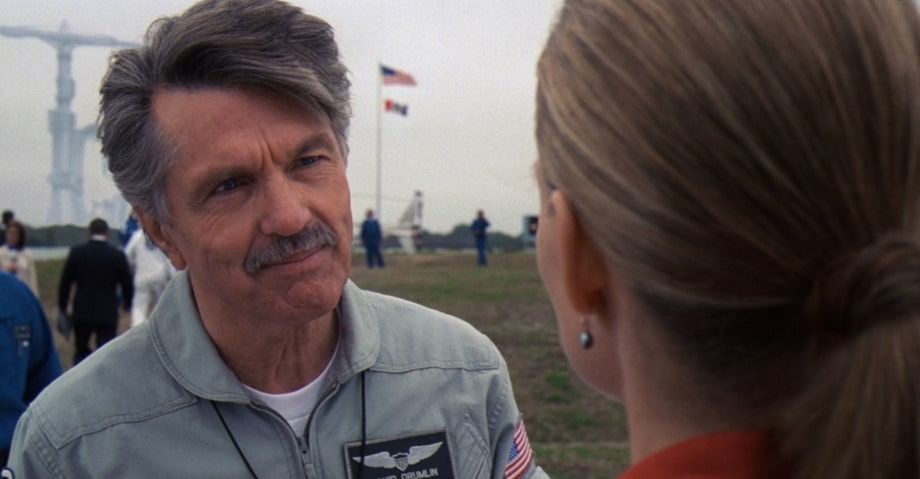
Probably when Ellie Arroway appealed to potential investors for thirteen months and asked them to see the big picture, the shadow of her former mentor, David Drumlin, stuck around her disappointment. I have already used the concept of ‘collective Drumlins’ when referring to bureaucrats without imagination, but it is time to look at one particular man more closely. In contrast to Sagan’s novel, we know not much about Mr. Drumlin’s background, and the movie does a good job of unlocking this character, always in contrast to the protagonist. In simple terms, David Drumlin is Ellie’s nemesis, the key antagonist of the story, who leaves behind the ever-suspicious National Security Advisor Michael Kitz (James Woods) and even the episodic character of the suicide bomber played by Jake Busey. The story never leaves Tom Skerritt’s character without Ellie to raise our natural antagonism to the character. It is reasonable to say that among the obstacles in the main character’s way, David Drumlin compelled Ellie Arroway in the most challenging way. No gap in technologies, and not the amount of light-years stands in the light of progress to the same extent as the mix of narrow-mindedness, personal ambitions, and sophistication.

Doctor David Drumlin is not a rock star in the world of science, but he is the force everyone has to consider. We meet the character for the first time in the Arecibo opening sequence, and he is shown as the man who makes the decisions. His very first words in the movie are: ‘Now I remember why I took the desk job’. In contrast to utilitarian scientists in Arecibo, Drumlin is the only person in a suit. He came here to make decisions on the world and the fate of other people, who devoted their lives to field studies and moving humanity forward. David Drumlin is depicted as a classical technocrat, a desk job man who appends signatures on checks. No matter how talented you are or how important your study is, you have to get on the right side of people such as Drumlin. His key problem is not his lack of a vision regarding the SETI (Search for Extraterrestrial Intelligence), but his disregard for other people, his self-interest, and being more of a politician than a scientist. Rephrasing the words from the book, science is too important to leave it only to scientists; in our world, they would be commanded by people like Drumlin.
On the surface, Drumlin has a biased attitude toward Ellie Arroway, either because she is more brilliant or because she is a woman, but in fact, David Drumlin sees no one aspect of himself. While other people at the desks in suits are a part of his life environment he cannot ignore, those eccentric scientists with radars in the jungles and deserts are a headache for Drumlin. When making a profound decision to stop financing the SETI program in Arecibo, David messed up his disregard for practicing scientists in Hawaiian shorts with the issue. In his worldview, astrophysicists like Ellie Arroway waste their lives in these jungles rather than becoming reputable desk workers just like Drumlin. He simply sees the different colors, and that’s why spending millions of dollars in the search for life beyond Earth seems impractical to him. Impracticable not because this program serves no value to science, but because people who give money want to see the result and profit. During an improvised party in Arecibo, Drumlin speaks more like a politician who is concerned with votes and money for the election campaign rather than a scientist and a visionary.
Science must first be accountable to the people who are paying for it, the taxpayers. We need to stop wasting money on pie-in-the-sky abstractions and start spending it on practical measurable ways to improve the lives of the people who are footing the bills.
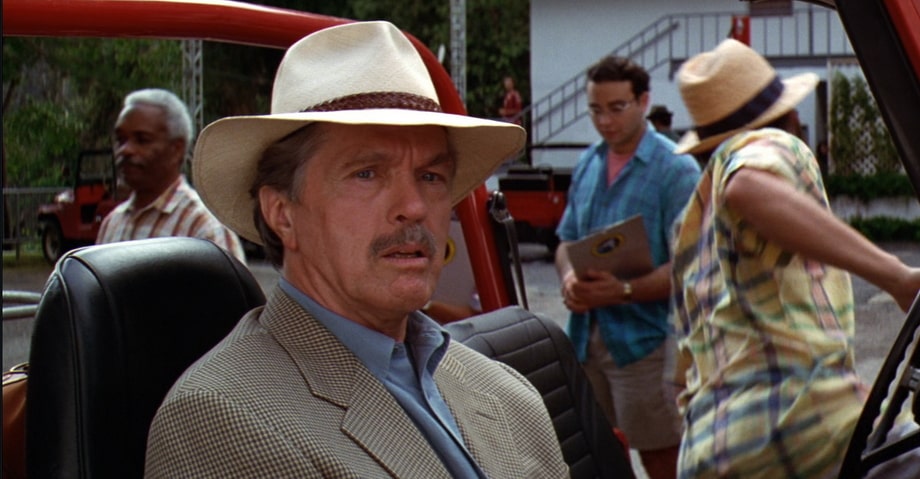
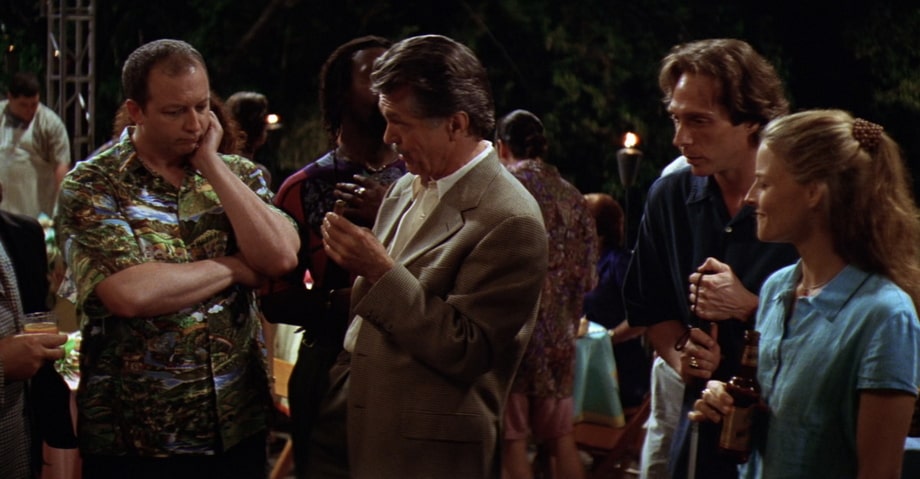
If you take David Drumlin from his point of view, the story shows his adaptive behavior. He was skeptical toward SETI because this field of study had no perspectives to take advantage of in his climb toward the governmental stairs in Washington. From the moment when other scientists, such as Ellie Arroway, made the greatest discovery of our age on a planetary scale, David Drumlin tried to show himself the most fervent advocate of this research. The man who broke the lives of many of his colleagues, who rejected financing and spoke about wasting time and money, now took credit as a man in charge of science. Drumlin knows how the system works and how he can take advantage of the situation regardless of the feelings and credentials of other people. For technocrats in Washington, scientists in shorts and t-shirts in the desert like Ellie Arroway are a bunch of weirdos and geeks, while David Drumlin is a go-to person who can handle them. More than that, David Drumlin uses the weakness, shyness, and integrity of other people to raise the stakes even more. From a scientific consultant to the chairman of the commission, and finally to the most discussed person on Earth as a potential first interstellar traveler. It is safe to assume that his ultimate goal was the post of US president. A skill to adapt yourself to the system often brings more profit than being talented or having an imagination.

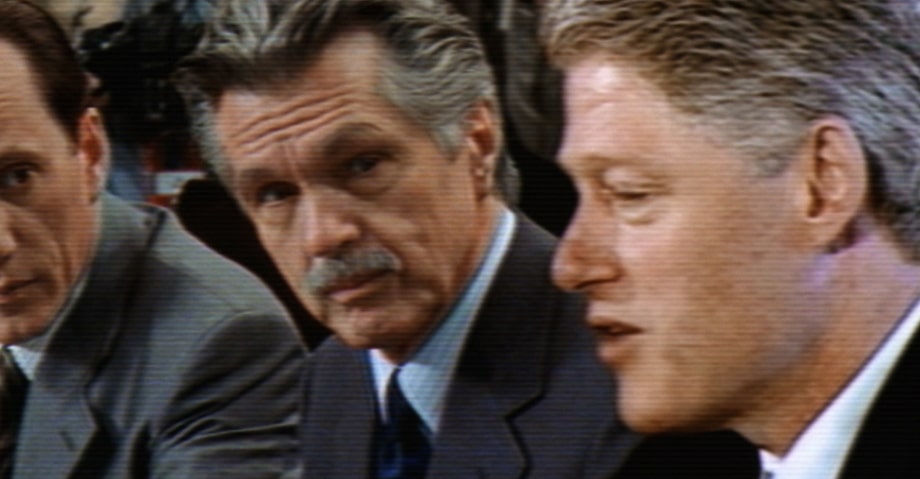
When it comes to the relations between David Drumlin and Ellie Arroway, the latter feels betrayed by her former mentor in many ways. He admits that Ellie is a brilliant scientist, the best among his former students, and he probably saw her following in his footsteps as the lecturer first and later as a profitable desk job person. He backed Ellie’s enthusiasm until she confronted his view on her future. People like Drumlin believe that they know better what other people should do with their lives, and anyone who rejects such ‘authoritative advice’ is just wasting his or her life. David Drumlin has always considered the Search for Extraterrestrial Intelligence as a professional suicide since the field does not offer immediate results and the fulfillment of bureaucratic ambitions for climbing the Washington, DC, ladder. He treats Ellie in the way we see, not because she is a woman in a man’s world, but because she disobeyed David’s guidance and rejected his patronship. His never-ending need to show his position is superior to Elli’s status lies on the surface of their relations in the movie. He interrupts her mid-sentence, takes her credential in the discovery, interferes in Ellie’s communication with other people, resigns the post of the chairman to take her place, shows himself a man of faith in contrast to Ellie’s fairness, and puts a spoke in her wheel on every stage until his final breath. The traumatic feature of their relationship lies in the fact that David Drumlin failed to become a father figure for Ellie Arroway, whom she needed so much after the death of her father.
“I know you must think this is all very unfair. Maybe that’s an understatement. What you don’t know is I agree. I wish the world was a place where fair was the bottom line, where the kind of idealism you showed at the hearing was rewarded, not taken advantage of. Unfortunately, we don’t live in that world.”
Ellie Arroway: “Funny, I’ve always believed that the world is what we make of it.”
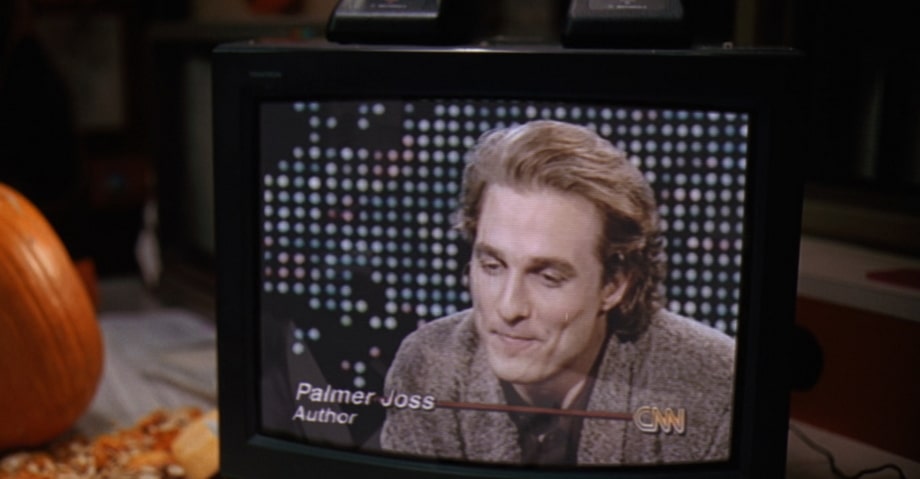
In contrast to his more fundamentalistic character in Carl Sagan’s novel, the cinematic version played by Matthew McConaughey is a more nuanced person. When applied to the story, Palmer Joss raises an obstacle for Ellie to become the pilot of the first machine, and he is her most devoted supporter toward the end, and simply speaking, the protagonist’s love interest. In the movie, we get only tiny pieces of his background story, like getting a Master’s degree in Divinity and then dropping out of the seminary for the sake of helping the churches in Third World countries. When Palmer and Ellie first met, he was taking notes, which would later, as we see, materialize into a globally recognized book. His character’s arc in ‘Contact’ starts with drinking a bottle of beer in the local pub near Arecibo, sympathizing with a young female scientist, and looking for an interview with David Drumlin. When the story leaps for a few years, Palmer Joss has made his way from the Puerto Rico cafe to the show of Larry King and the cabinets of the White House as a spiritual counselor of the President of the United States, a quotable author, and recognized theologian in his thirties.

The supporting efforts of the churches of Puerto Rico were not Joss’ primary reason to stay around the famous Arecibo Observatory, nor his idea to have a few words with the Head of the National Science Foundation. Palmer Joss is a highly educated person who openly speaks with scientists, including Ellie Arroway, in the words of science rather than religion. He doesn’t demonize astrology or scientific methods, and it’s safe to assume that Joss is himself fascinated with both the ‘El Radar’ and the SETI program. In his worldview, science should serve the purpose of finding truth, and the program of the Search for Extraterrestrial Intelligence may one day give humanity evidence of God’s existence. More than all, he is fascinated with Ellie: an honest, admirable, dedicated young scientist who tries to find her answers in the jungles of the Third World just like Palmer Joss does.
Their relationship arc is not trivial, and where many of us find irreconcilable contradictions, these two turn to each other. The point here is that Palmer Joss has always been an outcast and an underdog, just like Ellie. He has always looked beyond the conventional pearls of wisdom, the dogma of religion or science, and social barriers. He dropped out of a prospective future in a religious institution to fulfill his dream of writing a book, making journeys, and helping other people. We hear nothing about his parents, and he may have lost them at a young age, just like Ellie. It is unimaginable to visualize Palmer Joss with an underwear model, and Ellie Arroway is, without doubt, his type. From the very beginning, Palmer puts the highest esteem on her, even though Ellie wears practical clothes like shorts and t-shirts and drinks beer from the bottle. Joss’s approach to this world is unconventional, and Ellie Arroway, a scientist from the SETI program, is a very unconventional person to have an affection with.
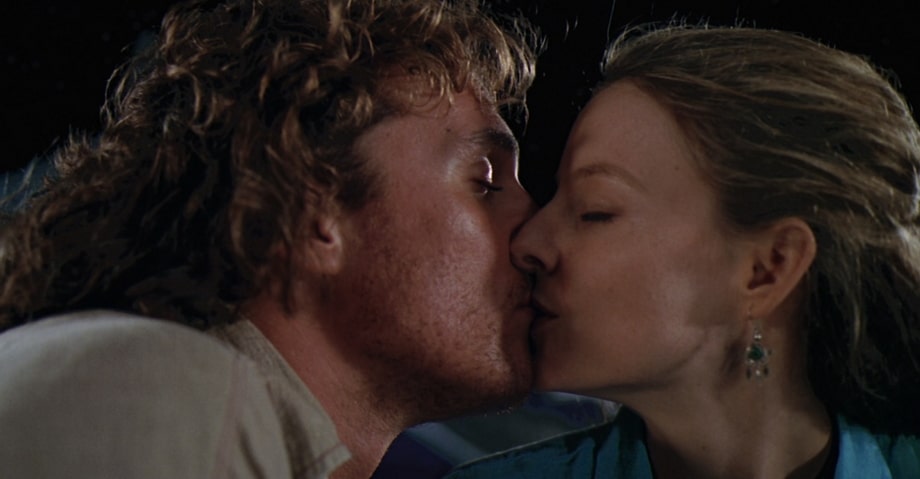

Palmer Joss’ rejection of celibacy is not as important as his warm attitude to Ellie against all odds. We should keep in mind that it was Ellie who left him and who never called Palmer, though he left his number with the words ‘Please call’. A few years later, Palmer made light of this fact, and he never blamed Ellie for her lack of desire to continue their relations. Ellie Arroway spent the next few years pursuing her existential dream of exploring the pattern of space, while Palmer Joss also used this time to become a recognized person. In a wider sense, they both needed this time to become more mature persons to reinitiate their relations. The movie leaves behind their intimate relations with other people in this period, and this is of no importance to the story. They still feel warmth towards each other despite only spending one night together years ago. I would say that Palmer Joss regards Ellie as a gift in a spiritual sense, a miracle in his life, and it is clear why he tried to evade her on the journey. Joss asked that question during the hearing, both because Ellie was not a spiritual person and because he feared so much to lose her. As the story shows, he saved her life.


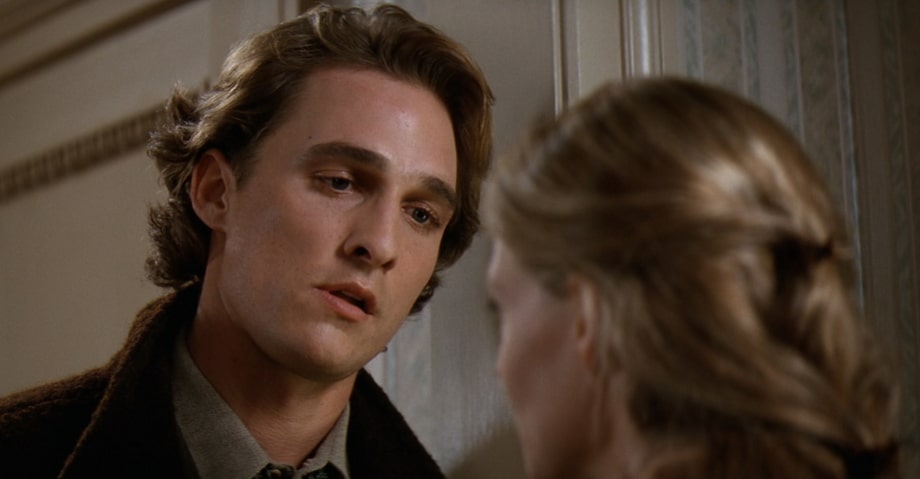
Palmer Joss has always had a vision and an ability to see the big picture, as Ellie Arroway demanded from people who have not supported her in her SETI aspirations. He is a big believer in the Search for Extraterrestrial Intelligence and, more importantly, he is the most devoted believer in Ellie Arroway. Being a spiritual counselor and the only non-politician/military/scientist advisor of the US president, Joss backed the idea of building the machine. His most crucial role in the story comes after Ellie’s journey to Vega when people like Michael Kitz challenged her words and experience. In the situation when Ellie had no factual scientific proof of her experience, only a man of faith could believe her. He believed in Ellie’s pursuit of truth, and he loved her. Despite their contradictions in believing in God, they took two different ways to come closer: through science and faith. In a wider sense, from now on, Ellie Arroway would rely more on faith and experience, and Palmer would take science more seriously and balance. The two worlds have clashed in these characters and come even closer to each other. Not knowing all facts and our future makes us believe, search for the truth, and feel.


Read me
Bourne Supremacy took great advantage of Germany and particularly Berlin as the key filming location. Let’s study Jason Bourne Berlin locations

Read me
An incredibly detailed cinematic guide across Angels and Demons filming locations in Rome, based on a book of the same name by Dan Brown

Read me
Arnold Schwarzenegger’s Total Recall autobiography book points out delicate issues of Arnold’s personal life and can be characterized as one of the best memoirs of our times
Read me
The story of James Braddock from ‘Cinderella Man’ lives beyond the boxing topic or the Great Depression setting and rises universal themes of love, family, and friendship

Read me
The fourth movie of the Mission Impossible series, Ghost Protocol, comes back to Prague fourteen years after the first film and gives Ethan Hunt more space for action.

Read me
Character analysis of one of the brilliant pieces of modern philosophical dramas in cinematography: American History X