


 5,00
5,00
Read me
Jason Bourne in Prague
The filming crew of The Bourne Identity successfully turned the city of Prague into the cinematic Zurich, Switzerland, and the French heartlands. Jason Bourne Prague locations scene-by-scene
FILMING LOCATIONS

In December 2019 I walked 30 kilometers across the Tabernas desert near Almeria in southern Spain to find all key Dollars trilogy filming locations for ‘A Fistful of Dollars’, ‘A few dollars more’, and ‘The Good, The Bad, The Ugly’.
Sergio Leone passed away more than three decades ago. Yet, his acclaimed movies and iconic status have shaped not only the way movies about deserts and guns look, but in many ways reconstituted our perception of the big movie made in Europe. Despite common belief, Leone was neither the creator of the Italian ‘Spaghetti Westerns’ nor the most profitable director, but four of his most recognized works were more impactful than his contemporaries. Since the mid-1960s, the name Sergio Leone in the opening credits has become a seal of excellence, even if they did not seem like this at the time. He made his name among the generation of young Italian directors who stepped out of the shadow of big-budget Hollywood movies. He made his name in Europe by working on new revisions of historical stories such as Sign of the Gladiator (1958), The Last Days of Pompeii (1959), and The Colossus of Rhodes (1961). In the 1960s, Leone became a star with his three now iconic Dollars Trilogy Westerns with Clint Eastwood and one with Charles Bronson. All four were mainly filmed in Spain, with the greater proportion of sets and locations once found in the Southern Province of Almeria, making Dollars Trilogy filming locations accessible nowadays.
Sergio Leone finished his screenplay named ‘The Magnificent Stranger’ as early as January 1964 and got acquainted with two experienced producers: Arrigo Colombo and his partner Giorgio Papi. Lone suggested only one-third of the budget he anticipated: around 40 million lire, and the other part, around 80 million, was assigned for another Western called ‘Bullets don’t argue’. The two movies were to be shot almost simultaneously in Spain, sometimes in the same locations, members of the filming crews, and costumes. Initially, Leone dreamed of filming in the United States on the actual locations, but the economic reasons and strict budget left no alternative but Europe, a cheaper substitute for Hollywood production. The other reason was the wilderness of the Spanish rural provinces, which looked like it was the 1860s in the United States, while the American heartlands had too many highways, farmhouses, and power lines already. Later on, during the work on ‘Once Upon a Time in the West,’ Leone would once more appreciate working with his proven Italian crew rather than with American filmmakers.
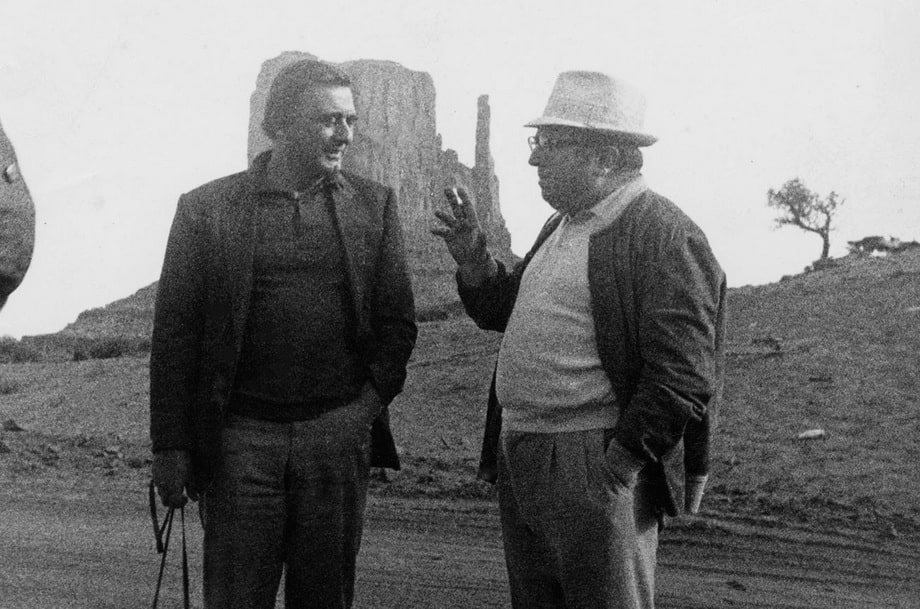
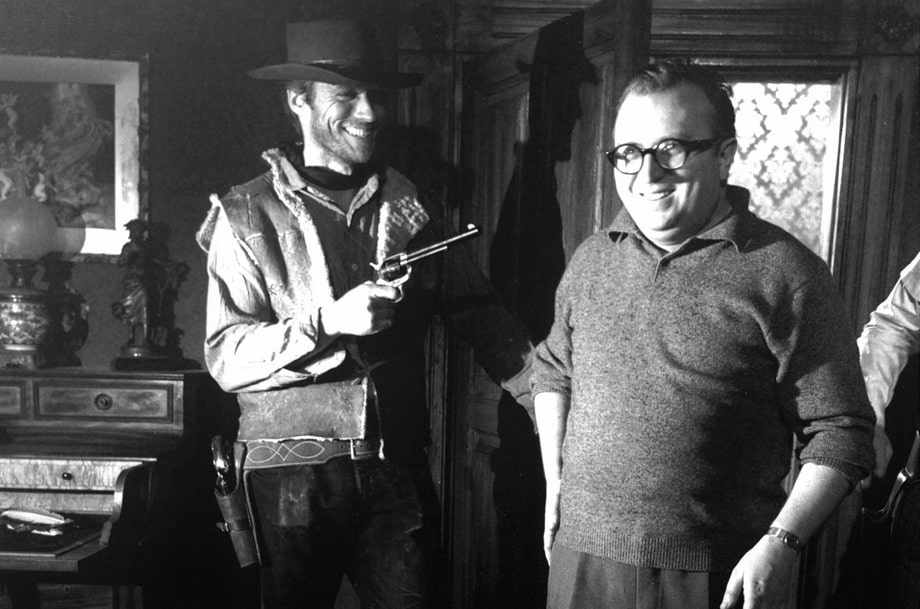
Sergio Leone was pleased to accept the chosen locations, among which was the Tabernas desert, a piece of the wilderness he needed for his Western story. The director was not a newcomer here, as five years before he worked in the area during the production of ‘The Last Days of Pompeii’ (1959). The Spanish and British (David Lean’s Lawrence of Arabia was filmed there in the spring of 1962) were the first to take advantage of the rural land around the city of Almeria in the deep south of Spain on the threshold of the 1950s and 1960s, and the Americans would follow them later. Shooting ‘A Fistful of Dollars’ (as well as ‘Bullets don’t argue’) around Almeria was a challenging task. While not having telegraph and electricity poles on the horizon, there was poor infrastructure too, with no airport in this part of Spain, and the movie crew meant a long train ride from Madrid to Almeria, at that time the least developed region in the country. It is interesting to know that Leone himself spent little time in Tabernas, leaving several scenes shot here to the second unit while focusing on shooting the scenes with the Stranger (Clint Eastwood).
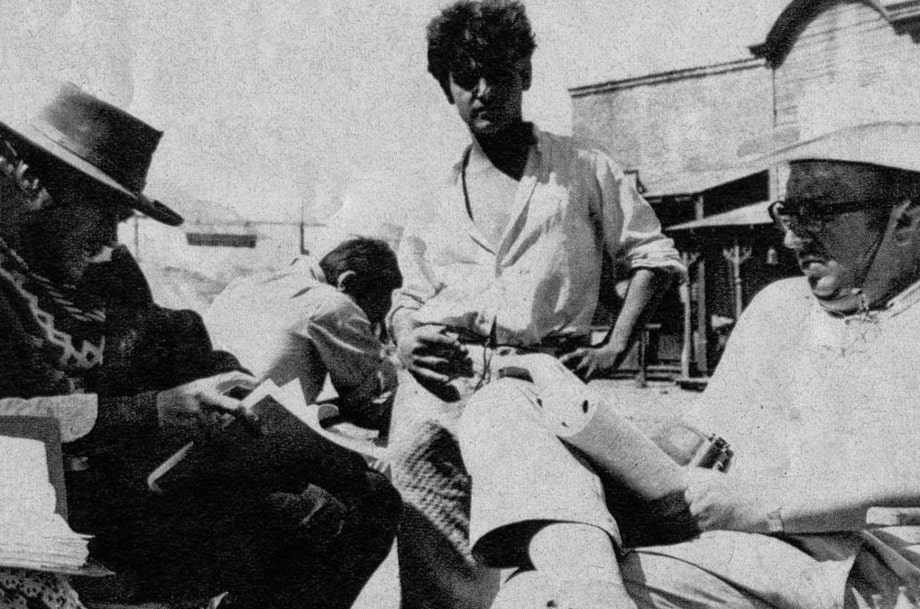
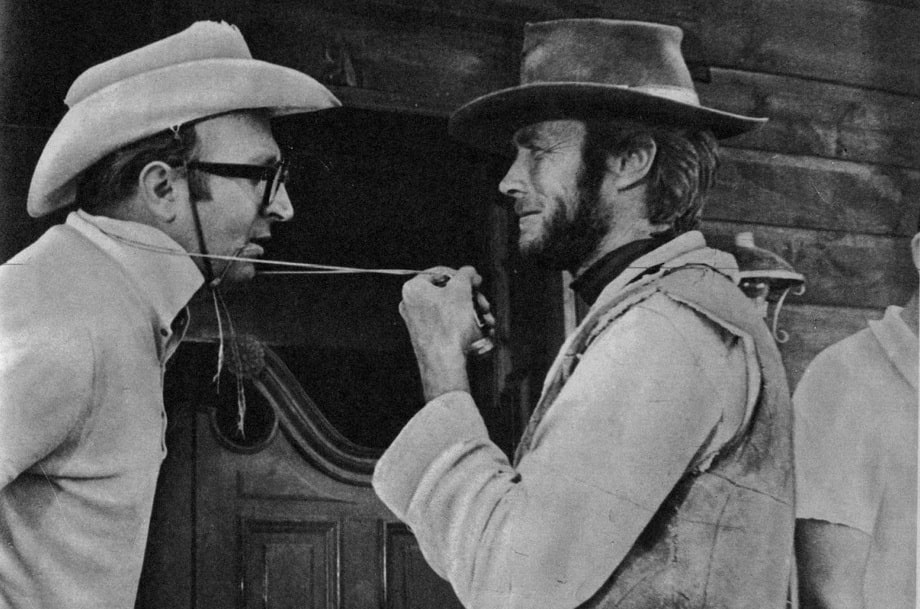
During shooting in Spain, Leone became obsessed with the details, having a poor balance between excitement and fury when the low budget of the production became a problem. When he did not find an appropriate solitary tree in this part of the Tabernas desert for a scene with Eastwood entering San Miguel, Leone found the one in another location. He brought technicians and they convinced the local elderly Andalucian farmer to take the tree down and take it with them to the filming set. Sergio Leone would spend much more time in the Province of Almeria in the following years while shooting ‘A Few Dollars More’, ‘The Good, The Bad, and the Ugly’ and ‘Once Upon a Time in the West’, taking full advantage of the photogenic area in the Tabernas desert for the ‘Wild West’ sequences.
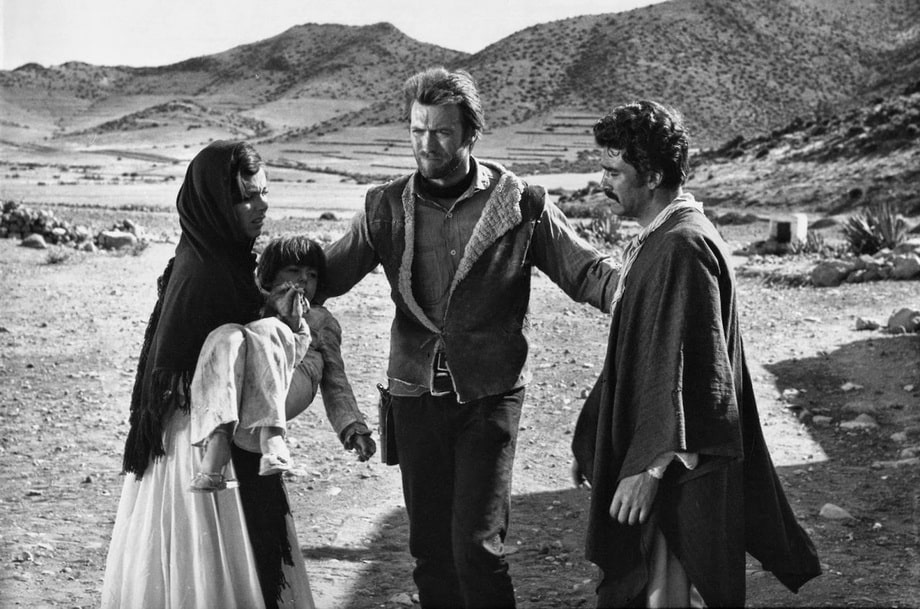
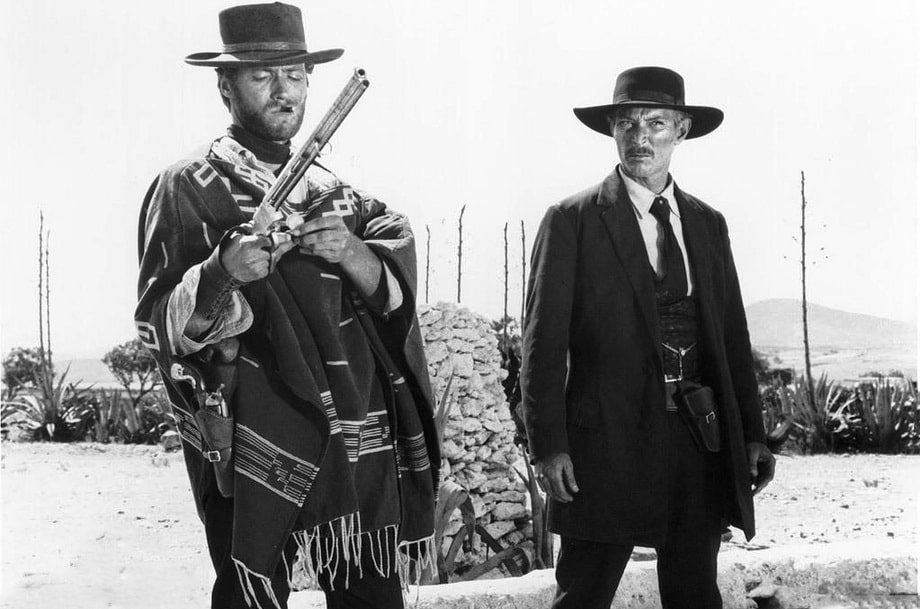
The Fistful of Dollars became an evident commercial success in Italy and stayed on screens unnaturally long for the B-rate Western movie. The critical reviews in the press, as well as strong encouragement from his colleagues and friend,s resulted in Sergio Leone’s desire to create a second movie. Leone spent months working on a script that would finally focus on two bounty hunters, the younger one meant to be played by Clint Eastwood. The actor was proud of the industry’s reaction to ‘Fistful of Dollars’ and was enthusiastic to work with Leone once again for a $50,000 check, three times higher than his fee for the first movie. The eventual box office success of A Fistful of Dollars made it possible for Leone to gain a budget of $600,000, three times higher than the first movie had. While such an increase sounds impressive, the director had all the means to spend this sum for good: the second in a row Italian Western was a larger and more ambitious undertaking, in the first place because Leone wanted to build an entire Western town in the Spanish desert.
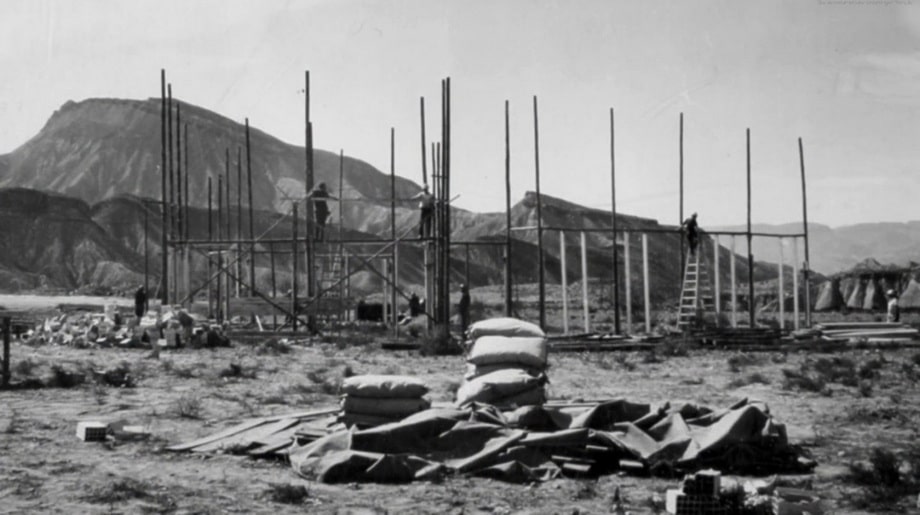
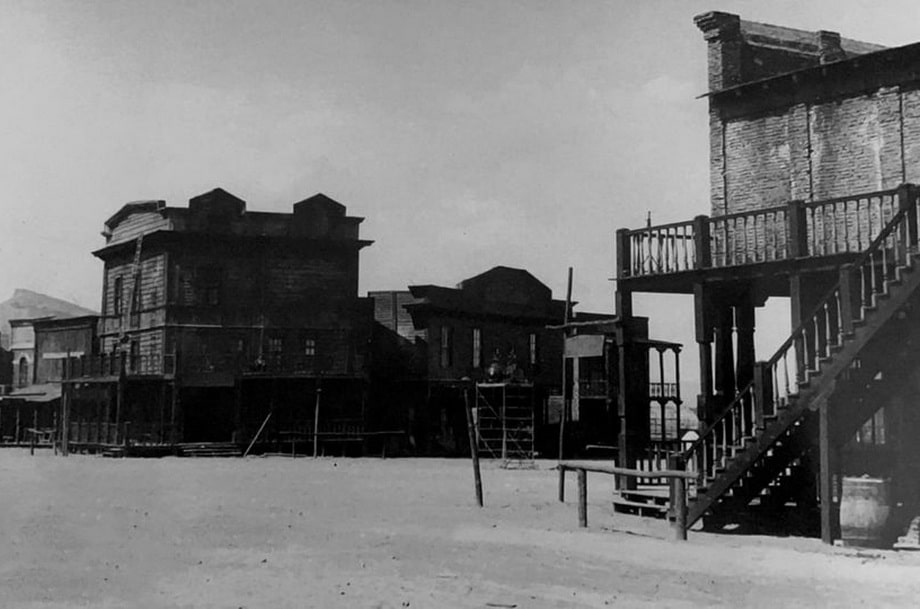
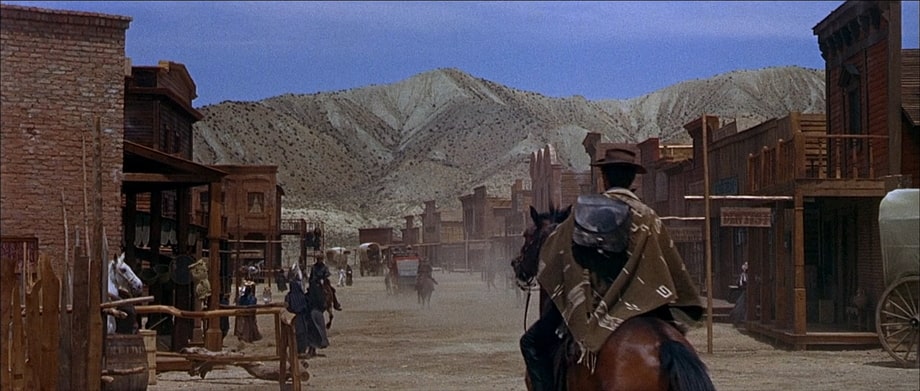
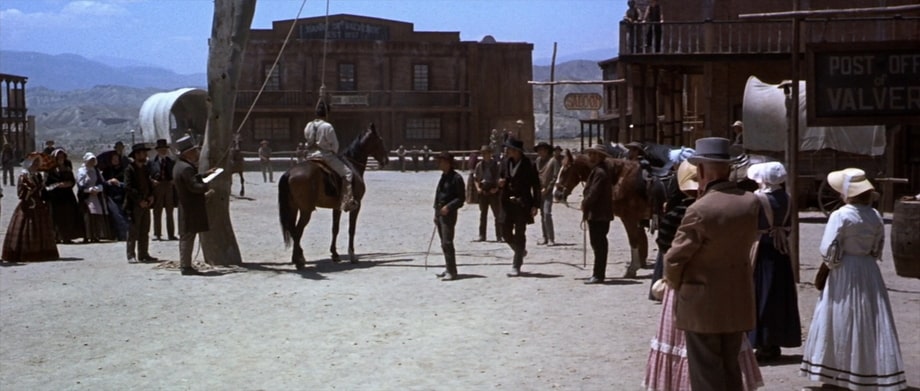
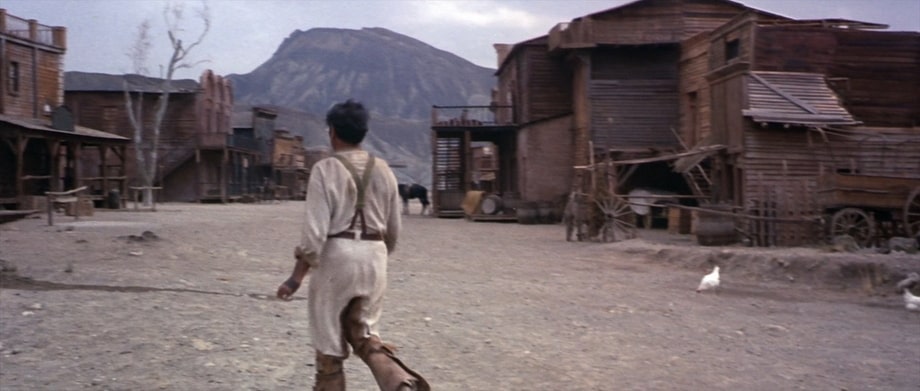
The man responsible for building up a frontier-like town was Carlo Simi, the art director for the ‘Fistful of Dollars’. Back in 1964, Simi impressed Leone to the extent that the director allowed him to create the sets, costumes, and props. Carlo Simi was not a stranger to the architectural style of the ‘Wild West era and was enthusiastic to work with Leone, another person with the same passion. More than that, with ‘A Fistful of Dollars,’ Simi proved his ability to create original sets with a restricted budget. While preparing For a Few Dollars More in 1965, the two spent hours watching through the pictorial catalogs of the era. The location for the anticipated Western town was not accidental, as Leone had come across the area called El Poblado del Fraile, after its owner, Alfredo Fraile, back in 1964 while scavenging locations for ‘A Fistful of Dollars.’ The site was 7 kilometers from the small town of Tabernas, itself 12 kilometers from Almeria in the heart of the desert, nowhere. Initially, the town was meant to be built outside Madrid, but the Almerian weather was more reliable. During the production process, leading actors and the top of the filming crew lived in the Grand Hotel in Almeria, which would accommodate the filmmakers of ‘Indiana Jones and the Last Crusade’ twenty-three years later.
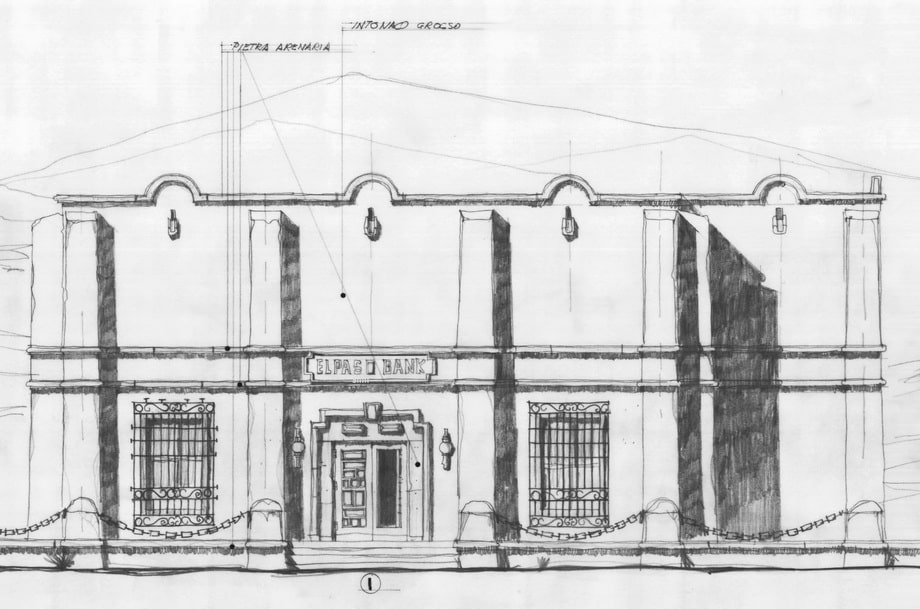
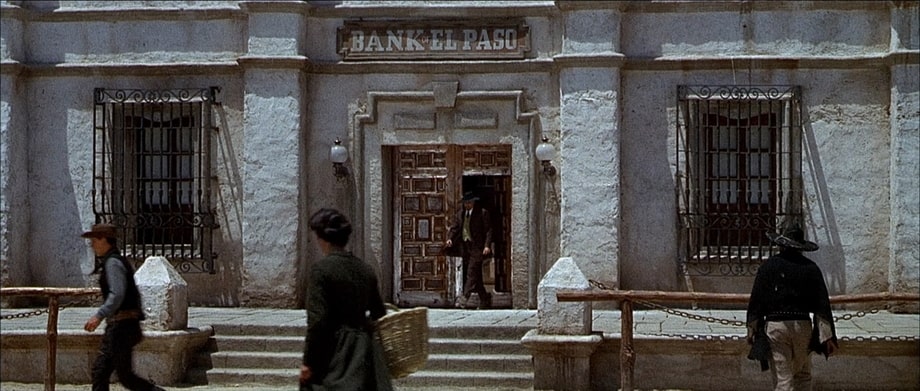
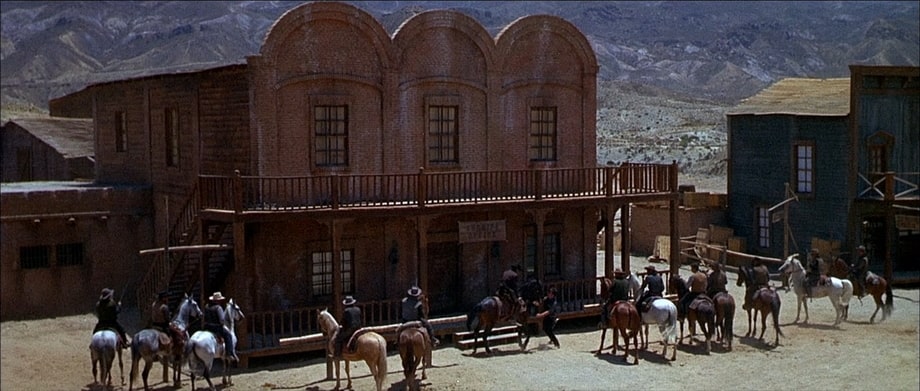
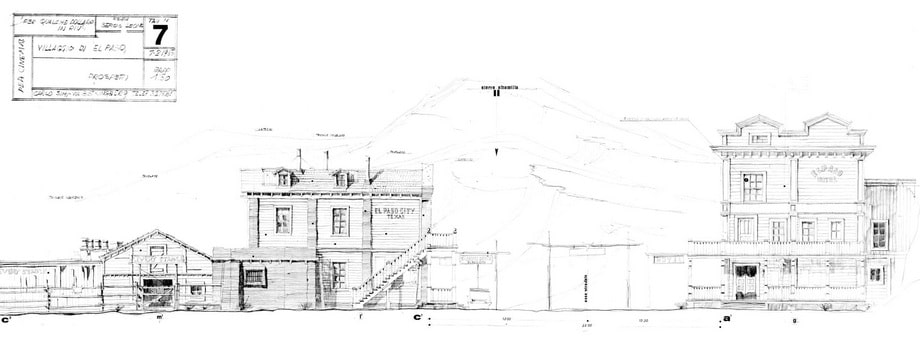
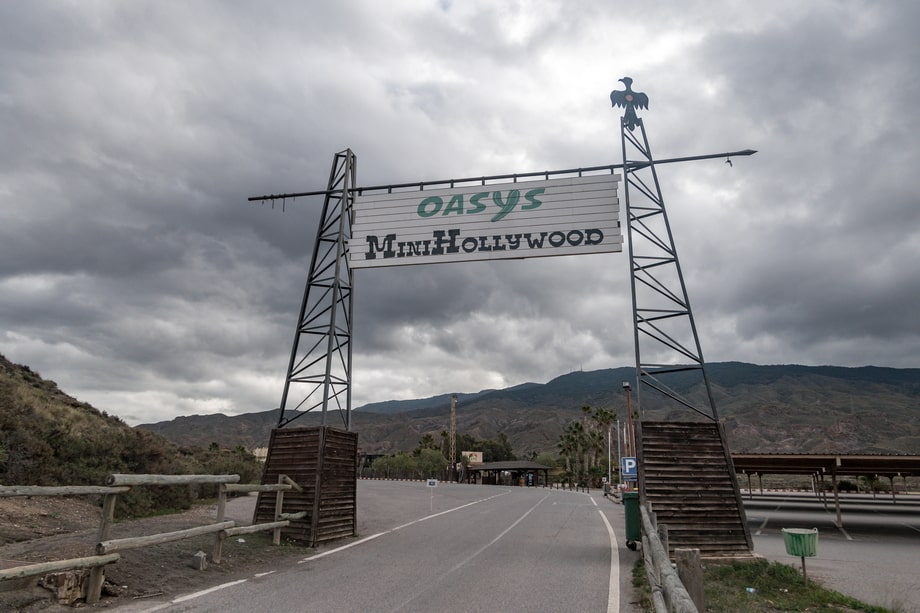
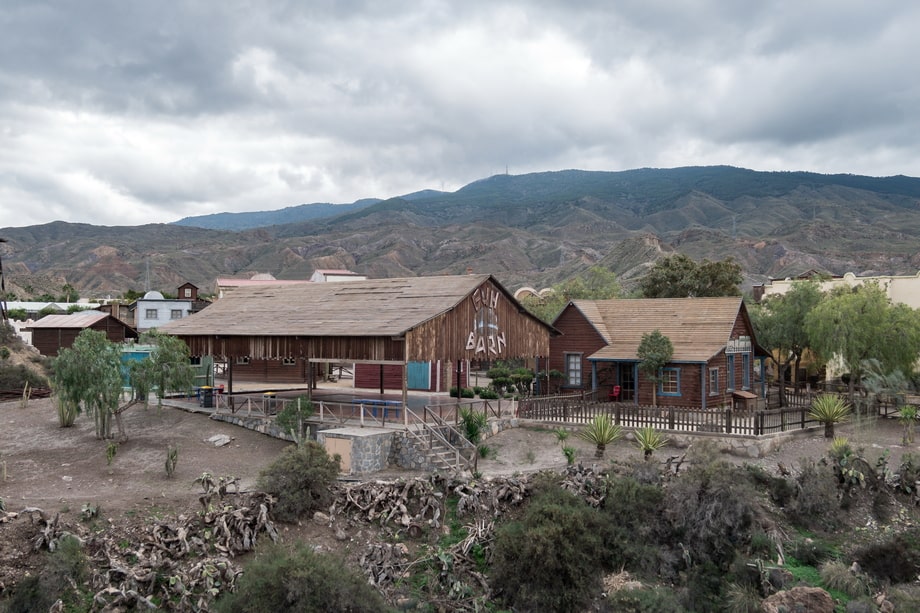
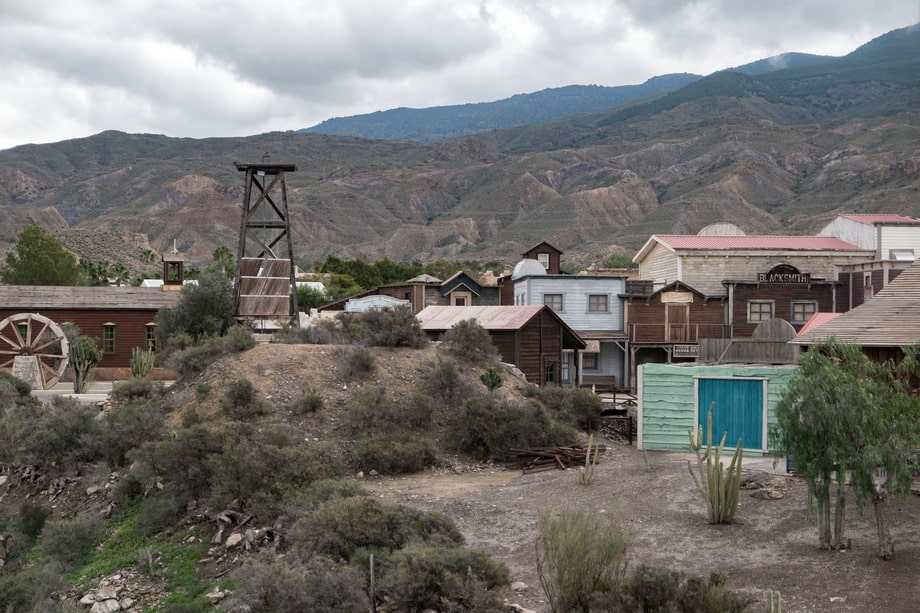
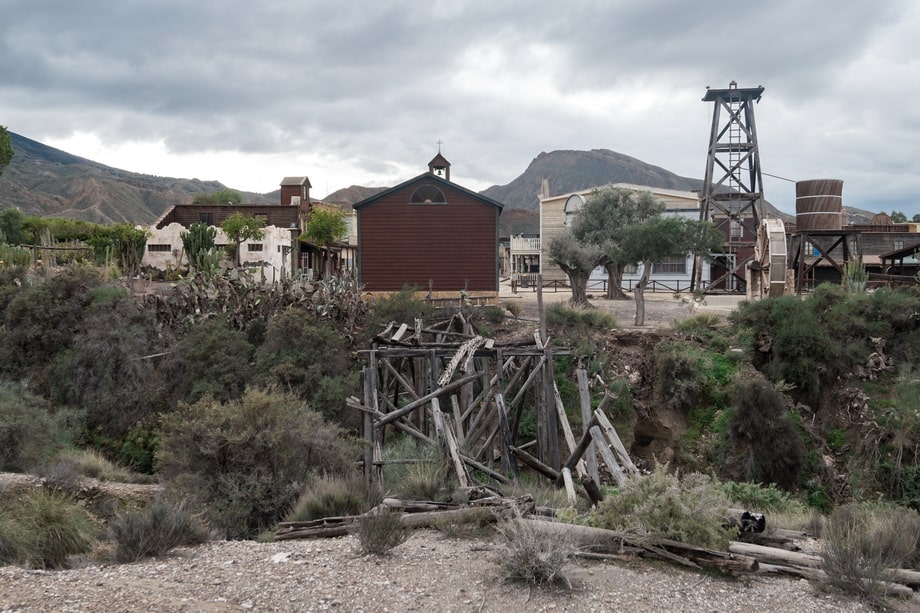
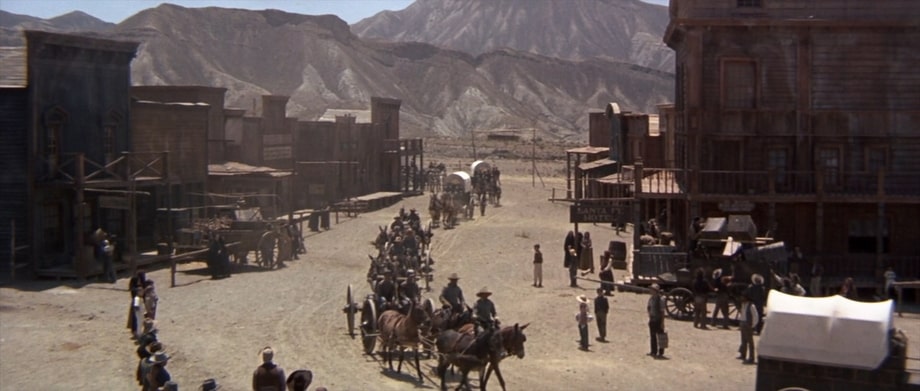
The newly created Western town for ‘A Few Dollars More’ had classic frontier-like architectural decisions, particularly locating key buildings on both sides of the main street. Carlo Simi was responsible for creating a bank, a sheriff’s office, a hotel, a two-story saloon, and additional buildings such as a barber shop, a telegraph office, and a parlor, not to mention the old Spanish fortress. The mountains of Taberna’s desert and cactus intensified the atmosphere of getting back in time to the 1860s and 1870s. The new town was to play two roles in the movie: El Paso and the White Rocks, and Leone himself wholeheartedly asked Simi to build a town, which would itself be the protagonist of the story. The town, which would later be known as ‘Mini Hollywood’, was functional not only on the streets but inside too, as several important scenes were to be filmed in the interiors. Local people from the Province of Almeria got jobs during the construction process and later as extras with good salaries for the region at that time. The making of Sergio Leone’s movies would transform a generation of the Almerian people for good.
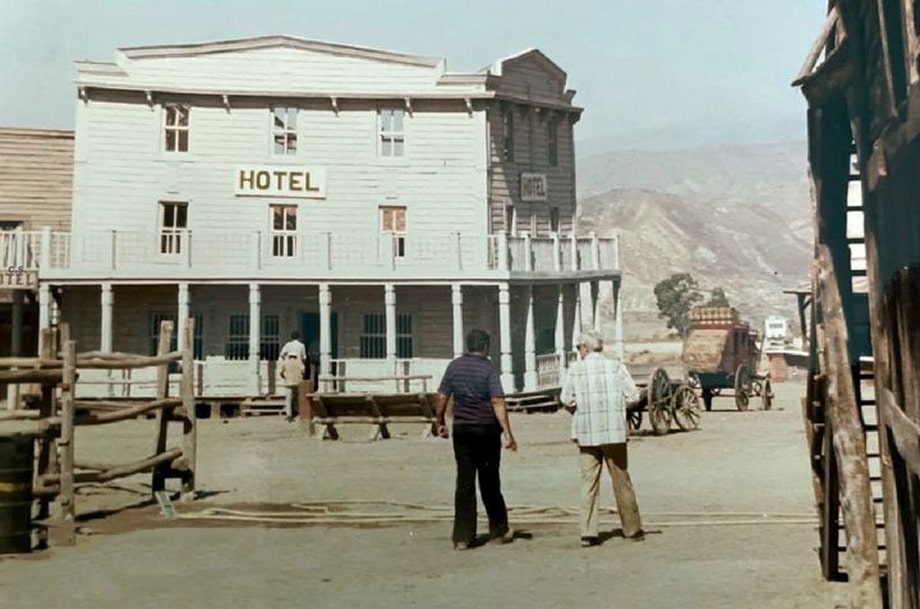
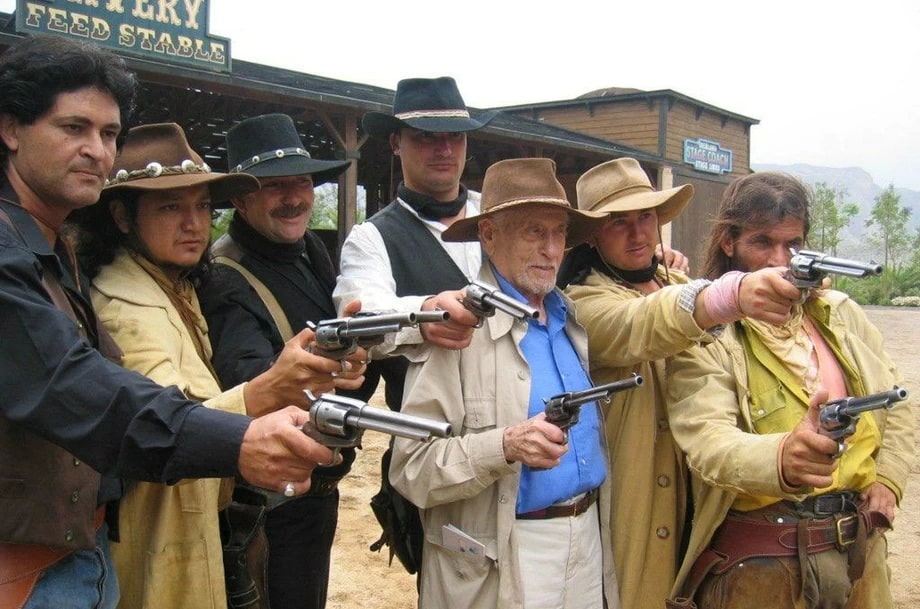
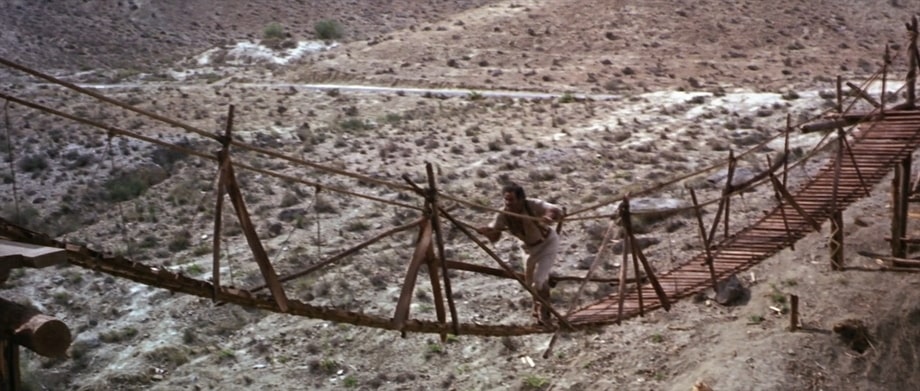
‘A Few Dollars More’ has its Western town, memorable locations, and scenes, particularly the legendary bank robbery. The next year, the director and his art director Carlo Simi would turn the town into a filming set for the new movie called ‘The Good, The Bad, The Ugly’. In a scene with Angel Eyes and the ‘half-soldier, the town worked for Valverde and Santa Ana while visiting Maria. Probably the most famous sequences associated with Eli Wallach’s character are after his long walk across the desert. He looked for water, a gun store, and, of course, a horse. After finishing ‘The Good, The Bad, The Ugly’, the locals bought the whole location and turned it into a tourist attraction, an iconic cinematic destination point for people from all over the world. Years later, Mini Hollywood was bought by hotel group owners, who added the props of the abandoned gold mine, a children’s zone, a zoo, and a swimming complex. One of the memorable occasions was in 2005, when Mini Hollywood was visited by Eli Wallach himself.
Lawrence of Arabia (1962) was the first Hollywood project from the big league that took advantage of filming in Spain, particularly in the Tabernas desert. Even sixty years later, the triumph of the seven Oscars still impressed the audience with its desert scenes. While most of the landscapes were found in the Wadi Rum desert in Jordan and Morocco, Tabernas is famous for at least one scene. The filming crew chose a spot near the road N-340A from Almeria to the North (the interstate A-92 did not exist then) and turned the bank of a dry river into a Middle-East oasis. The filming crew planted hundreds of palms and bushes, the majority of which did not last long as they were not accustomed to the climate. The new oasis in the desert was named ‘Oasis de Tabernas’, yet nowadays it is better known as ‘Oasis de Tabernas’, while geographically this part of the Tabernas desert is called ‘Rambla Viciana’.
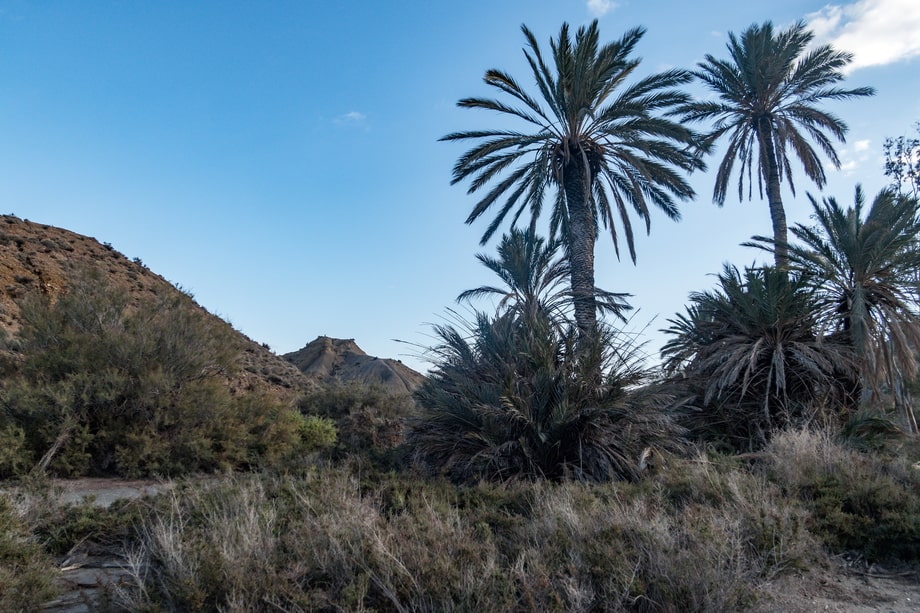
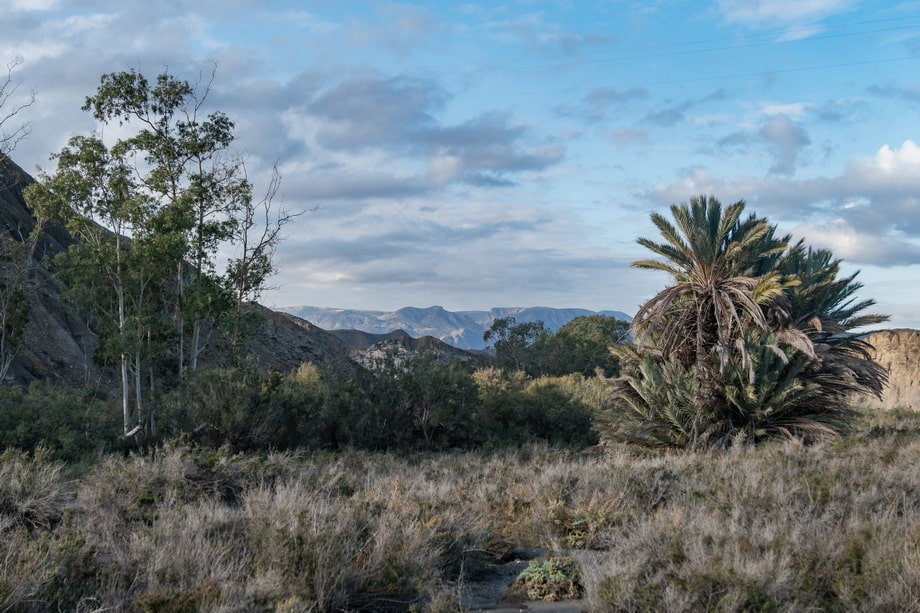
Sergio Leone came across this location in 1965 during the shooting of ‘A Few Dollars More’ and probably picked it as a filming location in admiration of David Lean’s ‘Lawrence of Arabia’. In the story, Indio and his gang of bandits meet here after the raid on the bank of El Paso. Leone’s classic was not the last movie filmed in the oasis. The projects worth mentioning are “Wild Kurdistan” (1965) by Franz Josef Gottlieb, “Play Dirty’ (1968) with Michael Caine, “The Hunting Party” (1971) with Gene Hackman, and the ‘Hercule Poirot’ TV series with David Suchet (1992). While almost all original trees from 1962 did not survive much, some did and can still be recognizable from the times of the 1960s, particularly from the scene from ‘A Few Dollars More’.
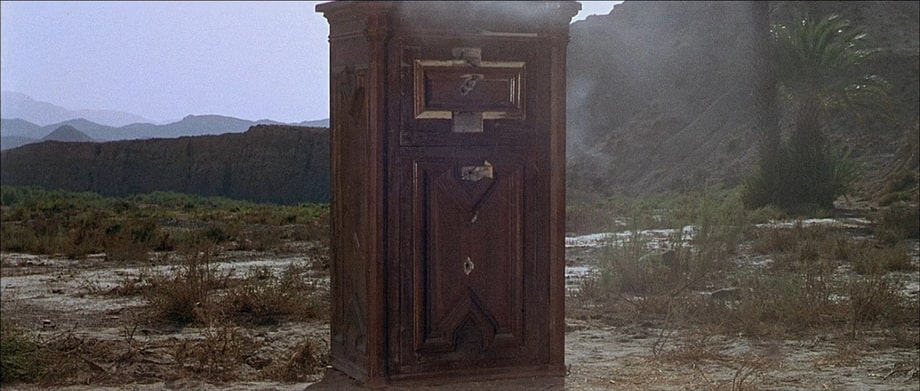
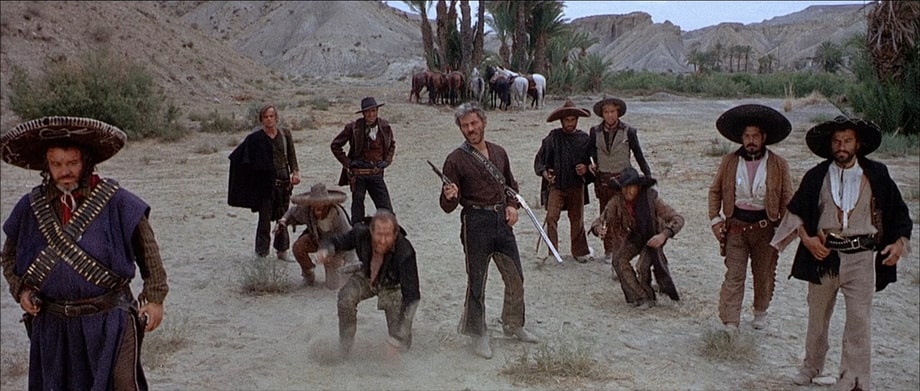
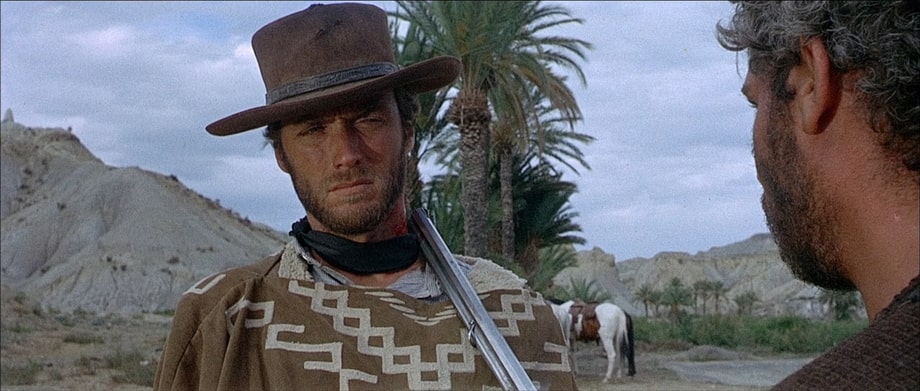
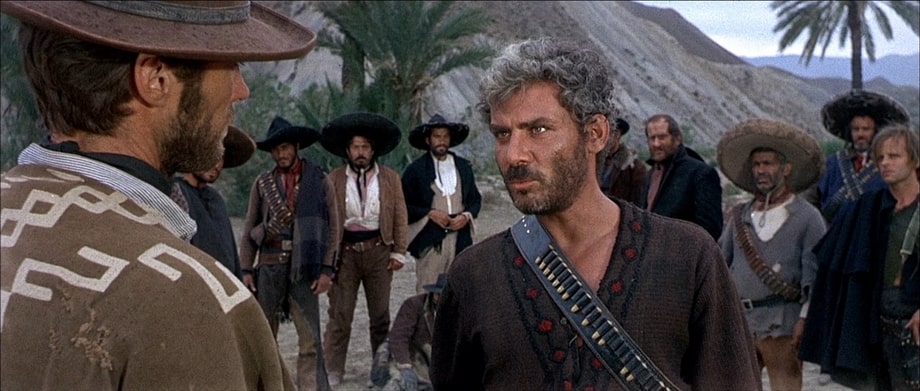
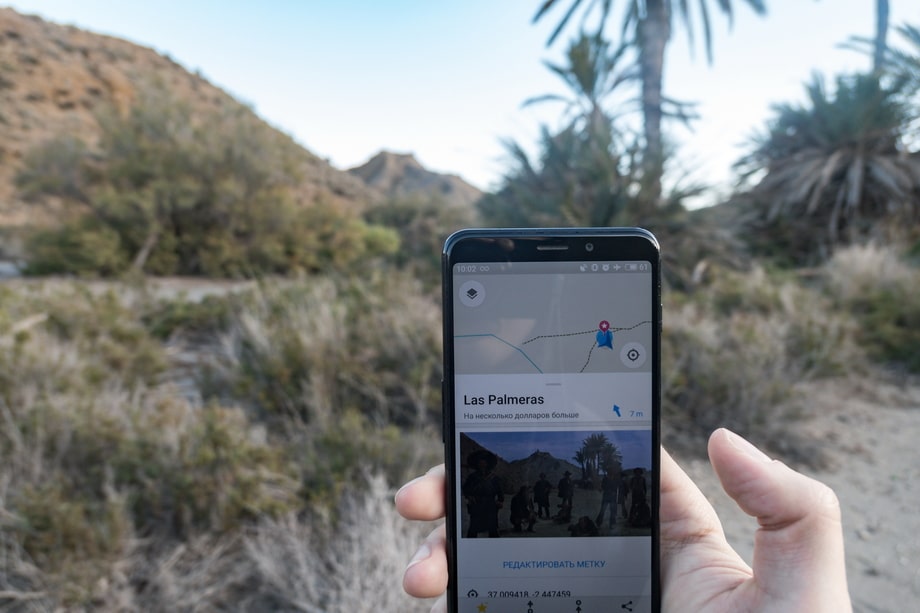
The municipality of Tabernas would probably not have been known beyond Spain without turning the area into the Wild West in the late 1950s. One of the less populated municipalities in Andalucia, its name originates from ‘Thabernax’ from the ancient times of the presence of the Greek troops in the area. In the 19th century, the area witnessed decades of prosperity due to the exploration of mines. Nowadays, the total population of Tabernas is about 4000 people, many of them involved in the sphere of tourism, particularly related to cinema and the annual Almería Western Film Festival, the only one of such kind in the world. It is interesting to know that the cinematic boom in the 1960s resulted in the opening of two cinemas in this tiny town amid the desert as early as 1967.
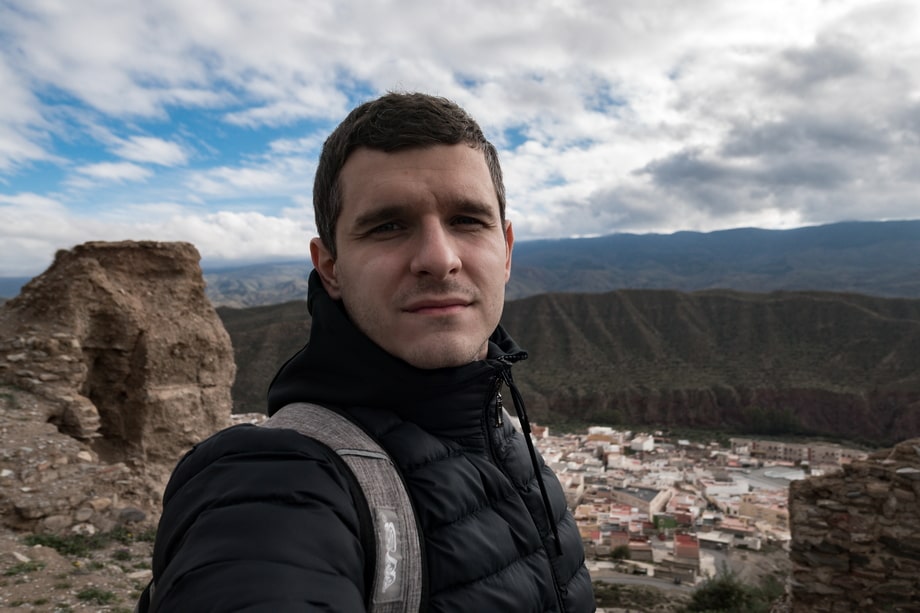
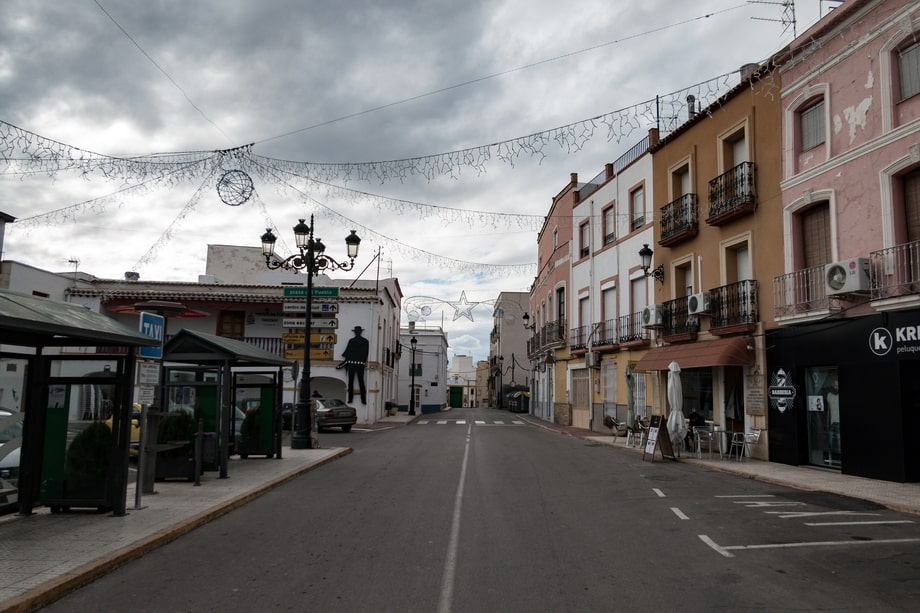
During my visit to the desert, I spent a few hours in the town waiting for the bus. I was delighted to climb the local Tabernas castle from the 16th century and witnessed the breathtaking panorama of the whole area with informational panoramic boards with movies which were filmed in Tabernas and the directions where to look. When it comes to the town itself as a filming location, in 1969, some of the scenes of ‘The Valley of Gwangi’ were filmed on its streets. The Godzilla-like movie in the Western setting.

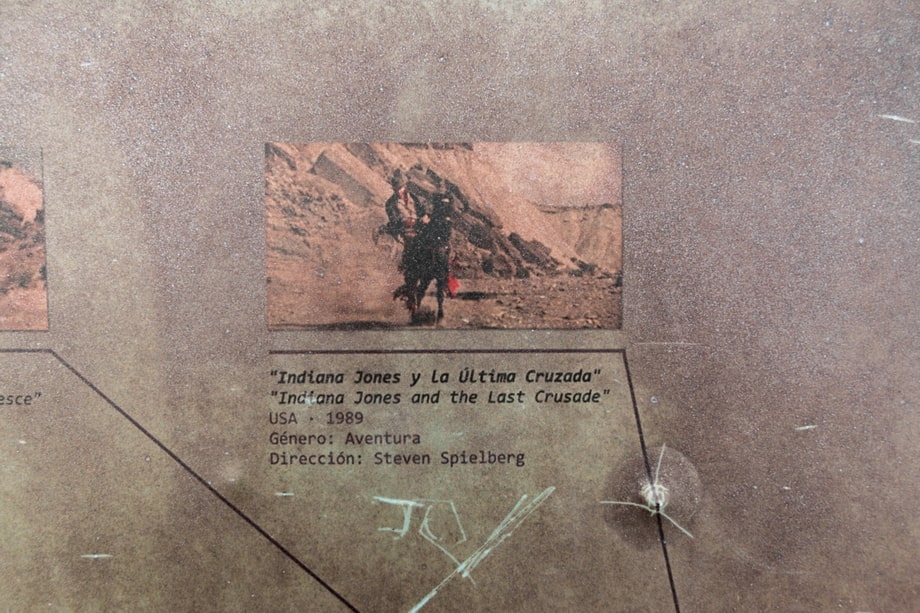
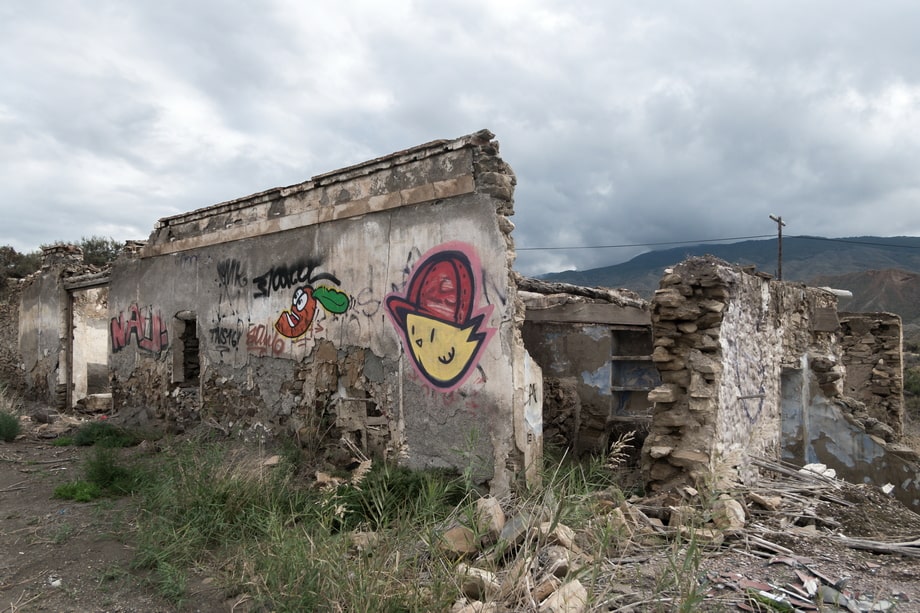
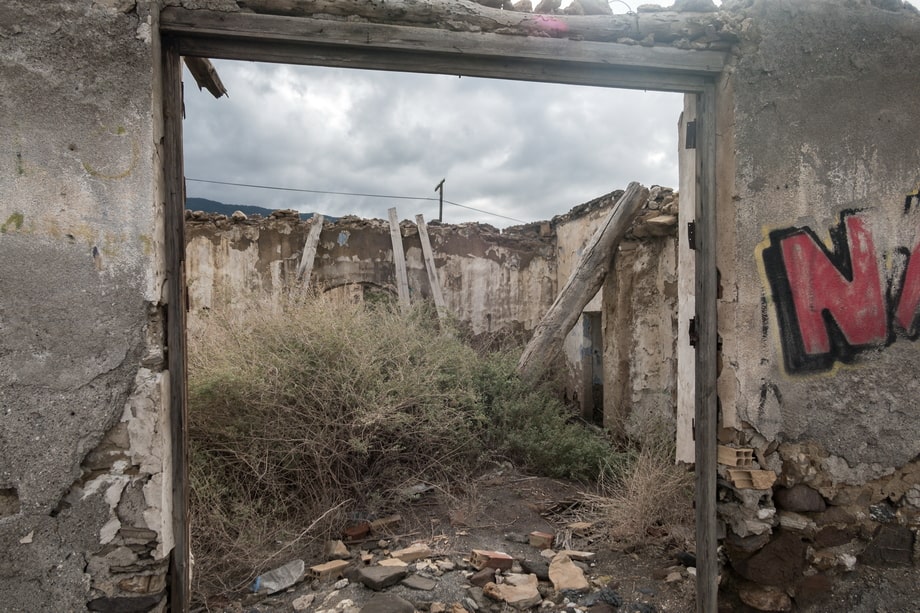
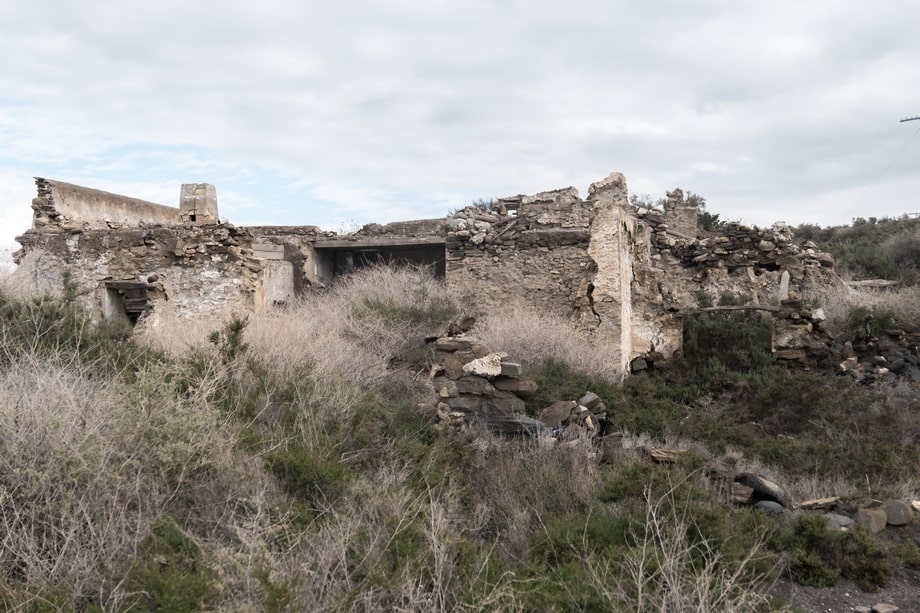
Returning to the Rojo house
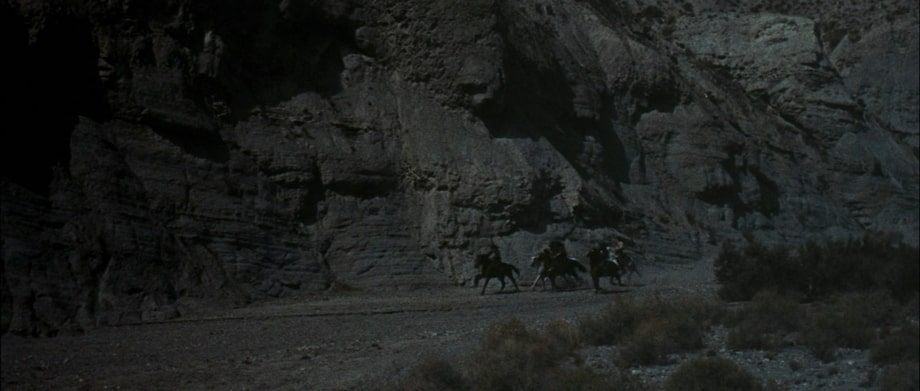
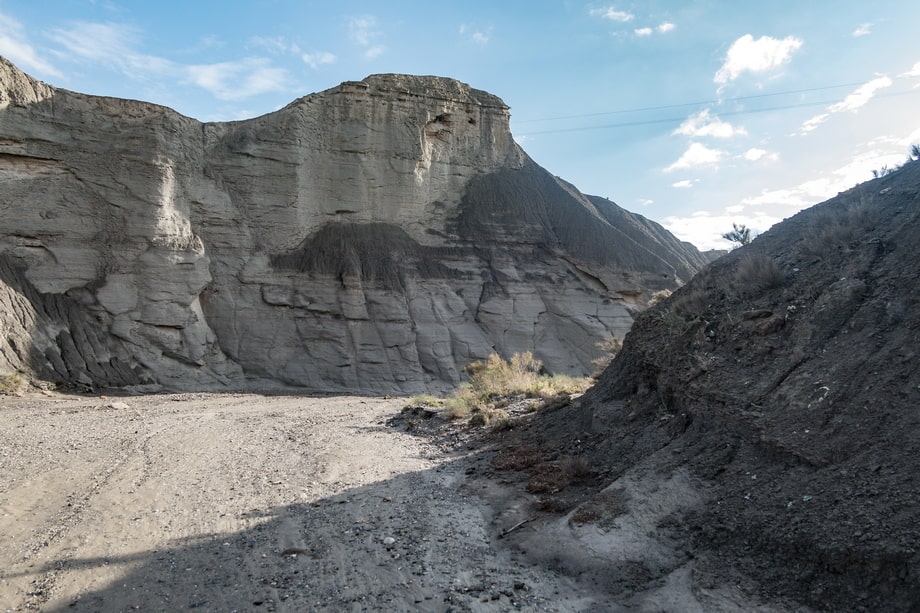
Racing to get to Marisol’s house. This part of the Tabernas desert is located less than 1 kilometer from ‘The Oasis of Lawrence of Arabia’.
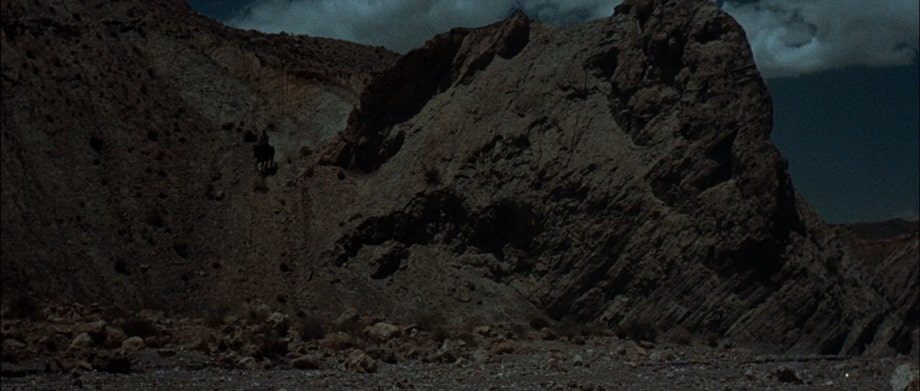
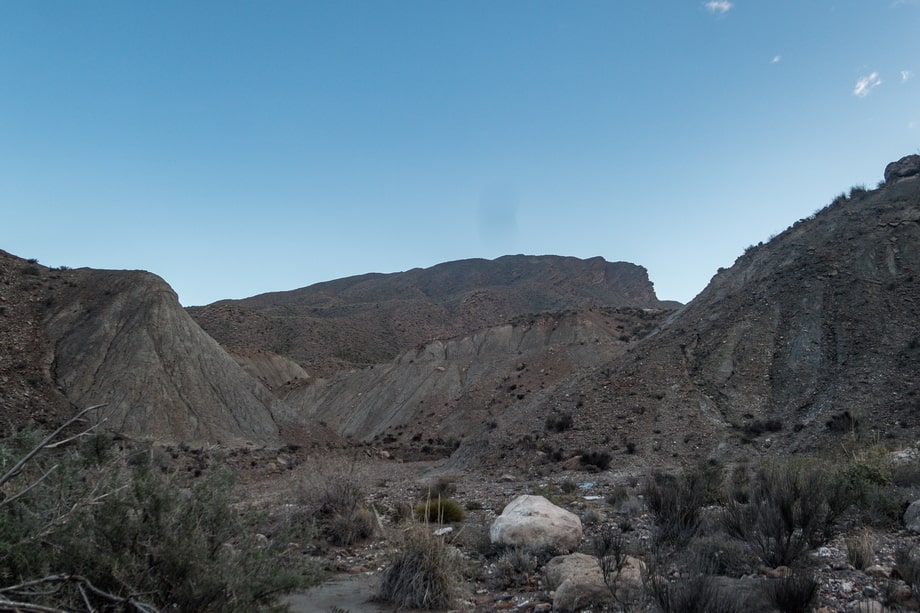
Returning to the Rojo house. This was the location of the later Mini Hollywood
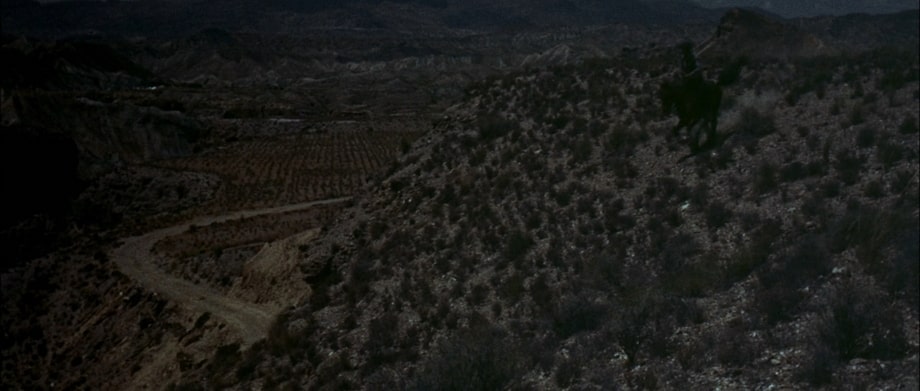
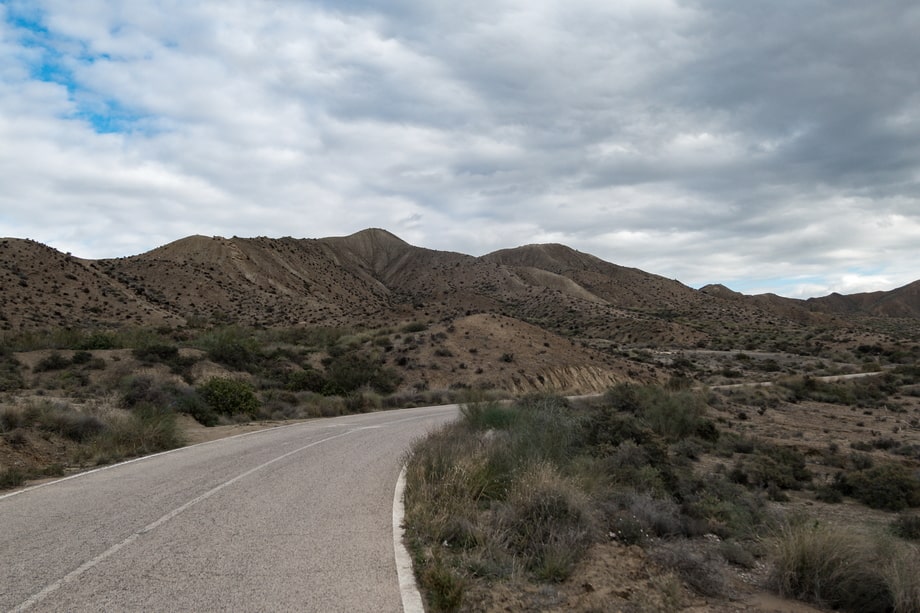
Preparing for the bank raid. Rambla Indalecio, Tabernas desert
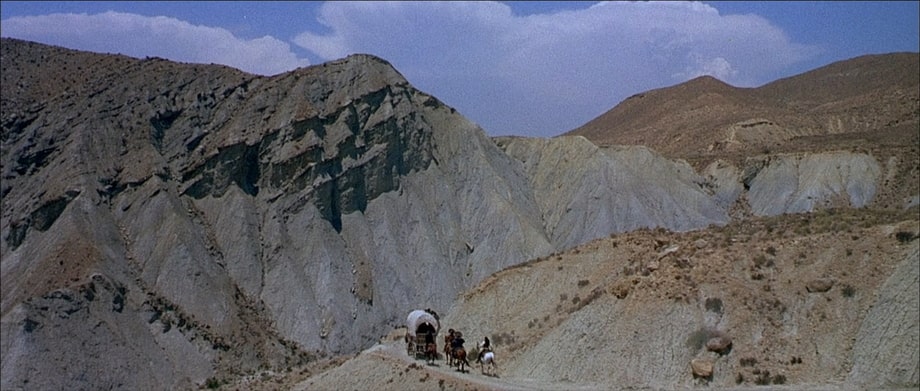
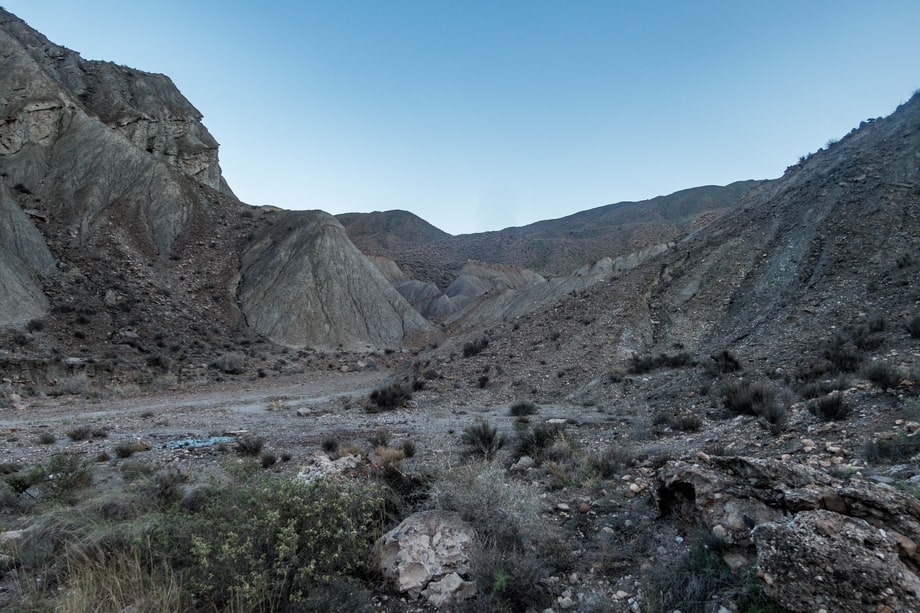
Inside the Agua Caliente tavern (Taberna de “Por un puñado de dólares”) on the highway to the town of Tabernas
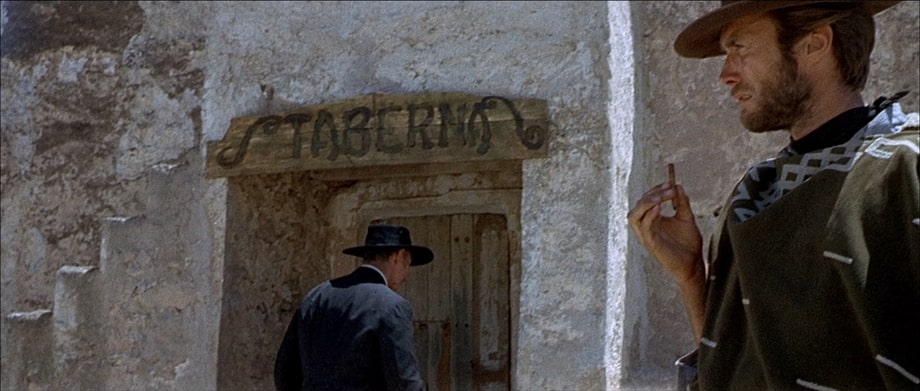
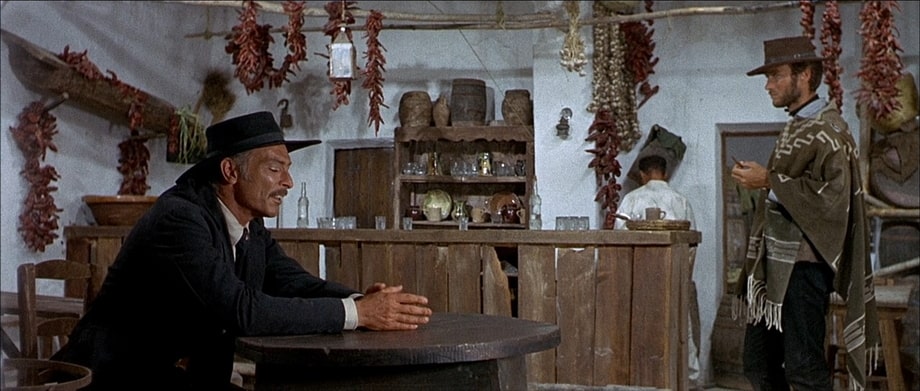
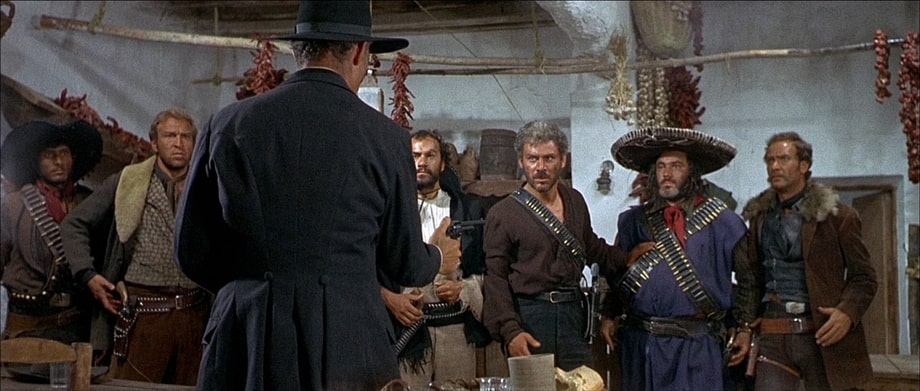
‘Five for you, five for me. ‘ Tuco and Blondie share money.
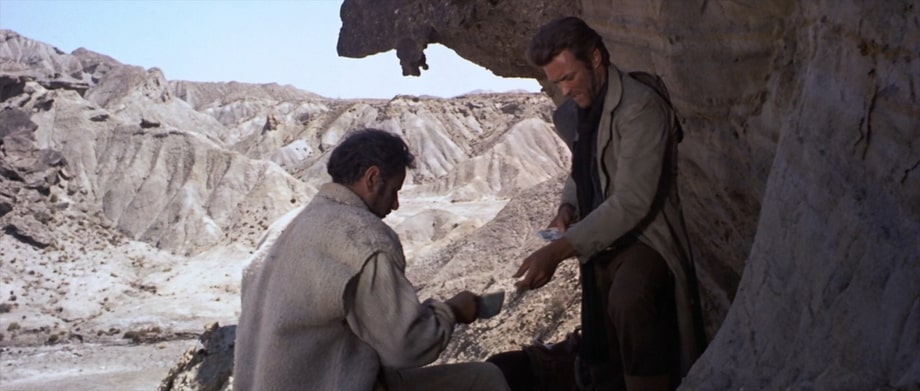
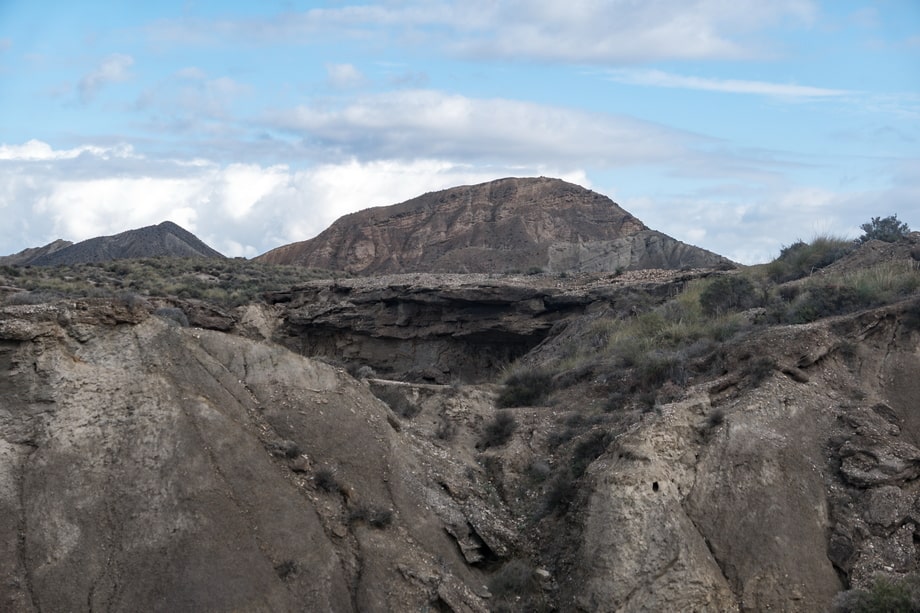
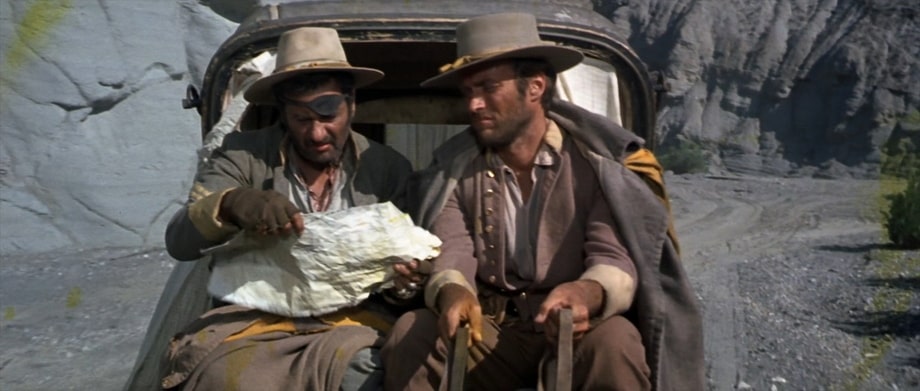
The two protagonists look at the map. Barranco del Infierno del Carrizalejo
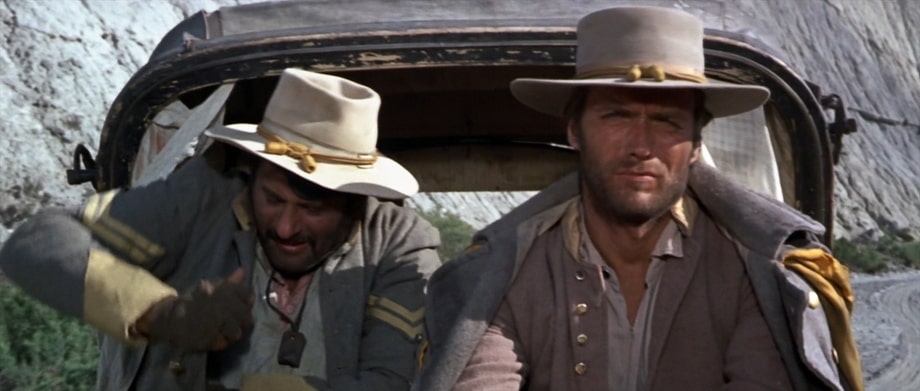
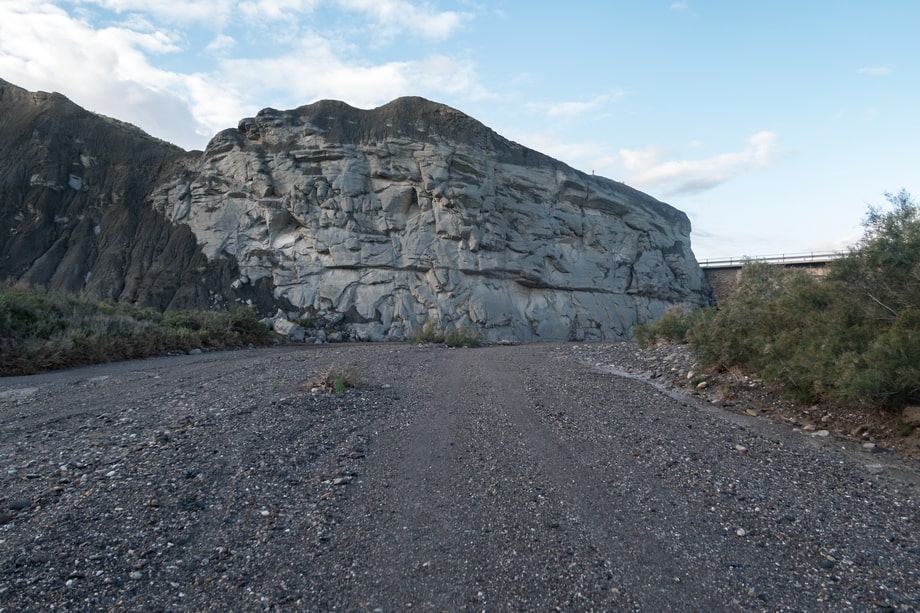
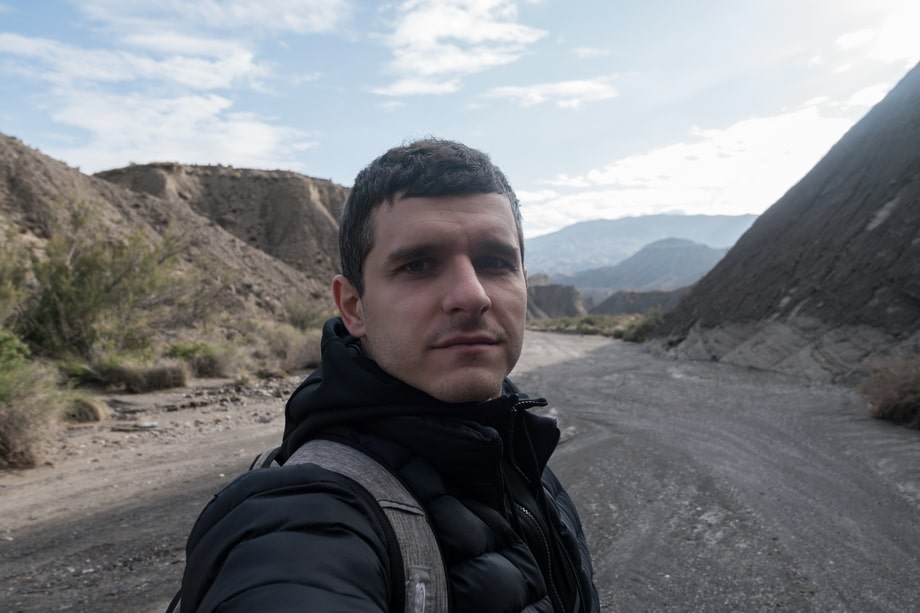
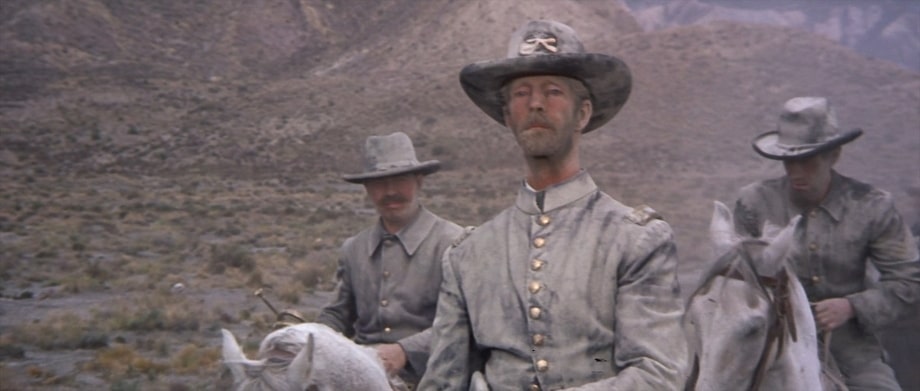
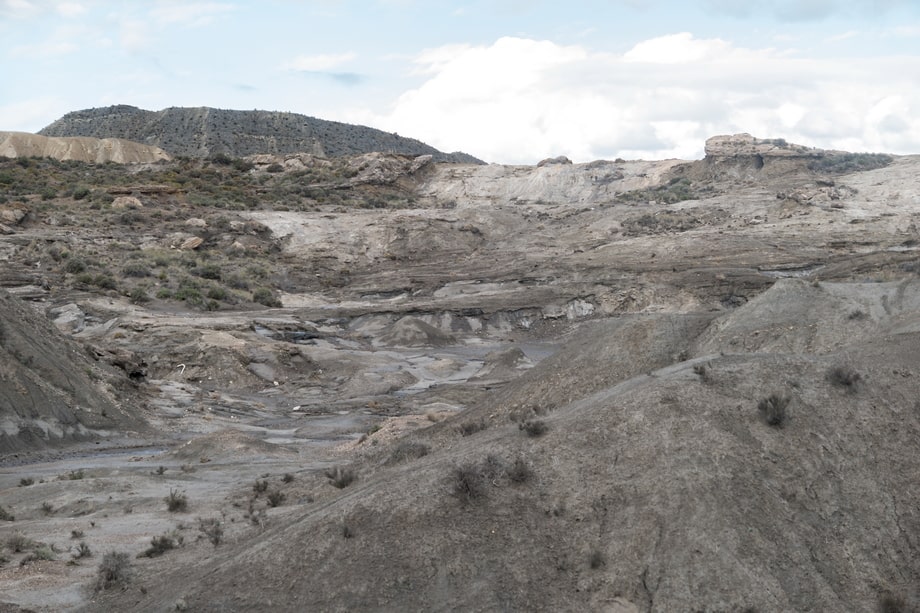
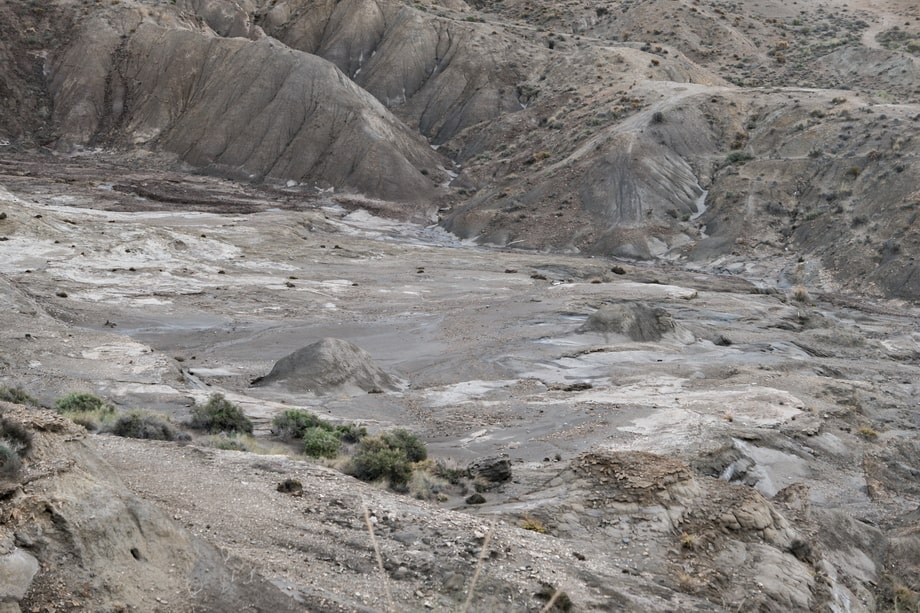
They’re grey like us! The two meet Yankee soldiers. Las Salinas.
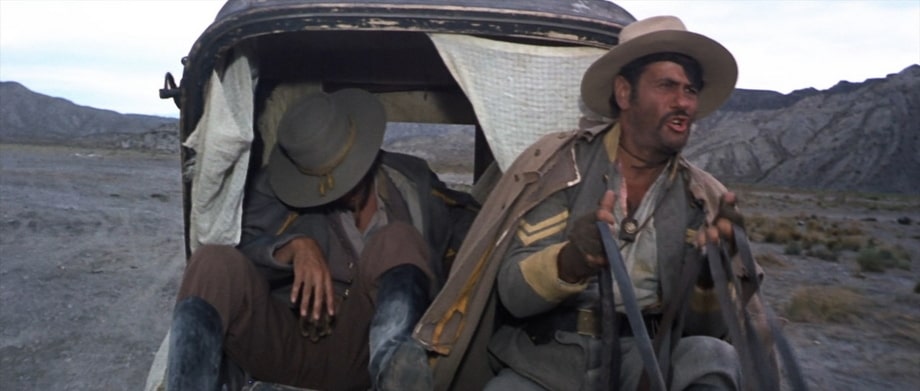
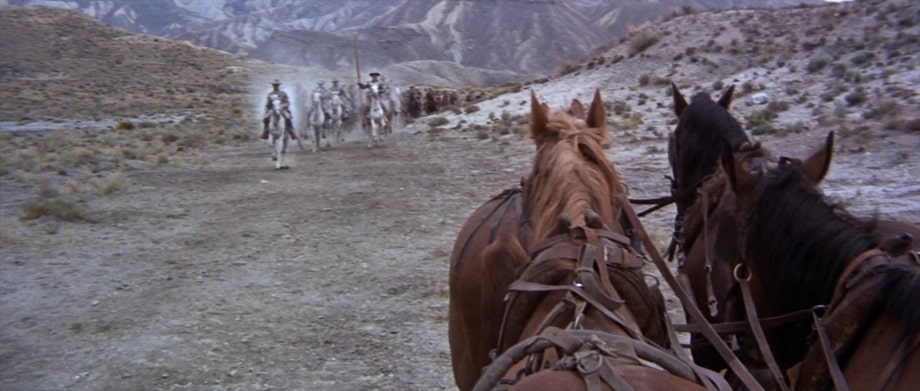
Read me
The filming crew of The Bourne Identity successfully turned the city of Prague into the cinematic Zurich, Switzerland, and the French heartlands. Jason Bourne Prague locations scene-by-scene

Read me
Let’s deepen into the character of Richard Kimble, a semi-iconic movie protagonist from ‘The Fugitive’ movie with Harrison Ford

Read me
An enthusiastic walking tour along the main Indiana Jones and the Last Crusade filming locations in Venice, Italy. Indy and Marcus arrive in Venice, Hotel Danieli, Barnaba Church, the Grand canal and the boat chase scene

Read me
An unlooked-for inspirational romantic story of the Passengers movie correlates with SCI-FI origins and a space odyssey by those ‘lost in space.’

Read me
The story goes far beyond a pure entertainment nature and its leading characters lead us through a story of finding a balance between work and family, keeping your own truth and helping other people

Read me
Arnold Schwarzenegger’s Total Recall autobiography book points out delicate issues of Arnold’s personal life and can be characterized as one of the best memoirs of our times