


 5,00
5,00
Read me
Hannibal filming locations in Florence
Let’s walk along with the main Hannibal filming locations in Florence, where a new movie on Hannibal Lecter was filmed in 2000. A rare walking tour for movie enthusiasts
FILMING LOCATIONS

The second James Bond movie takes place in magnificent Istanbul and sixty years after the premiere, many of the original filming locations have slightly changed since filming of the 007 series
The introduction of the James Bond character to the silver screens around the world in October 1962 was a success of unexpected magnitude. The movie adaptation of a spy novel by a British writer, Ian Fleming, demanded the costs of only 950 000 $ (a moderate sum when compared to 42 million spent for ‘Cleopatra’ the same year) and gained 59 million at the international box office. Followed by such an astonishing premiere, the second movie in a new series was to be premiered the next year. There was no lack of written material for a new installment, as Fleming had created twelve novels with James Bond as a protagonist and several stories and collections as companion writings. While ‘Dr. No’ was the sixth novel in the line of Flemming’s printed work about Agent 007, for the second movie the fifth novel was chosen (as a Ukrainian, I would not use the name of the terrorist state in this article and, instead, refer to the issue as simple James Bond Istanbul locations).
Ian Fleming wrote the first seven books of The Adventures of James Bond with an interval of one book a year between 1953 and 1959, with the fifth book published in April 1957. While the 1962 movie adaptation is regarded as an undeniable classic of the franchise and probably the most loved among the early movies, Fleming made it in many ways different from the first four novels. The writer himself later stated that he had made up his mind to create a more serious story, empowered with more complex characters and feelings in contrast to previous, more bravado-macho-like novels. Fleming wanted to be taken with greater regard as an author, and he spent a third of his book dealing with antagonists (Colonel Rosa Klebb and agent Donovan Grant) and the dubious character of Tatiana Romanova, a young agent of Soviet intelligence. James Bond was not introduced for around one hundred pages. The writer regarded his deviating choices as a tool for breaking the established formula.
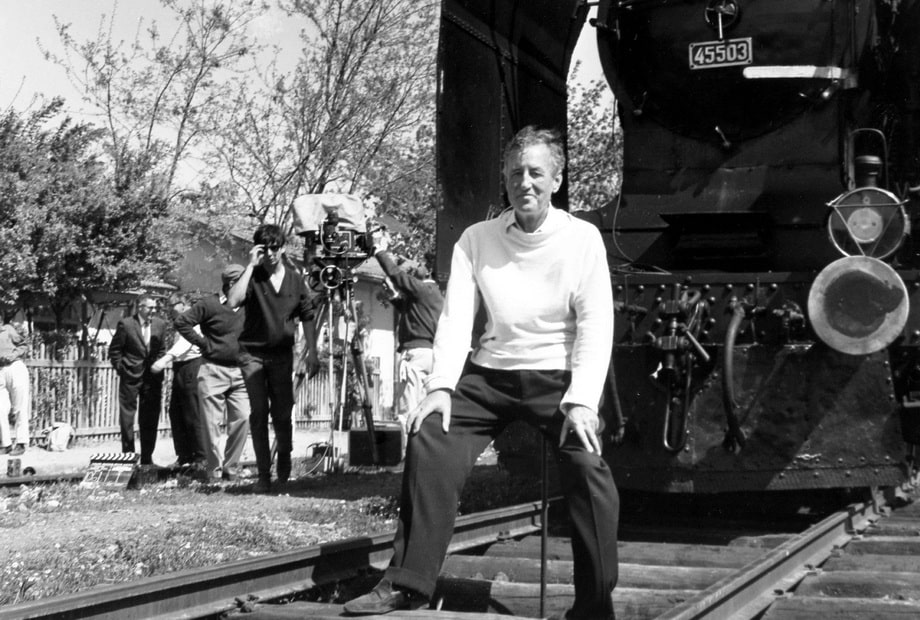
It is worth noting that the fifth novel of the James Bond series could see the light in the TV format back in 1959, three years before the first movie of the Eon Productions, but it never materialized. The choice of the fifth novel for the second movie is conventionally attributed to the fact that the 35th US President, John Kennedy, listed the novel № 9 in his list of ten favorite books in an interview with LIFE magazine in March 1961. Considering the gap of two years and the choice of ‘Dr. No’, for the pioneer opening, such a connection is unlikely, and the more pragmatic version deals with the fact that the right owners wanted to reach the European audience with a story set mainly in Istanbul. As time would show, the second movie was the most ‘European’ of all early 007 stories. A year later, the producers would aim to expand the American audience with ‘Goldfinger’ in the same way. Above all, the fifth novel had a plotted narrative and plot suspense, and Istanbul was an exotic destination to explore. With Ian Fleming still alive, putting his name on the posters was a marketing boost for any novel to be adapted. The writer passed away in August 1964, thus seeing premieres of the first two movies in the rising Bond franchise, and he did not live long enough to witness the increasing gap between his books and the adaptations.
The success of Dr. No allowed the producers to double the budget from 0.95 to 1.9 million dollars for the second appearance of James Bond. The expenses were still tight compared to other box office hits, but the filming mainly in Istanbul and England provided a means to raise the quality bar. The rising star Sean Connery gained a significant salary boost and, in fact, his check for the second movie more than tripled compared to 1962 to around 20,000 British pounds, plus an additional £1000 for the suits and shirts and additional weekly expenses. The shooting process took sixteen weeks between April and August 1963, a significantly longer period compared to Dr. No. The filming crew came to Istanbul on April 20, 1963. Writer Ian Fleming visited the production sets in the summer to witness the adaptation of his favorite Bond novels and spent some time with the producers and his local friend, Nazim Kalkavan, who had served as an inspiration for Darko Kerim. The shooting geography also included Scotland, Spain, and Pinewood Studios near London.
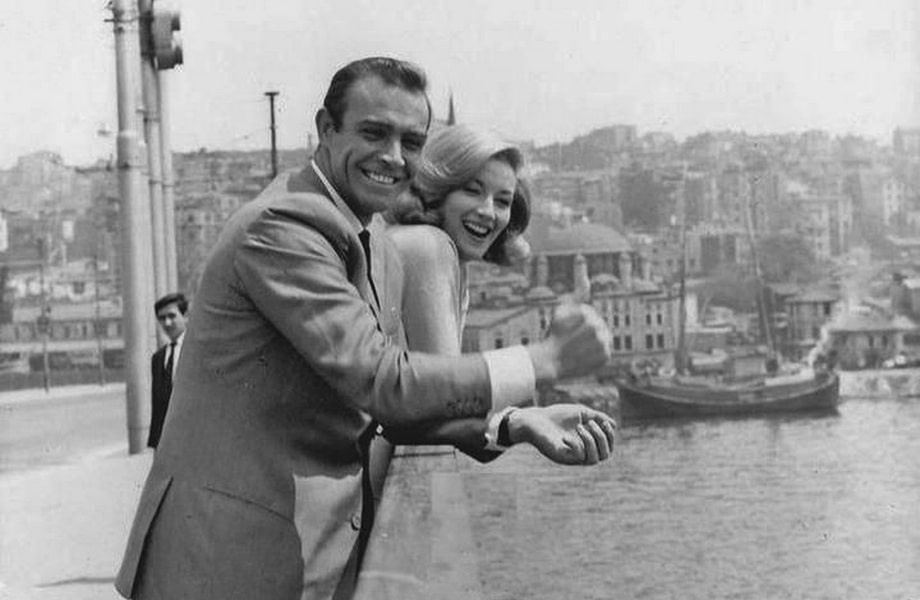
The second movie not only followed some deviations from the original novel but also introduced changes compared with the first movie. The gun-barrel section is followed by a prologue scene, which tricked the audience with expectations and even tried to persuade us that Sean Connery’s character was killed in the first minutes of the story. A face mask, a SPECTRE training facility, and the introduction of a villain, Donovan Grant, played by Robert Shaw. A few remember that Austin Martin premiered only in Goldfinger, and Bentley with a car phone was, in fact, the very first Bond car in the franchise shown in the second movie. Above all, the movie introduced the very first gadget set in the series in the form of an attaché’s case, which included a rifle with an infrared telescope and ammunition, fifty British gold Sovereigns, a tear gas canister, and a throwing knife. The end scenes were shot by the second film unit in Venice and later used as a rear projection with Sean Connery and Daniela Bianchi in the foreground.
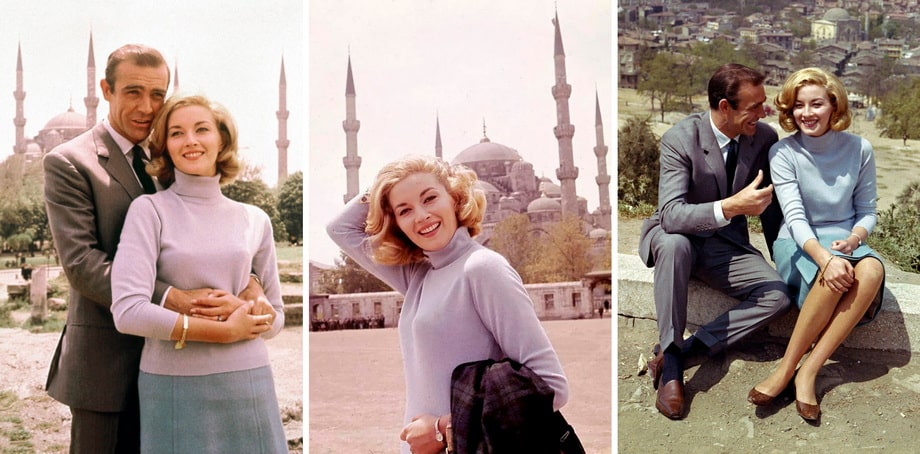
The movie premiered in Great Britain on October 10, 1963, roughly a year after the release of Dr. No, this time at the Odeon cinema as a pioneering screen. The following months made the second Bond movie the most profitable that year in England, beating another iconic story, ‘The Great Escape’, and later on, Istanbul Adventures became the highest-grossing movie in the box office history of the country at that moment. A premiere in the United States followed in April 1964 and showed significant improvements compared to the predecessor a year before. The box office in North America rose by fifty percent and amounted to 24.8 million dollars gross, with a total overall box office of 78.9 million (an equivalent of around 700 million nowadays) compared to 59.6 million with Dr. No. Such a success allowed United Artists to allocate a 3.5 million dollar budget for the next Bond movie called ‘Goldfinger’, which was announced at the end of the second movie: ‘Not Quite the End. James Bond will return in the next Ian Fleming thriller, Goldfinger. Such a tradition of naming the upcoming movie proved producers’ long-lasting agenda and correlated with the rising popularity of Agent 007 in the world. Both the critics and the wide audience were mainly enthusiastic about the quality of the second James Bond movie, though some voiced frustration regarding a balance between a spy thriller and a comedy. As was stated before, choosing ‘Goldfinger’ worked for the US-aimed strategy. Both director Terence Young and lead actor Sean Connery later claimed the second movie as their best in the franchise.
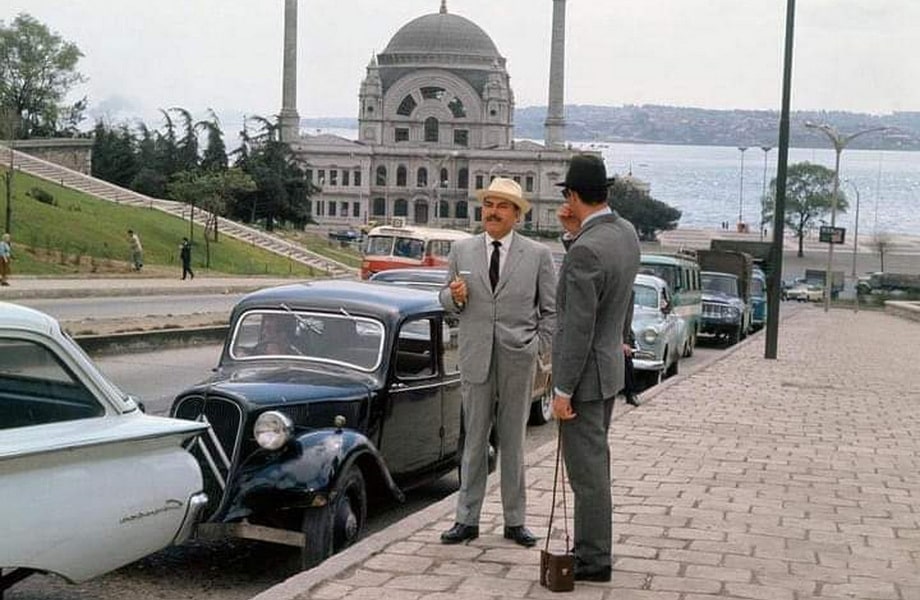
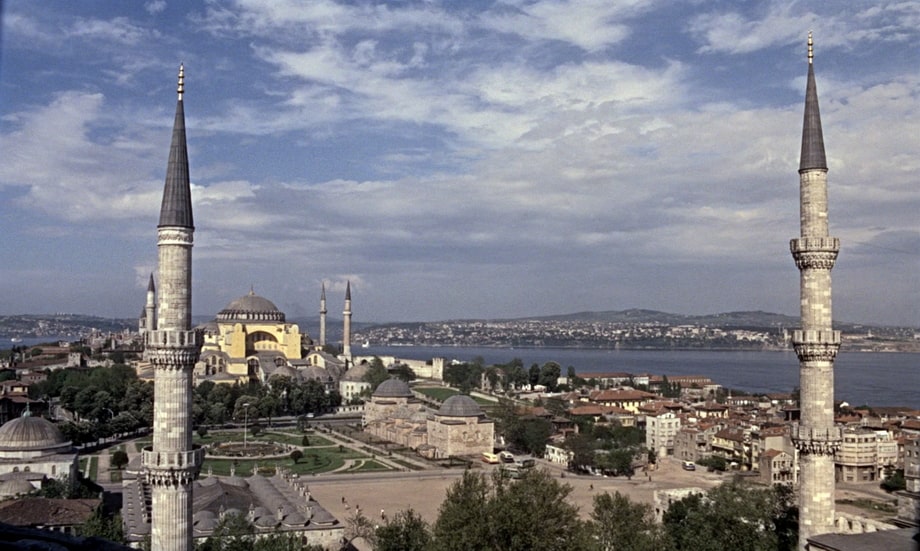
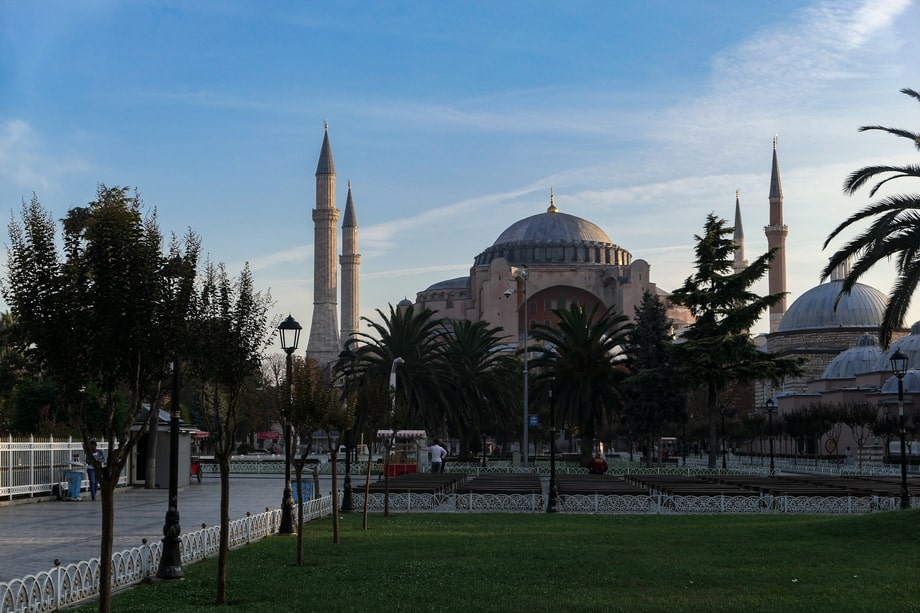
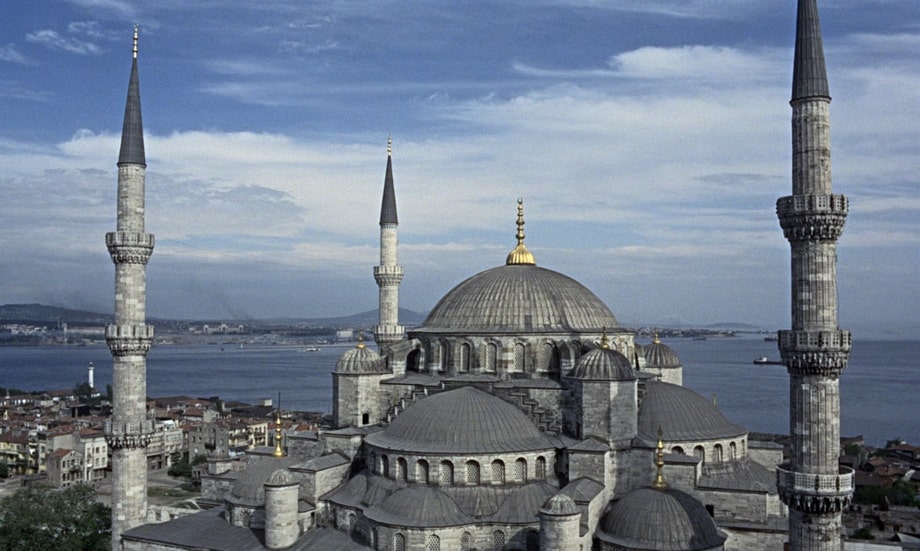
At the time of filming in 1963, the population of Istanbul amounted to only 1.6 million citizens, a moderate amount compared to the modern 15 million and the seventh largest urban agglomeration on the planet. The opening shot of the city captures two of its most recognized landmarks: Hagia Sophia and the Blue Mosque. The bird’s view of the cameraman set the viewing point at the top of one of the minarets of the most well-known mosque in Turkey. What unfolds in the center of the frame is the Sultan Ahmet Park. Located in the heart of an ancient city, it has a length of only 140 meters and a width of 100 meters, and serves as a starting point for most of the visitors of Istanbul. With only two minarets of the Blue Mosque shown, the role of the dominant panorama is played by the magnificent Hagia Sophia. It originated from the times of the Byzantine Empire and was built as far back as 537 A.D. as a Christian Cathedral. It was converted into a giant mosque in 1453 after the seizure of Constantinople by the Ottomans. It served Muslims as a praying destination until the 1930s, when it was turned into a museum for another eight decades until being converted to a mosque once again in 2020. In the far background of the opening shot, we can also be satisfied with a panorama over the Bosphorus.
The beautiful shot of the heart of Istanbul changes the ugly Soviet symbols on the gate of what is supposed to be a USSR consulate in Istanbul. The movie does not waste much time before introducing its key female character: Tatiana Romanova, a corporal of the Soviet intelligence service who worked in Istanbul as a clerk. In this establishing shot, she leaves the territory of the supposed consulate and changes a few words with her colleagues. It is interesting to note that in contrast to her supposed nationality, Romanova was played by Daniela Bianchi, 1960 Miss Italy and the 1st runner-up at the Miss Universe of the same year. Her duet with Sean Connery would later be regarded as one of the most popular in the whole Bond series. It is also worth noting that Bianchi had no key roles before 1963 and no experience in the English-speaking cinema, and her character was revoiced in post-production by a British actress, Barbara Jefford, though she possessed chemistry with Connery and acting charisma.
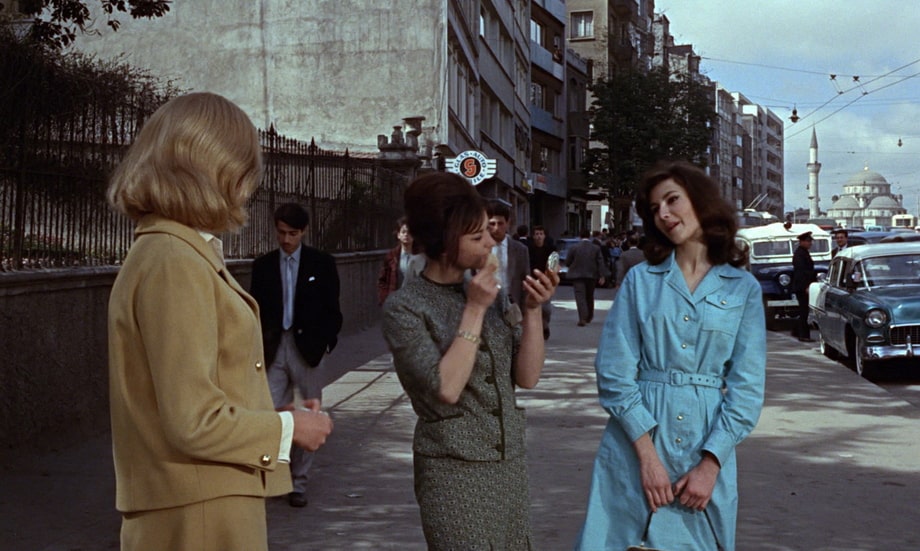
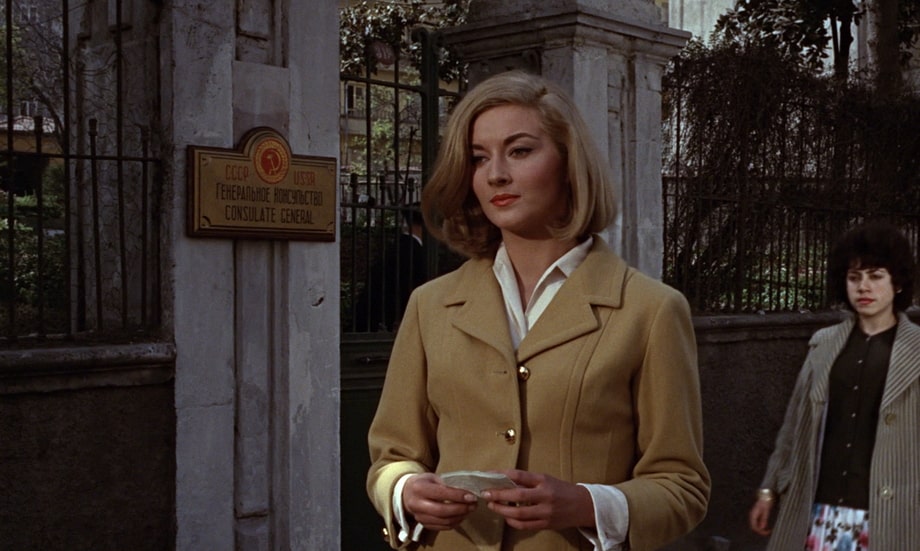
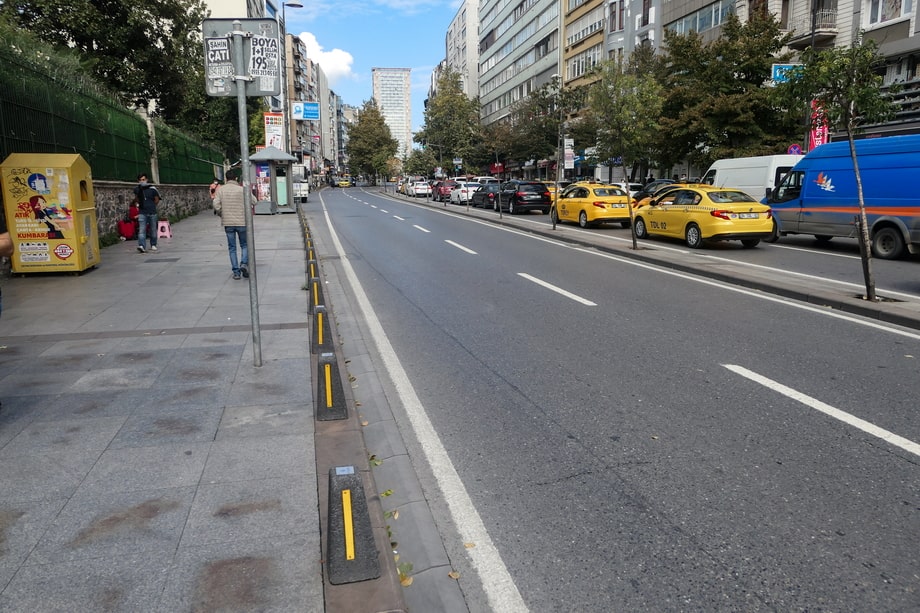
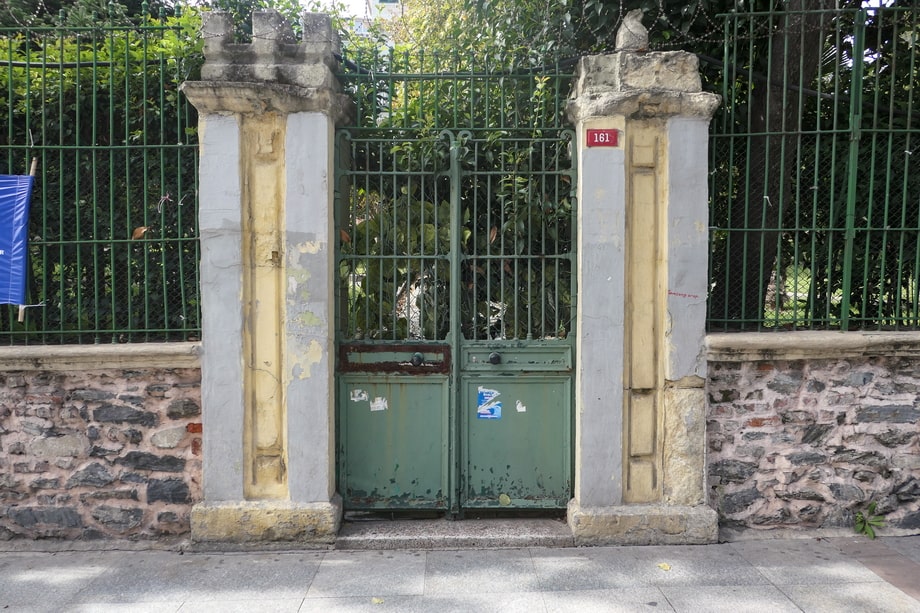
The location that served the Soviet consulate can be found to the North of the city center, 5 kilometers from Sultan Ahmet Park and the opening shot location. It is located in the Şişli district, once popular among the Turkish middle class. The address of the exact property with a fence and a garden is Halaskargazi Caddesi 161, and nowadays it accommodates a tourist bureau. It is worth noting that it is the only villa of such kind in the area, and it comes as no surprise that it was used as a filming location back in 1963. When Tatiana talks to her female colleagues in front of the gate, we can see a glimpse of a mosque in the far background. Regarding the address, it is easy to identify a Sisle Mosque. In contrast to the old mosques in the center of Istanbul, this one was opened as late as 1949 due to the rapid expansion of the urban area.
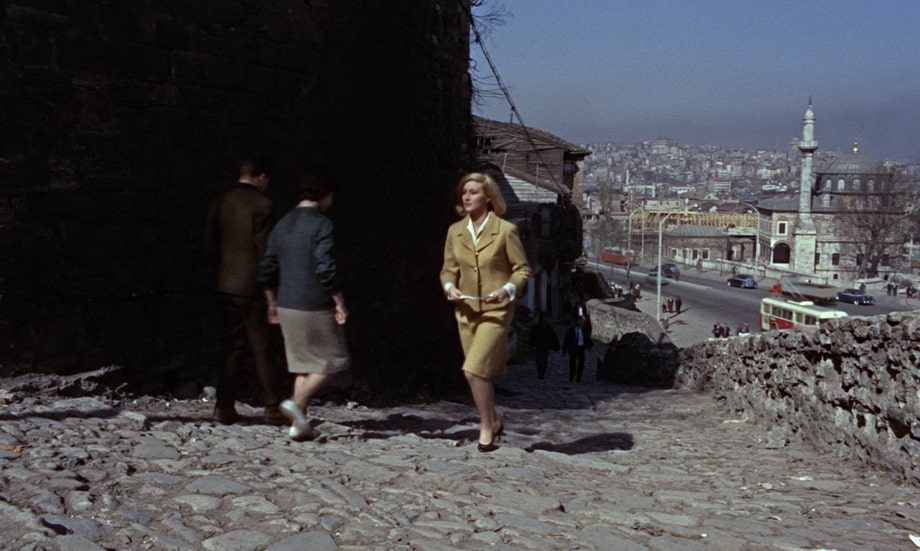
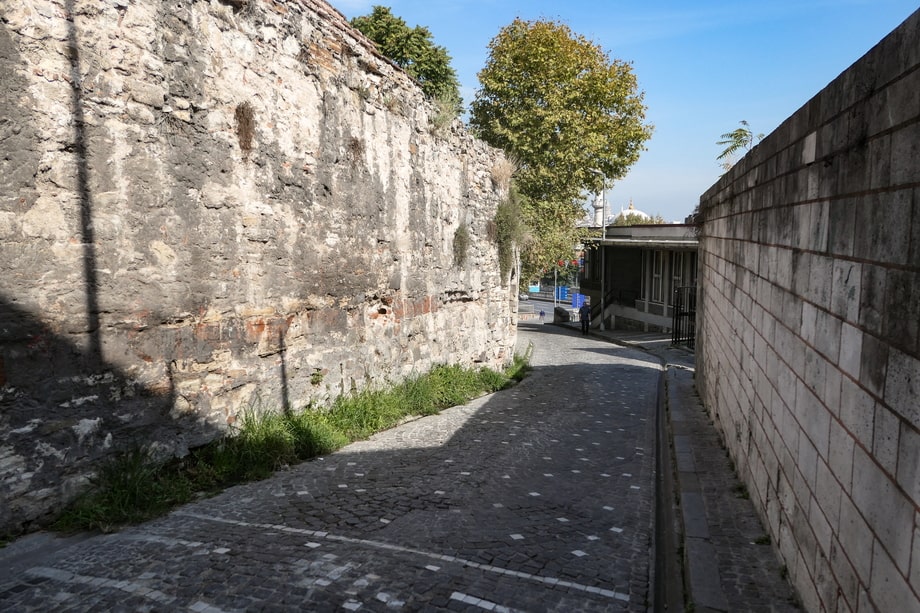
A very brief sequence at the entrance to the consulate makes space for Romanova’s pedestrian walk across the streets of Istanbul, guided by an address on a piece of paper. We see Tanya walking up the hill with a picturesque panorama in the background. Similar to many other occasions, this location can be identified thanks to the Muslim mosque, which found its place in the panoramic shot. İt is known as Şep Sefa Hatun Mosque (Şebsefa Hatun Cami) and was built back in 1787 and bore its name from Şebsafa Hatun, a wife of the sultan, who patronized the building of a mosque to commemorate the memory of her passed son. It has only one minaret, the main dome, and four smaller ones, and sixteen windows. Romanova is walking up the street called Itfaiye Caddesi, which originates here and runs to the south. Looking closer to the panorama, an attentive viewer may also identify a glimpse of the famous Galata Tower in the far background on the other side of the Golden Horn estuary. Back in 1963, the area was a kind of outskirts of Istanbul and had low tourist interest, maybe except for the nearby Aqueduct of Valens. Six decades later, the area is known for its dense urban development, local cafes, and a busy Atatürk Boulevard.
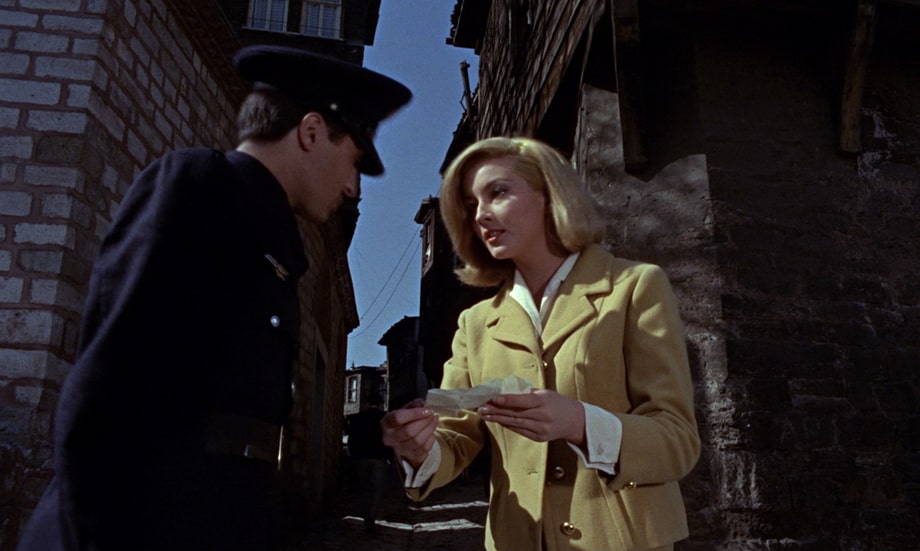
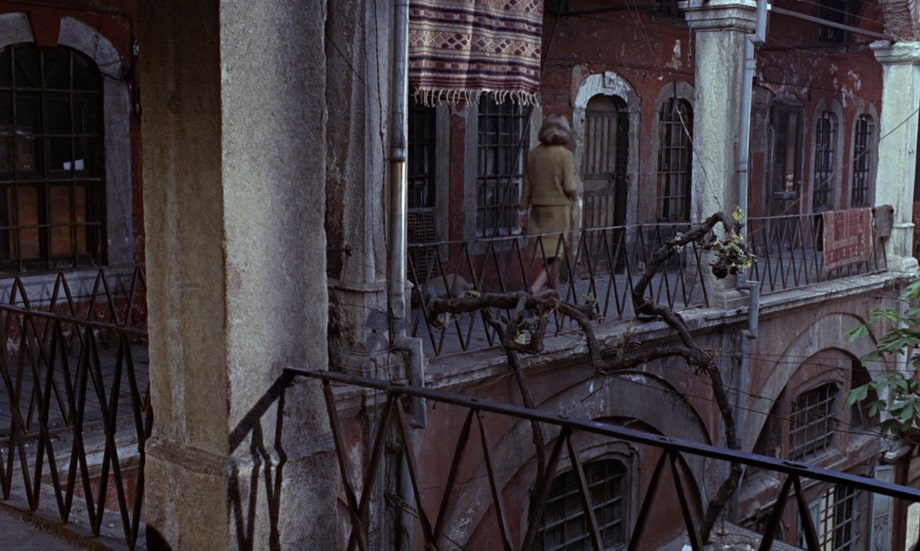
After asking a local policeman for advice, Romanova deepens into the narrow streets of Istanbul to find a designated meeting place with Rosa Klebb, a Soviet intelligence officer. A cozy red-colored courtyard called Zincirli Han is located at the northeast end of what has been appreciated for centuries as the Grand Bazaar, an ancient city market. While the interior of Klebb’s secret hideout was created on the premises of the Pinewood Studio in the UK, the courtyard where Tanya was tracked by agent Donovan Grant can be found and visited six decades after the shooting. As we find out later, Rosa Clebb was not only a colonel of SMERSH but the third most influential member of SPECTRE.
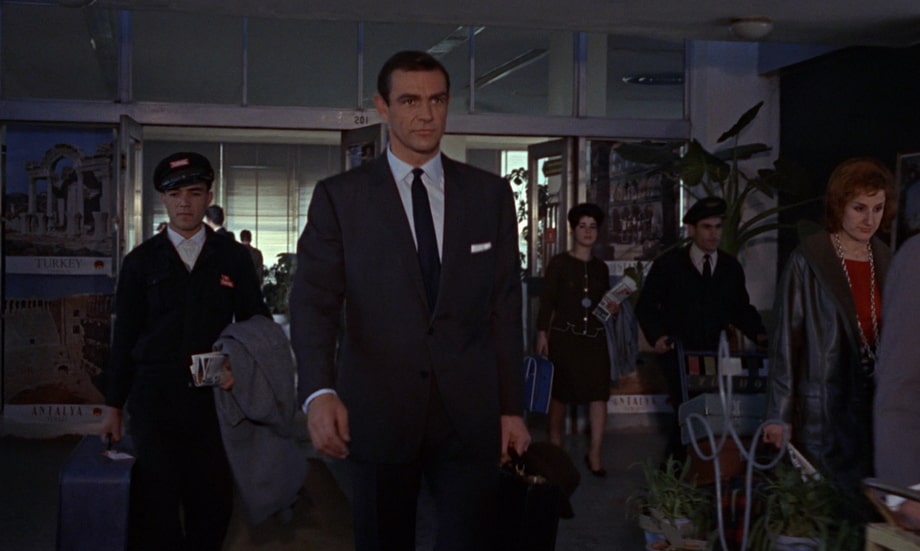
Followed by a brief introductory visit to London, James Bond (Sean Connery) gets an assignment to come to Istanbul and make contact with a potential defector, Tatiana Romanova. We see the Pan American airline, which brings 007 to what was known at that time as Istanbul-Yesilköy Airport, which would be renamed Atatürk Airport in 1985. Located 15 kilometers from the oldest historical part of the city center, in the 1960s, the Yesilköy served up to 250 scheduled flights every day. What we see in the movies is the old terminal building from 1953, which was replaced in 1974 by a new, larger facility. A new airport terminal with a capacity to operate 20 million passengers every year was finished in 2000, and the Atatürk Airport was the main gate to the city and Turkey until 2020. In 2022, it was announced that the former airport area would be turned into a giant garden with 130,000 trees. As for me, I came to Istanbul for the first time in 2015 at this very airport, though there were no remains of the old terminal building shown in 1963 (at least in the international area).
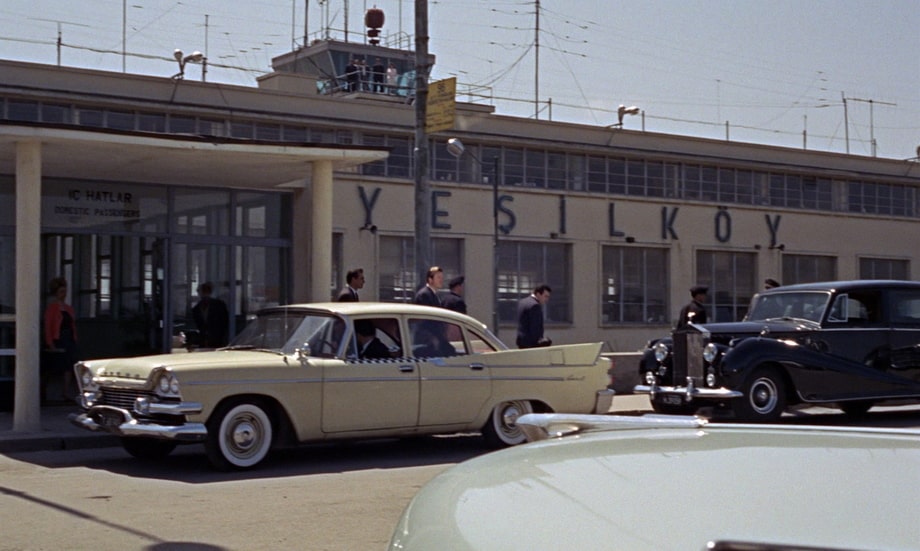
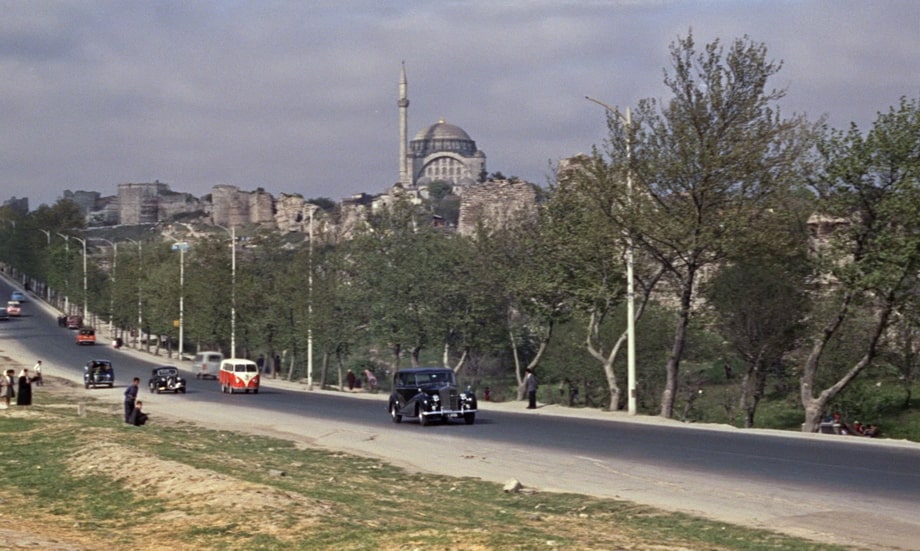
A few minutes after arrival, James meets the chauffeur of Ali Kerim Bey, the head of the British Secret Service in Istanbul. After an exchange of code words, the two boarded a Rolls-Royce Silver Wraith, a model which was produced in a moderate quantity of only 1883 cars between 1946 and 1958. On his way to Kerim Bey’s secret accommodation in the heart of Istanbul, Bond was tracked by Bulgarian spies. The next panorama shot was taken to the West of the old town. The exact location could be identified once again thanks to a mosque in the background. It is called a Mihr-î-Mâh Sultan Mosque and was built in 1566 next to the IV-century Walls of Constantinople, the remnants of which could be seen in this shot with a car passing by. The road was at that time known as Topkapı-Edirnekapı Yolu (modern Beylerbeyi Caddesi). Another giant mosque that can be identified in the far background for roughly two seconds is the Fatih Mosque at a distance of around 1.5 kilometers. Originally built in the 14th century, it was almost completely rebuilt in 1771 after a devastating earthquake.
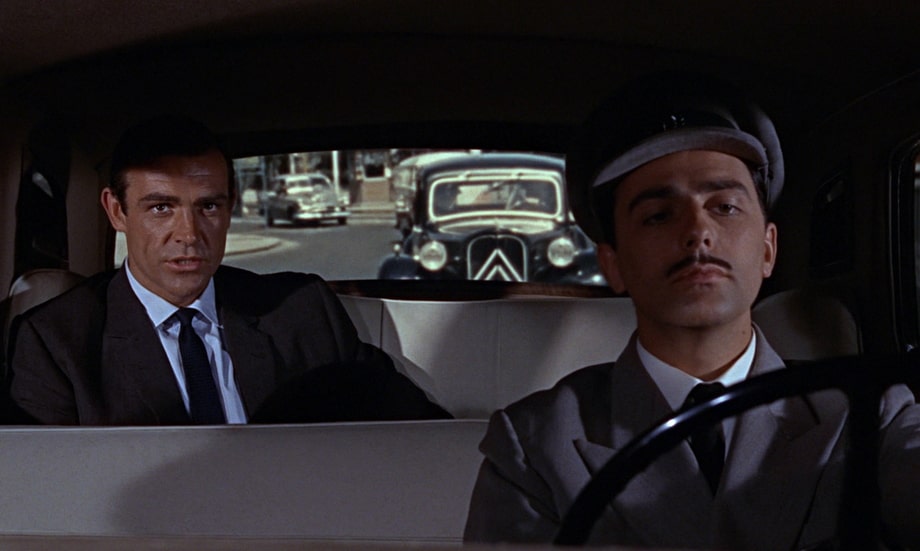
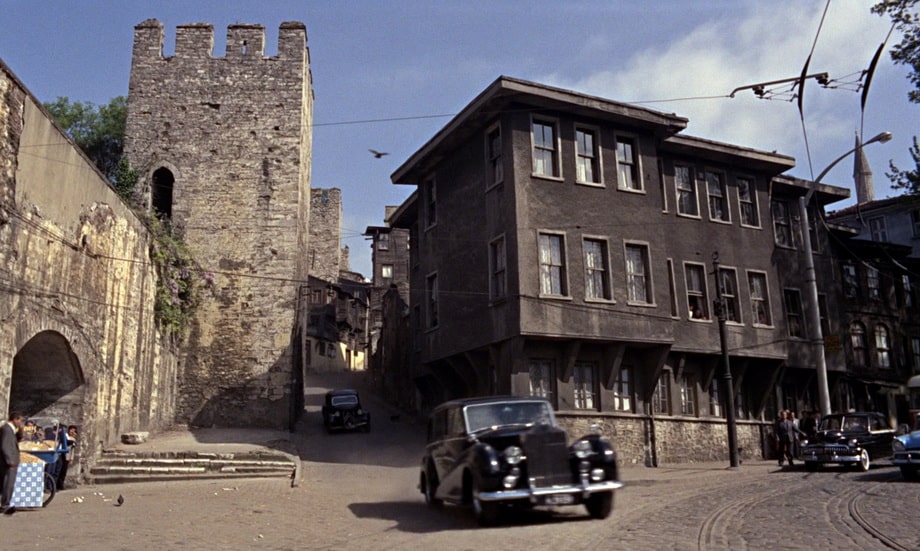
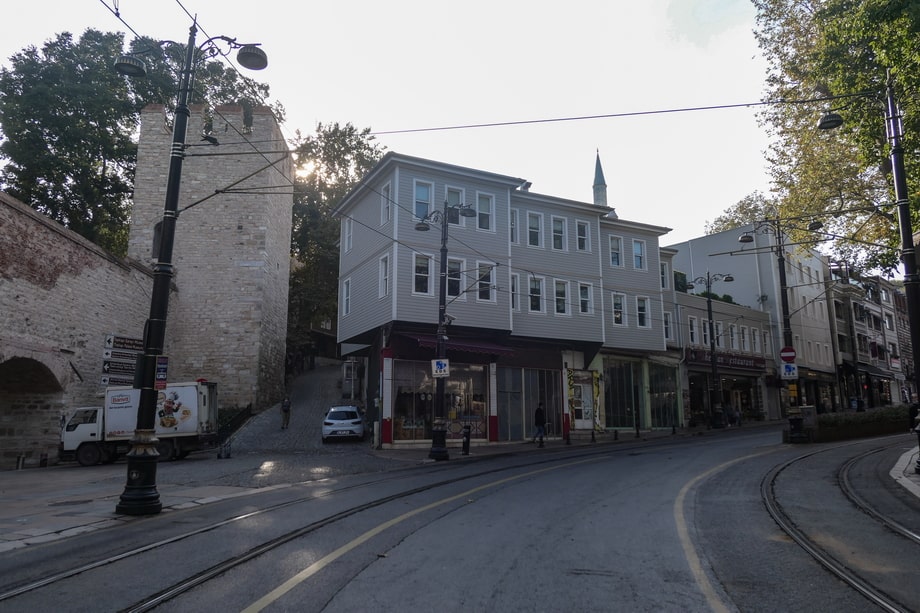
The following shot of just a few seconds shows a Rolls-Royce Silver Wraith with Bond and Bye’s driver passing between the ancient wall on the left and wooden buildings on the right, riding down a narrow street. This location is accessible to everyone who comes to the city center of Istanbul, similarly because it is located just next to Gülhane Park and a few minutes walk from both Aya Sophia and the Blue Mosque. The street is called Soguk Cesme, with a length of less than 300 meters, which runs next to the walls of Gulhane Park and Topkapi Palace. The full name of the street can be translated as the ‘Street of the Cold Fountain’, named, respectively, after a local fountain. The wooden buildings we see are the landmarks of the street and were built at the threshold of the 20th century. They were renovated in the mid-1980s, so it looks slightly different compared to 1963. With the introduction of the next location, once again to the west, it is safe to assume that the wooden houses and the wall of Gulhane Park were chosen by the filming crew for their authentic historical look. Nowadays, Soguk Cesme is a pedestrian street and is car-free, even for British secret agents.
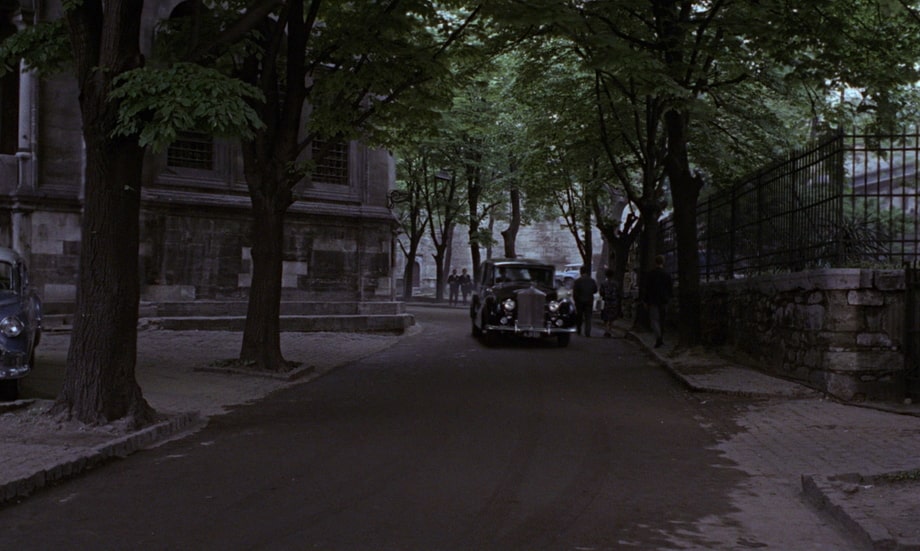
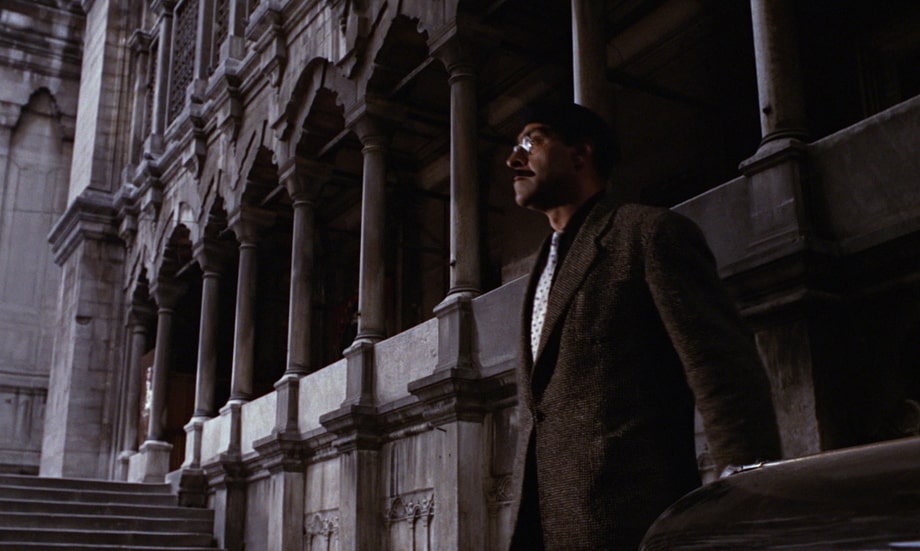
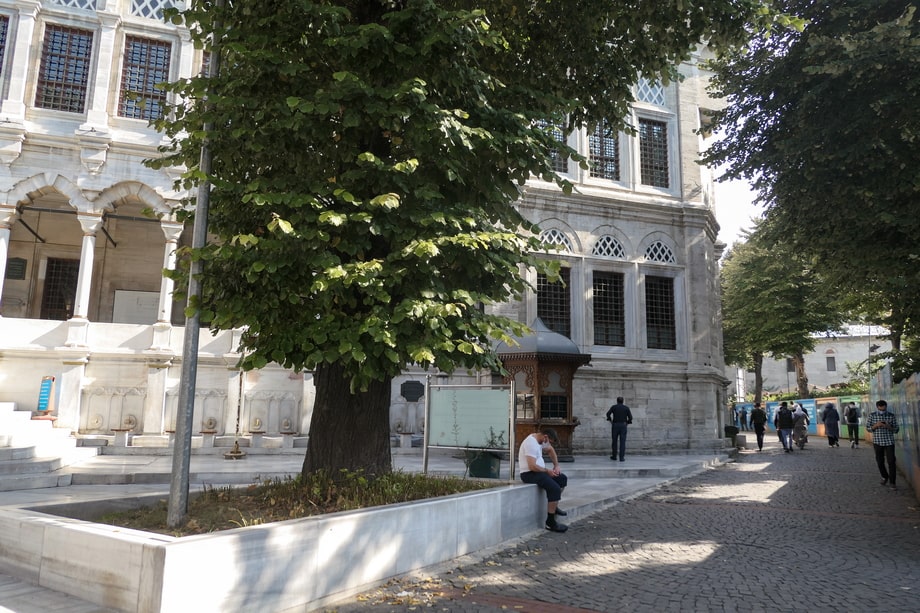
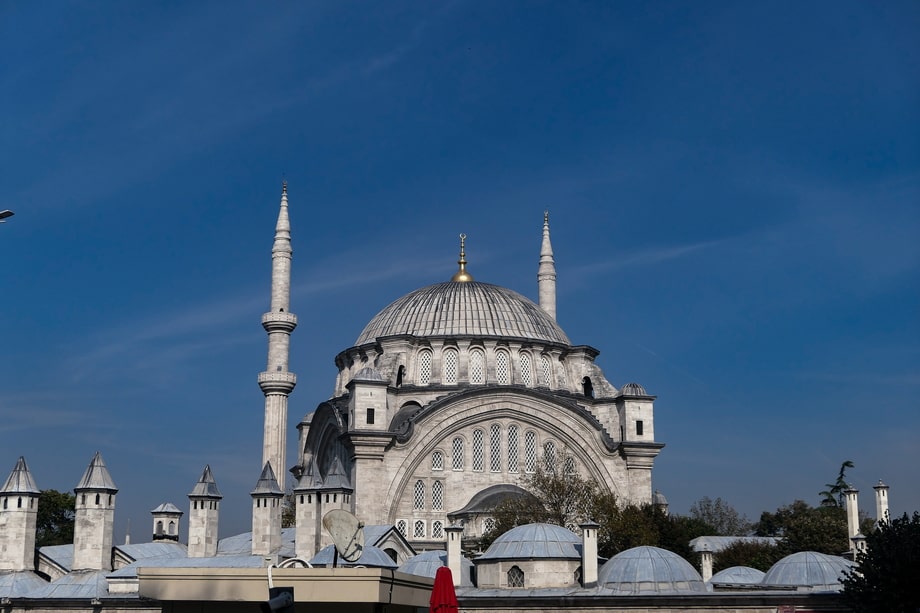
The next few moments inside the car were created by an old technique of protection of the road behind the passenger until we see the car in its real location. The street squeezed between the stone wall on the right and the mosque on the left is called Nuruosmaniye Caddesi (car-free nowadays) and was named after the Nuruosmaniye Mosque. Both cars make a stop just next to one of the entrances. The mosque was built between 1748 and 1755 in a new Ottoman Baroque Style. The whole complex was restored several times in the past three centuries, with the last renovation finished in 2012. A few seconds after a stop, a Bulgarian agent (played by an Istanbul-born Hasan Ceylan) watches James Bond leave the car and take a walk. We see 007 and Bey’s chauffeur leave the mosque grounds through the western gate and enter the Grand Bazaar. After passing several merchant shops, they enter the secret ‘Station T’ British headquarters. The Grand Bazaar, or Kapaliçarsi in Turkish, is one of the largest and oldest covered markets in the world, with a total area of around 30,000 m2 and 4000 shops inside, with its streets and numerous entrances. Of course, the interior of Ali Kerim Bey’s office was recreated at Pinewood Studios in London.
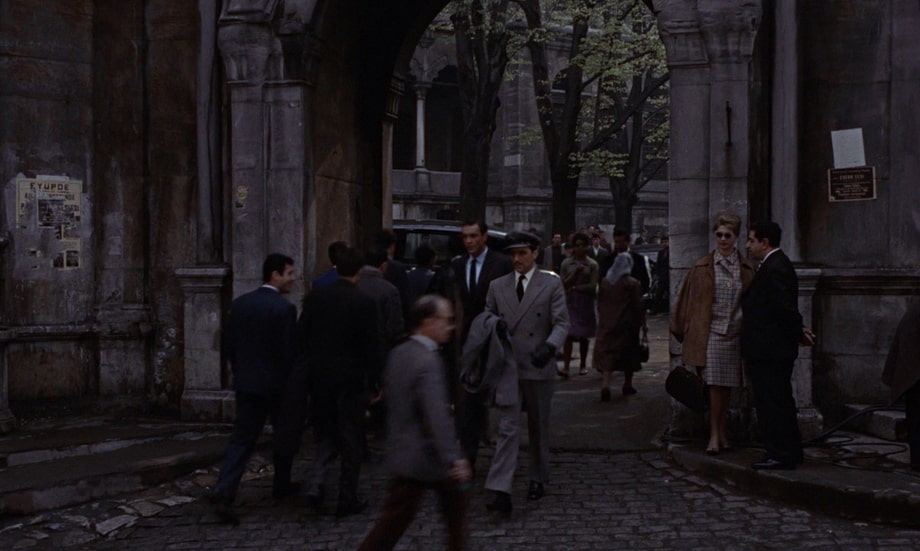
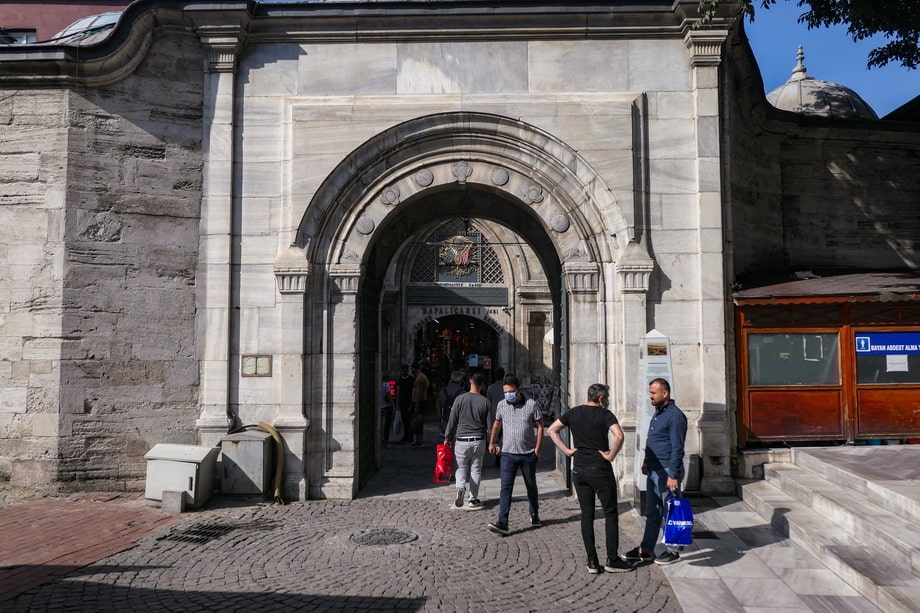
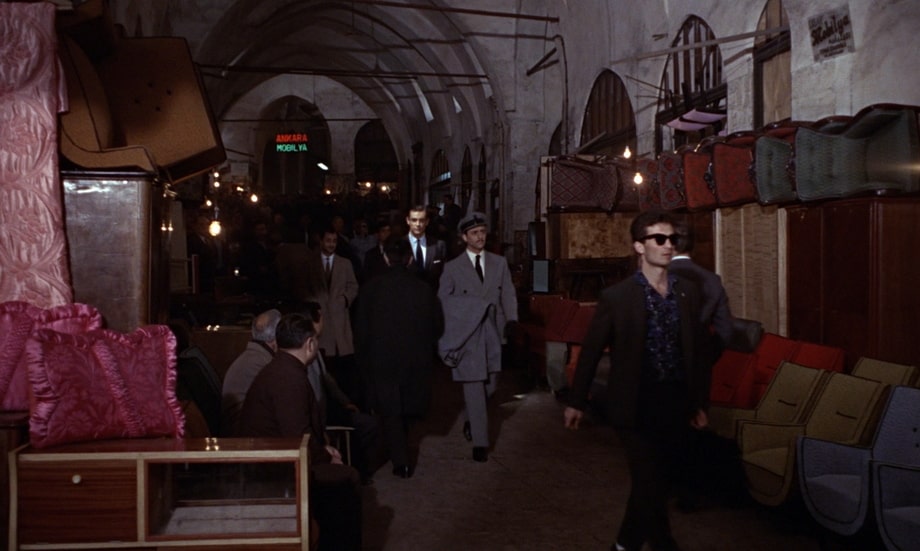
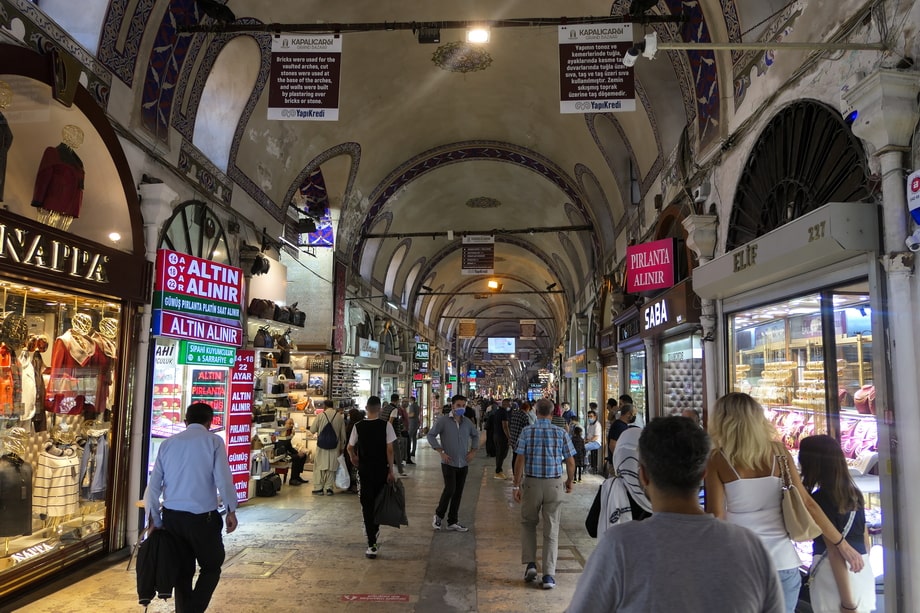
It is interesting to note that the most attentive viewers may notice a police cordon and a crowd of local people in the far background at the moment when Rolls-Royce rides Nuruosmaniye Caddesi. Though the James Bond series was not a legendary franchise in 1963, with only one movie presented to the public a year before, the filming crew had problems with the crowds of people who wanted to come closer to the filming crew in Istanbul. Five decades later, 007, with the face of Daniel Craig, will return to Istanbul for one of the most spectacular chases in the whole franchise. James Bond on the roof of the Grand Bazaar on his motorcycle in ‘Skyfall’ would overshadow the 1963 scenes near it. Kapaliçarsi is a usual choice as a movie location in Istanbul and was used for such Hollywood movies as ‘The International ‘ (2009), ‘Taken 2’ (2012), and ‘Inferno’ (2016).
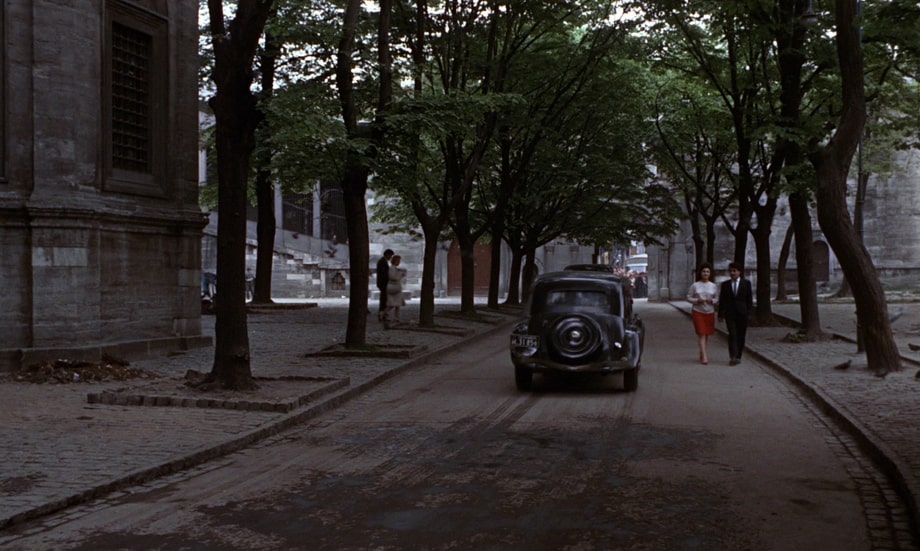
While the location of the Soviet consulate was shown earlier with Tanya leaving it with her colleagues, a new matter contributes greatly to the story. Red Grant, a villain assassin performed by character actor Robert Shaw (best known for ‘Jaws’ and ‘The Sting’), kidnapped a Bulgarian driver, the one who had chased James Bond to Karim Bey’s office. Grant possessed the Citroen car, battered and fettered the driver, and left his body in the car in front of the Soviet consulate. A guard at the gate identifies Grant’s suspicious behavior and reveals a dead body in the left automobile. The action itself was ordered by Colonel Klebb to raise Soviet suspicion against the British, including 007.
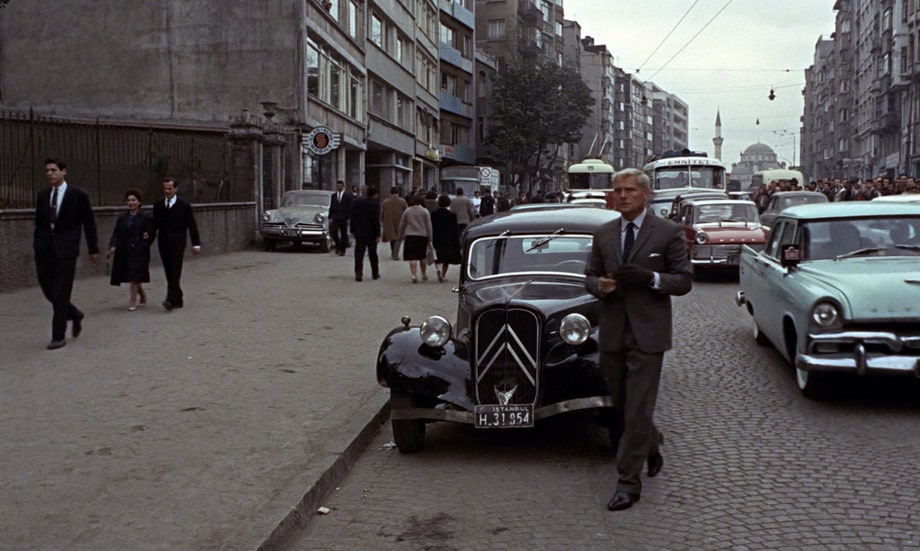
The location itself is already familiar to us with a tiny adjustment. Though in a scene with Romanova, we saw Halaskargazi Caddesi street in the Northern direction with Sisle Mosque in the far background, this time Grant leaves the place in another car, showing the street in the opposite direction. He was picked up by Colonel Klebb in a taxi. Once inside the taxi, the two are shown driving across the city with a brief glimpse of the Bosphorus and another mosque called Dolmabahçe Mosque. Situated near the well-known Dolmabahce Palace, the location is roughly 2.5 kilometers from the filing location of the consulate.
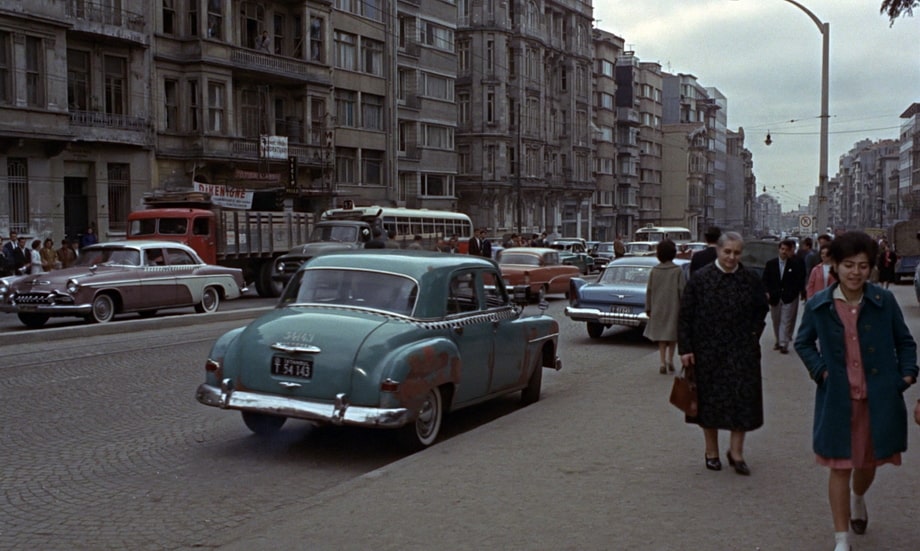
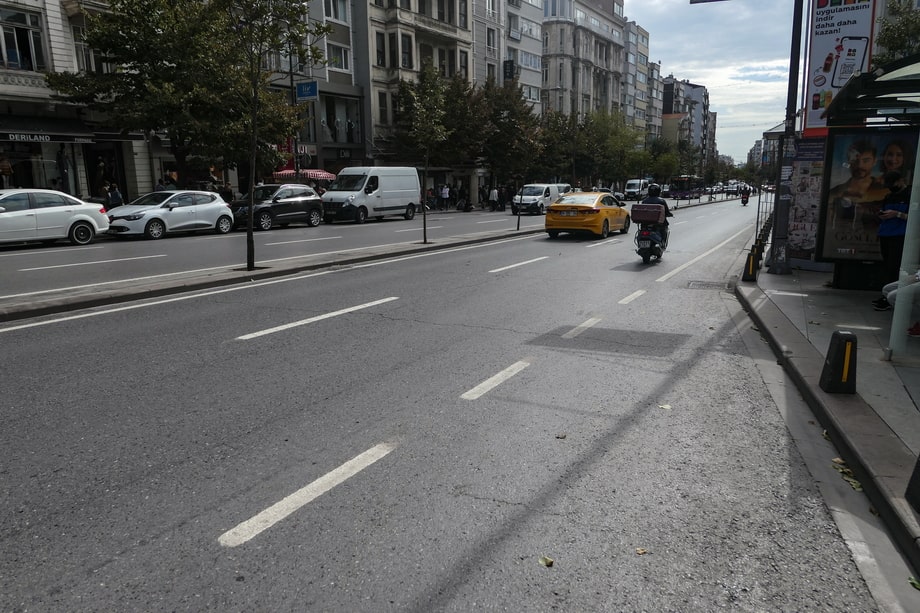
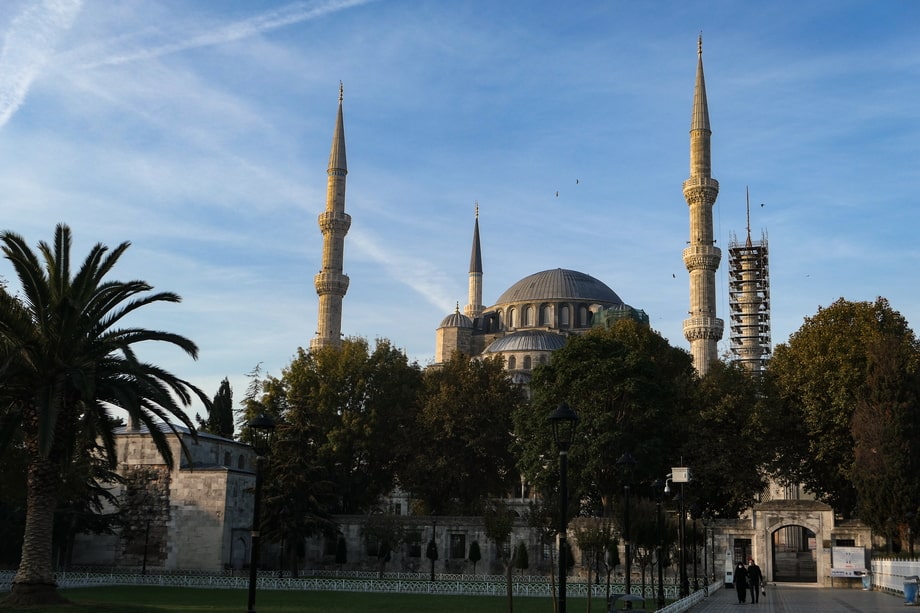
A short sequence with Klebb and Grant riding in the car makes space for another breathtaking panorama of Istanbul, this time for the Blue Mosque. We have already seen this part of the city in the opening bird’s eye view, that time from one of its minarets with a panorama over Hagia Sophia. This time, the shot was set in the reverse direction, facing the Blue Mosque. It was constructed in 1617 with a capacity to welcome up to 10,000 attendees at one time. It took another two decades after a movie depicting James Bond in Istanbul to include the mosque in the UNESCO World Heritage List for having both historical and cultural significance.
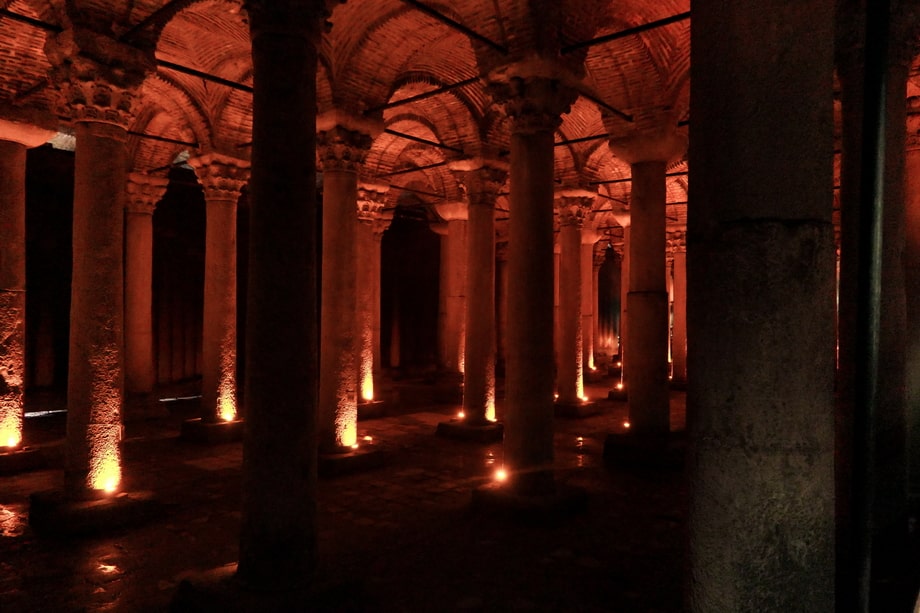
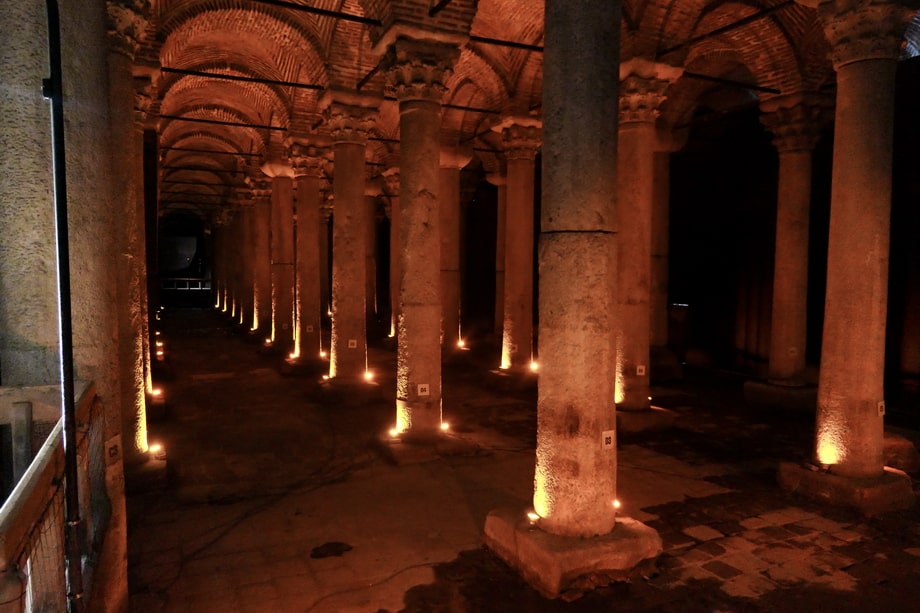
We see James returning to Kerim Bey’s secret office in the center of the city and joining the ‘Station T’ head on a boat ride to the Soviet consulate under the streets of Istanbul. The British agents thus supposedly cover the distance between the Grand Bazaar and the consulate. Speaking about the filming location, more than 5 kilometers away, and which is more importantly, the Golden Horn separates the Grand Bazaar from a villa at Halaskargazi Caddesi 161, but in the movie, the Soviet embassy is supposed to be located somewhere in the Old Town in the European part. On the other hand, the scene with the boat was filmed in the real Basilica Cistern, or Yerebatan Sarnıcı in Turkish. This underground cistern is the largest of such kind in the city and was created in the 6th century to supply the city with water from the Belgrade Forest, around 20 kilometers from Constantinople. Though completed under the Eastern Roman Emperor Justinian I (Justinian the Great), Bey’s claim that the Cistern was created under Constantine is not a mistake, as under him was constructed a predecessor of the cistern.
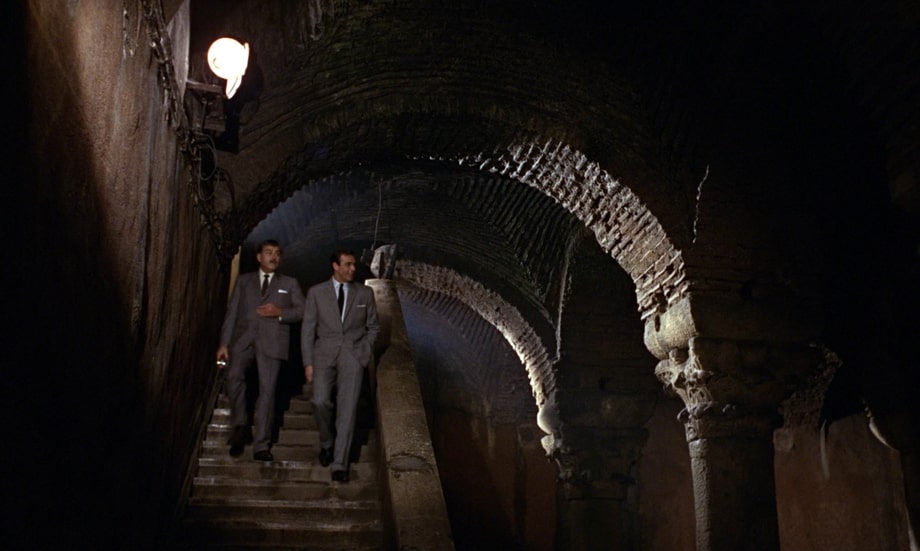
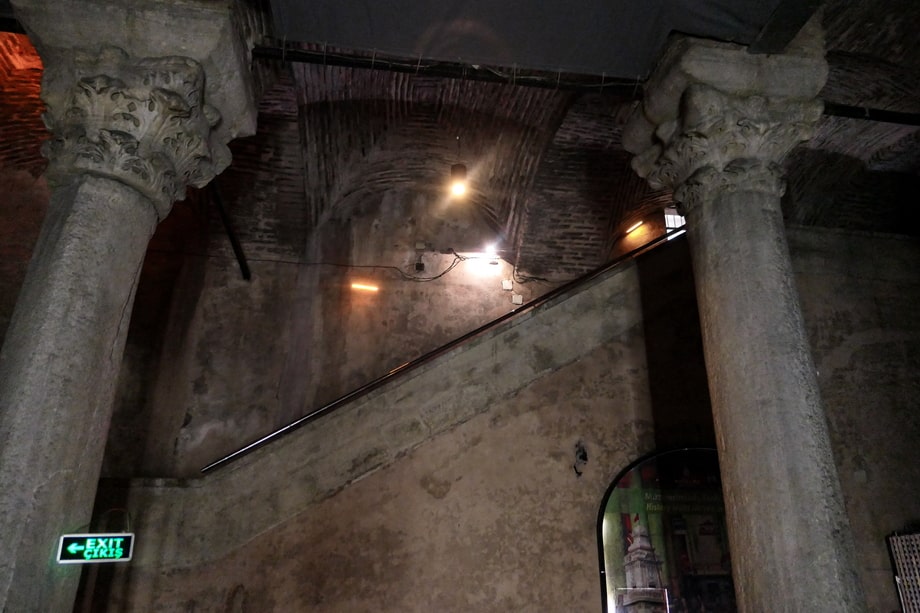
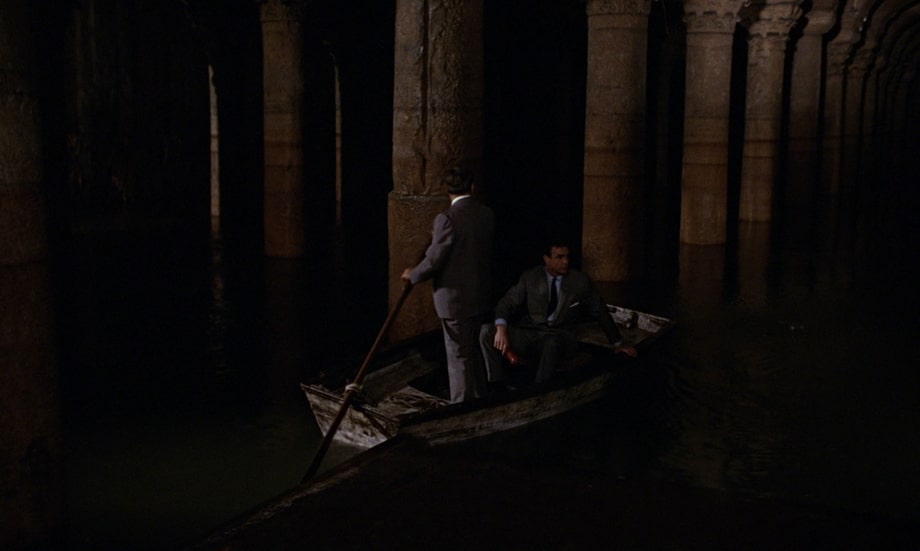
It is interesting to note that Bond and Kerim get down to the underground facility using an ancient stair, which nowadays serves as the main entrance to the Cistern. The entrance is situated at Yerebatan Caddesi Street, just across the road from Hagia Sophia in the very heart of the city, obviously not under the Grand Bazaar area as it was shown in the movie. While this cistern is the largest in the city, it only covers a space of around 10,000 square meters and does not run under the whole city center. The depth of the water is only around one meter or less in different periods, and nowadays you don’t need a boat to walk here as the location was supplied with convenient passages above the water in the 1980s. The final section, when Kerim and Bond use a periscope, was recreated at the Pinewood Studios in the UK. Basilica Cistern is an iconic landmark in Istanbul, and movie fans could also recognize it in the 1997 TV series ‘The Odyssey’ by Andrey Konchalovskiy and, of course, in the more recent ‘Inferno’ by Ron Howard.
I want to say a few words about the actor who played Kerim Bey in the movie. His name was Pedro Armendariz, and he was a major film star in his native Mexico at the time. Hiring Armendariz was considered a perfect casting decision. In the early stage of production, director Terence Young discovered that the actor was ill in a terminal stage and the shooting process may be exhaustive for him. The shooting schedule was rearranged for the convenience of Pedro Armendariz, and his scenes were shot among the first. The actor himself asked the director to leave him in the movie for his wife to get his salary, and despite his deteriorating health, he spent another two weeks filming in the UK. On June 18, 1963, Pedro Armendariz shot himself in the hospital so as not to suffer to the end from neck cancer, three months before the premiere of the second Bond movie and a day after the premiere of another movie with him, ‘Captain Sindbad’.
Another Istanbul location where terminally ill actor Pedro Armendariz performed next to Sean Connery is probably the most obscure when dealing with the city map. After adventures in the gypsy camp (some exterior shots in the suburb of Istanbul and the camp itself staged at Pinewood studios near London), Kerim Bey and James Bond go for a night walk to kill the Bulgar assassin called Krilencu. A Soviet henchman worked for Rosa Klebb, and the character was based on the one from Fleming’s book with slight differences. Krilencu made at least two failed attempts to kill Kerim Bey, the latest in the gypsy camp. The character was played by a British actor of Hungarian origin, Fred Haggerty (1918-2002). In 1967, he played an uncredited role in the ‘Casino Royale’ parody movie on the 007 franchise, and in 1977, he played another uncredited role in ‘The Spy Who Loved Me’.
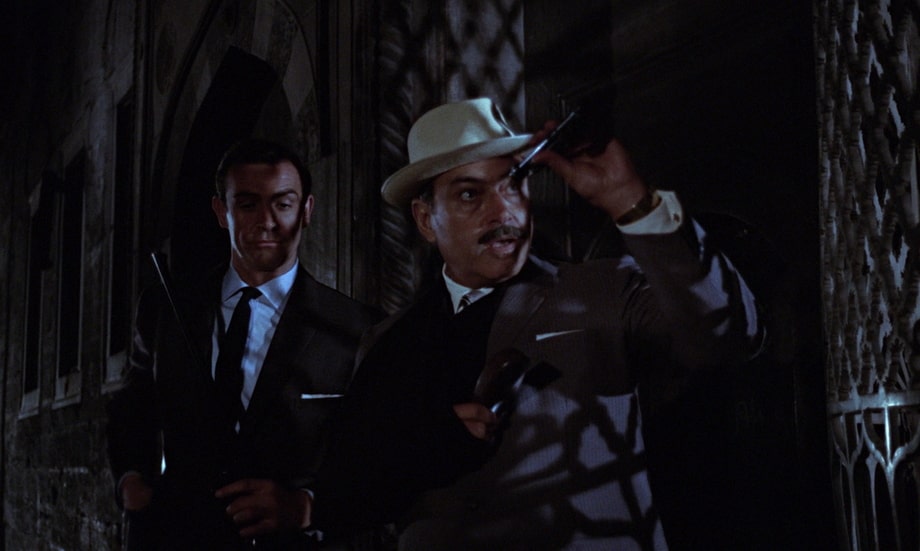
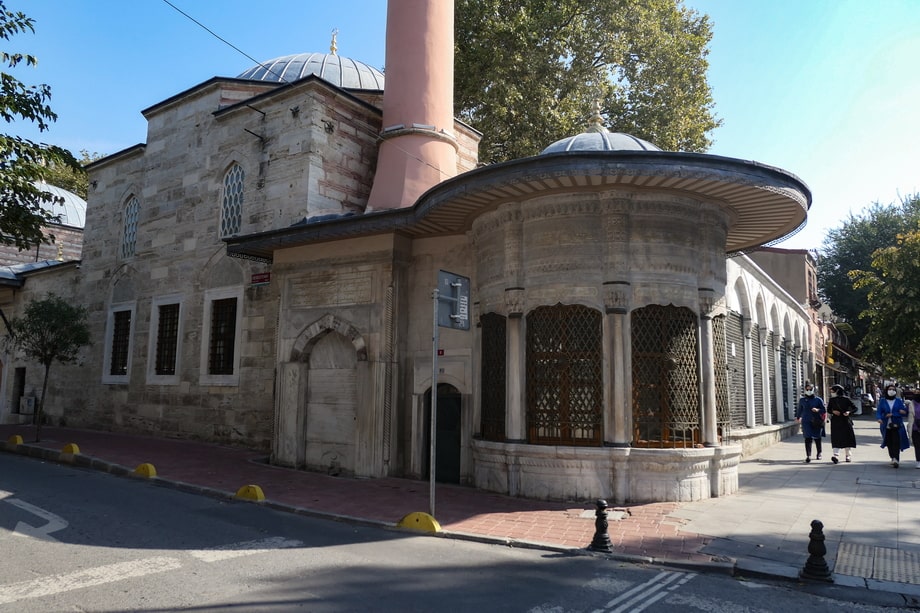
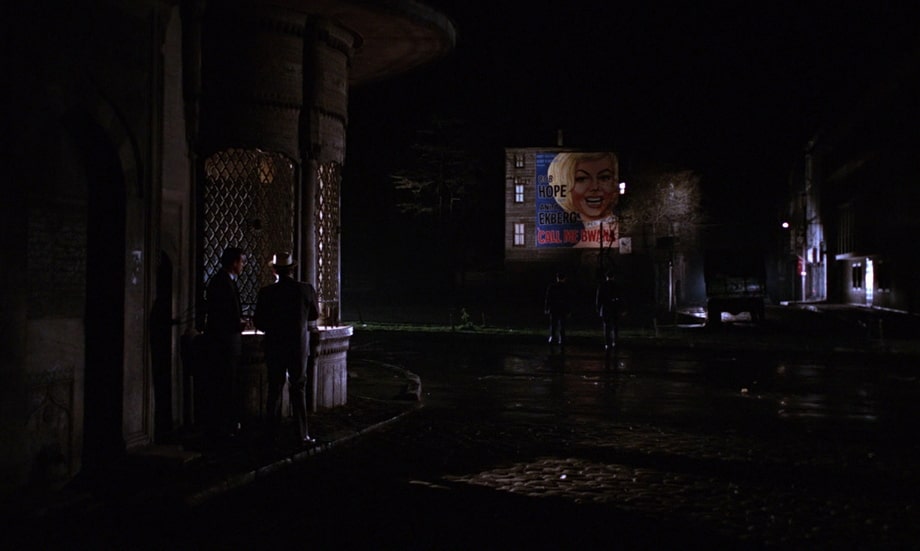
Before getting to the exact location, it is interesting to note the difference between the similar scenes in the novel and the 1963 adaptation. In Fleming’s book, outside Krilencu was a huge banner of a movie called ‘Niagara’ with Marilyn Monroe as a leading star. In the original, the mouth of Marilyn included a hidden door. In Terence Young’s movie, the 1953 movie made space for the 1963 movie called ‘Call Me Bwana’, and the door was located in the mouth section of a giant picture of Swedish actress Anita Ekberg (1931-2015). The movie was the property of Eon Productions, the owners of the 007 franchise, produced by Albert Broccoli, and premiered on April 4, a few days after the start of the shooting of the second Bond movie. Once Kerim Bey kills Krilencu with an AR-7 sniper rifle, Bond says sarcastically, ‘She should have kept her mouth shut. ’ It is worth noting that ‘Call Me Bwana was created by roughly the same crew as ‘Dr. No’, including cameraman Ted Moore and editor Peter R. Hunt, of course, except for different directors: Gordon Douglas and Terence Young, respectively.
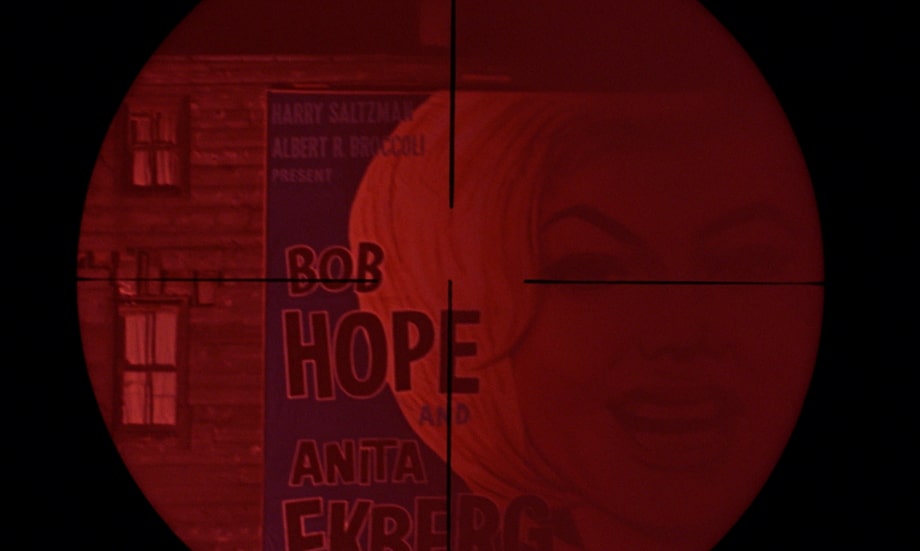
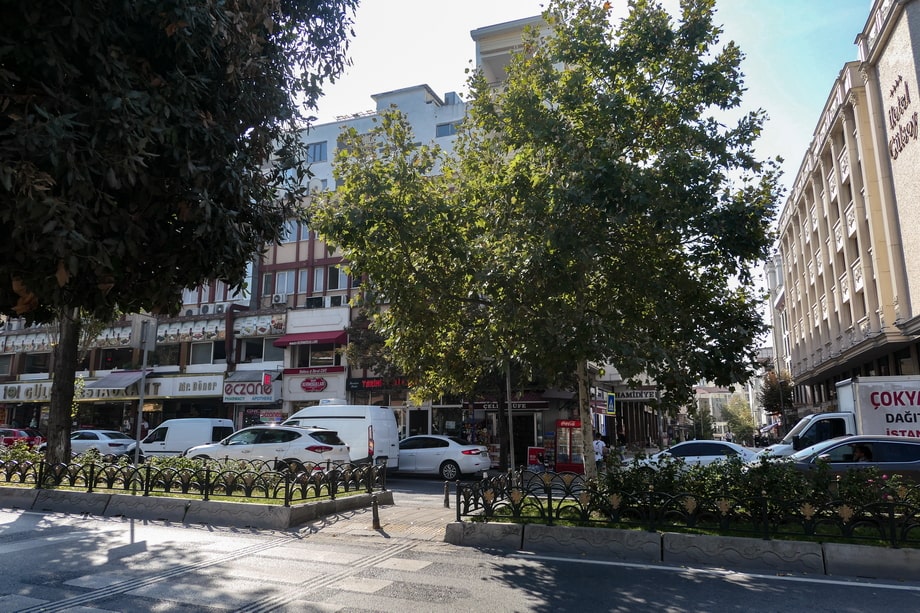
The location where the scene took place could be found within walking distance of the actual Grand Bazaar, a supposed headquarters of Kerim Bey. The exact filming location could be identified only thanks to the background behind Kerim and Bond. It is the South-Western part of Damat Ibrahim Pasa Cami, a small mosque to the West of Grand Bazaar named after the XVII Ottoman Grand Vizier. The complex on the modern intersection of Şehzadebaşı Caddesi and Dede Efendi Caddesi streets was built in 1720. Nowadays, the spot where Kerim and James stood opens a panorama over the residential buildings across the road, which are not the same as in 1963.
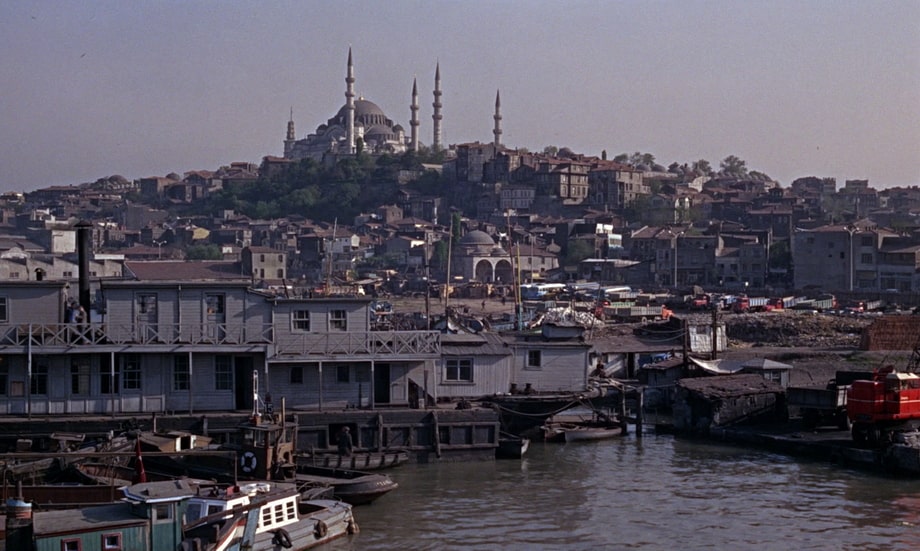
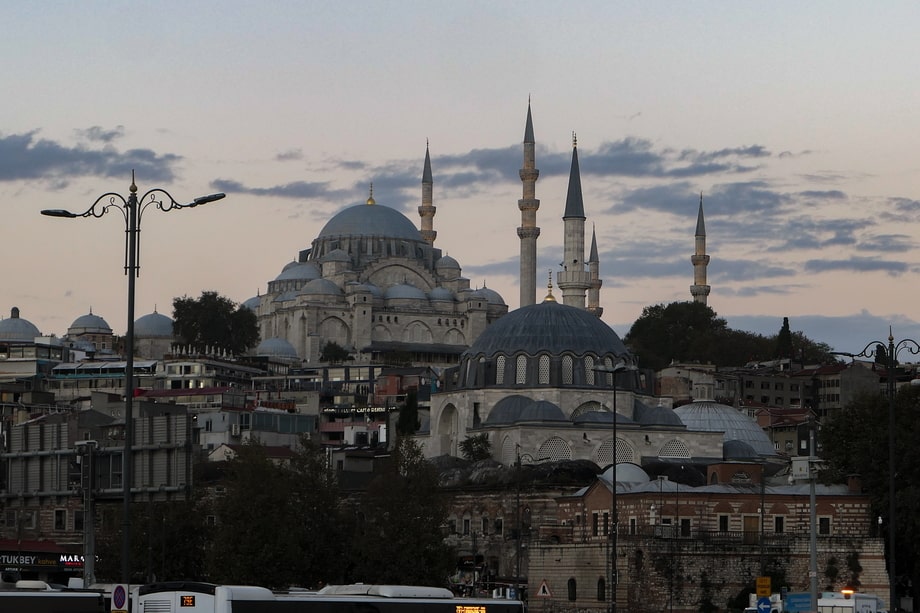
After the ‘bed’ encounter between Tatiana Romanova and James Bond in a hotel room, the two agree to a meeting in the city center the next day. We see another panorama over the high historical part of Istanbul, though not as picturesque as some previous ones. The boats and wooden facilities in the foreground belonged to the Eminonu pier, one of the transport hubs of Istanbul. Back in 1963, it looked more shabby and less touristy than nowadays. This shot also takes advantage of two Istanbul mosques. The larger one on the hill is Süleymaniye Cami, built in the 16th century under the commission of Suleiman the Magnificent, probably the most well-known Ottoman ruler. Until recently, 2019 if to be precise, Süleymaniye Mosque was the largest one in Istanbul and its size and grandeur dominated the landscape of the city seen from the Bosphorus for four and a half centuries since its completion in 1557. The panorama also includes another mosque beneath the hill: Rüstem Paşa Cami, with only one minaret. Named after one of the Grand Viziers of the Ottoman Empire, it was completed in 1663, only six years after Süleymaniye Mosque, and they have accompanied each other when looking from the Golden Horn since then.
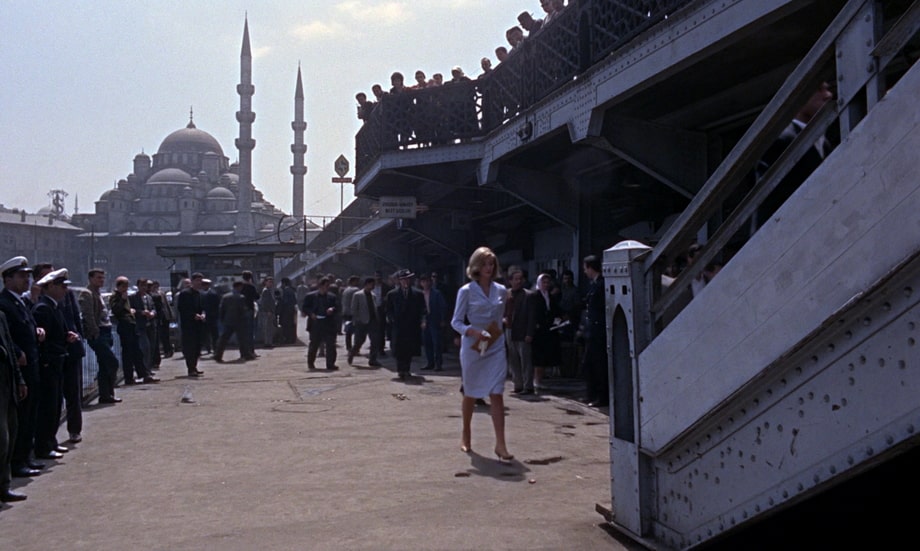
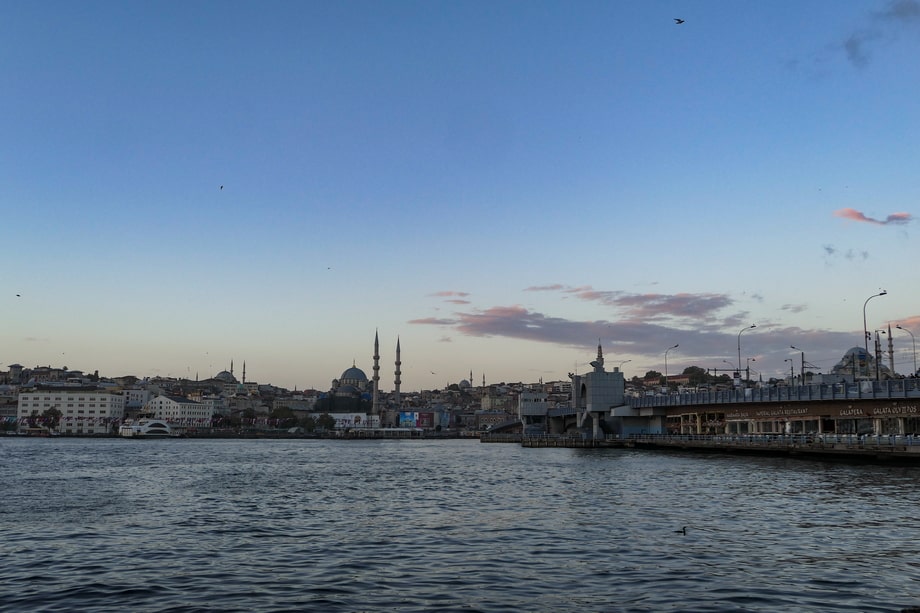
A few seconds later, the establishing shot leaves place for another breathtaking panorama when Tanya walks next to a bridge, followed by a Bulgarian agent. The magnificent mosque we see in the background is Yeni Cami or The New Mosque. The construction of this complex took almost seventy years, from 1597 to 1665. The bridge Tanys is ascending by stairs is the Galata Bridge, evidently the most recognized water crossing structure in Istanbul. Unfortunately, the bridge from 1963, with wooden pavement laid in 1912 by a German company, was badly damaged in a fire in 1992. The current version we can all see in Istanbul was rebuilt and opened in 1994. It is worth noting that the modern Galata Bridge is not even the second but the fifth version of the bridge in this place since 1845, not to mention temporary crossings and pontoon bridges here since the 6th century. As we can see in this scene, the crowd above stares at the actress Daniela Bianchi—another hint to the filming crew’s problem with the onlookers during the shooting in Istanbul in 1963. In 2011, both the Galata Bridge and the Eminonu Pier provided some external shots to ‘Taken 2’ with Liam Nison.
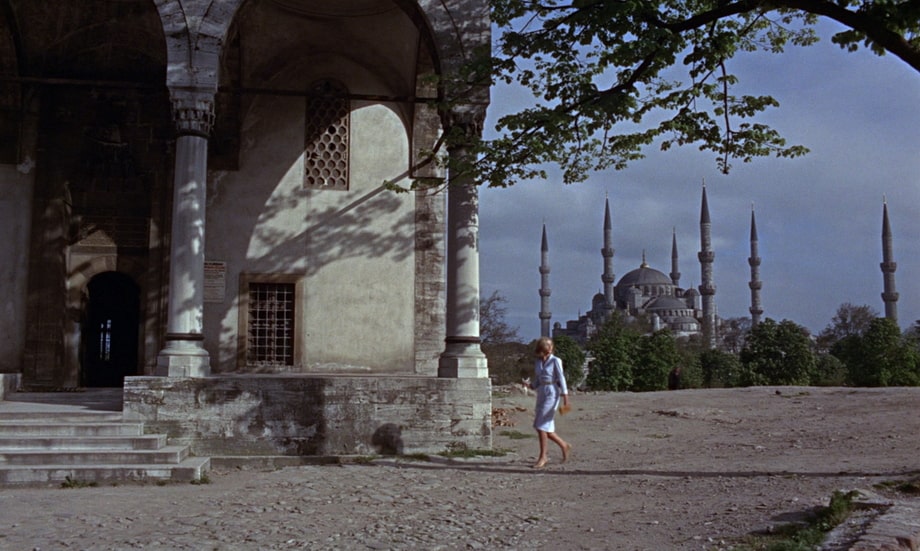
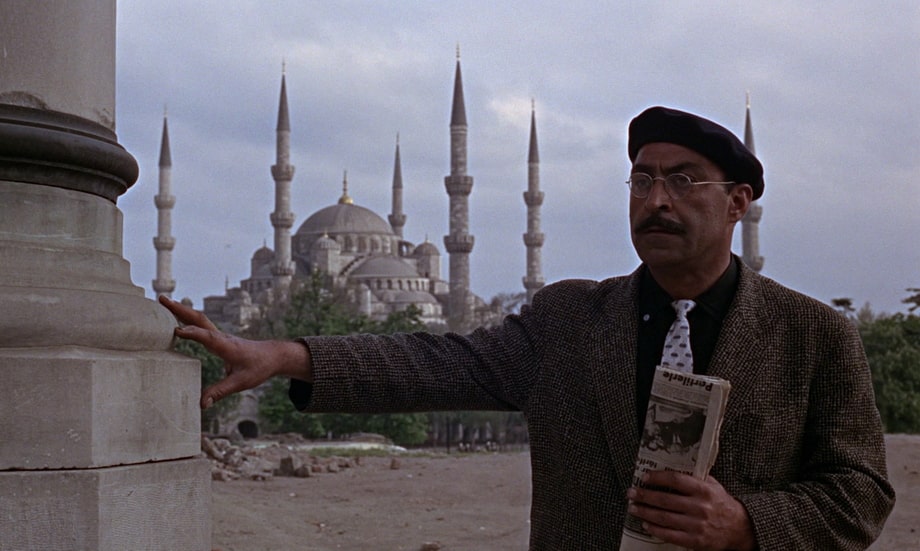
After a short sequence at the Galata Bridge, Romanova proceeds with her pedestrian journey across Istanbul, particularly to the ancient city center. It should be noted that her direction of walking on the bridge indicated a move in the opposite direction, though, of course, with a more breathtaking view. Now we see the key female character walking next to a small mosque—in fact, the most moderate in size among those we have already seen in this movie. She is followed by a Bulgar agent, played by Turkish actor Hasan Ceylan (1922-1980). This is the Soviet agent who previously traced James Bond from the airport to the Grand Bazaar and whose driver was kidnapped and murdered by Red Grant. Getting back to the exact location, we deal with the Firuz Aga Mosque, built by an Ottoman state treasurer as far back as 1491. Despite a feeling of a wasteland in the background, the scene was filmed in the very heart of the city next to Sultan Ahmet Park and at arm’s length from both the Blue Mosque and Hagia Sophia. We can see the Blue Mosque in the background to the right. The area around Firuz Aga Mosque has significantly changed and has been urban developed since 1963. It is worth noting that it would take Tanya around 30 minutes of walking to cover the distance between the Galata Bridge and this location.
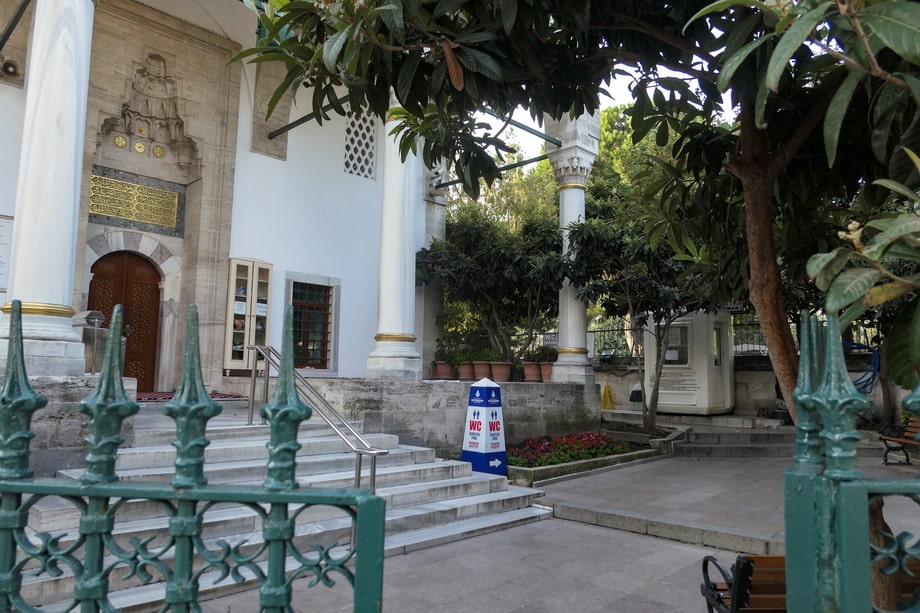
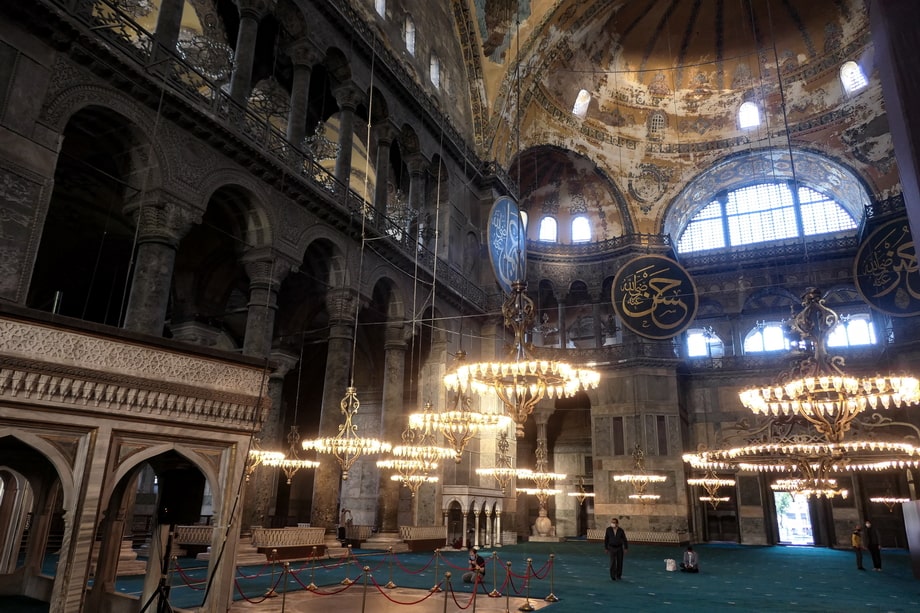
Considering the previous location, Hagia Sophia is located close to Firuz Aga Mosque, thus making Romanova’s route relevant from the point of Istanbul’s real topography. It was almost unimaginable to stage an ambitious English-speaking movie in 1963 and shy away from closing the story to the city’s most recognized landmark. The opening Istanbul panorama already took advantage of Hagia Sophia externally, and it was reasonable to come back here and visit the ancient sanctuary from the inside. In the following scene, Tatiana Romanova delivers the blueprints of the Soviet consulate to James Bond. We see 007 among tourists inside the main hall of the Hagia Sophia. The giant complex was built in the VI century under the reign of Emperor Justinian I, the one I have mentioned a couple of times before. It was the largest Christian cathedral for ten decades and was turned into a mosque in 1453. In the scene with James, we can be easily impressed with the size of the structure, particularly with the height of 55 meters.
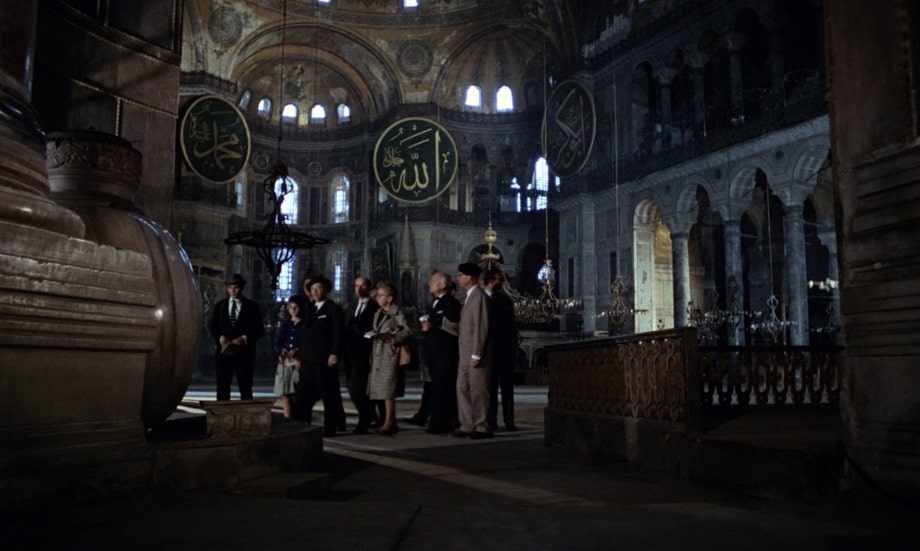
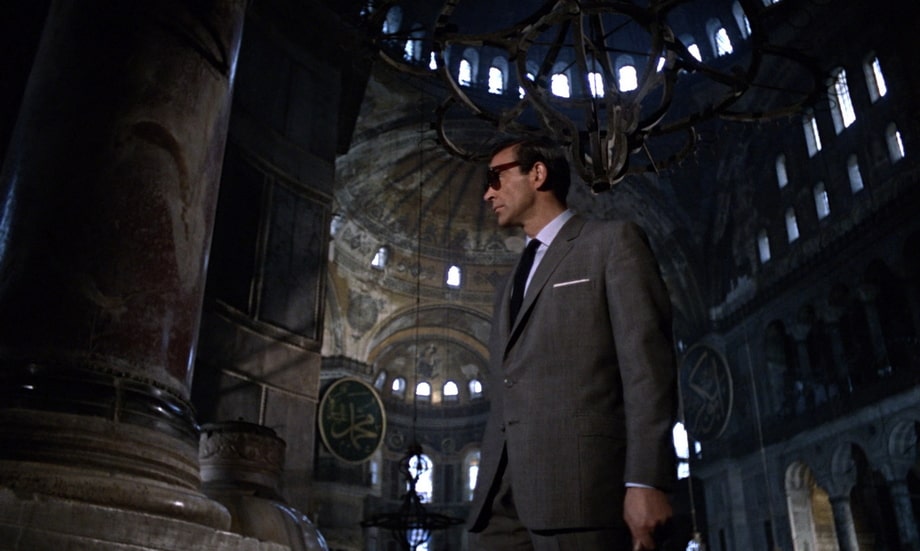
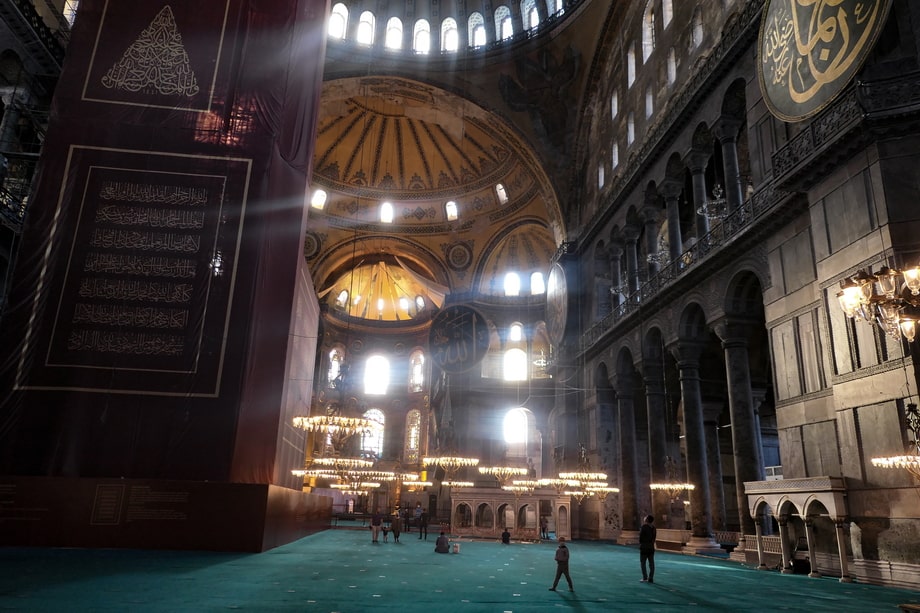
James and Tanya identify each other, and Romanova leaves the plans to a giant pillar. Bond takes notice of the Bulgarian agent, who watches Romanov from cover, but Red Grant kills the Soviet spy on the spot without being noticed by 007. Hagia Sophia was among the first and most important filming locations in Istanbul in 1963, and the first take here materialized on April 22, only three weeks into the production process. The local government allowed Eon Productions to film scenes inside the museum (since 1935) to the extent that they would not bother the access of tourists inside Hagia Sophia. Several times, large groups of visitors caused production delays, and filming here was a challenge. Apart from dealing with bystanders, natural low-light conditions made Terence Young and his men bring tons of lighting equipment. During those days, the people of Istanbul could see three dozen vehicles with the filming crew, who covered their path from the Hilton Hotel to Hagia Sophia daily. In 2020, the museum complex was once again controversially turned into an active mosque. Regarding Hollywood movies, Ron Howard got permission to film here for several scenes for his ‘Inferno’ with Tom Hanks, thus using the authentic location from the book by Dan Brown.
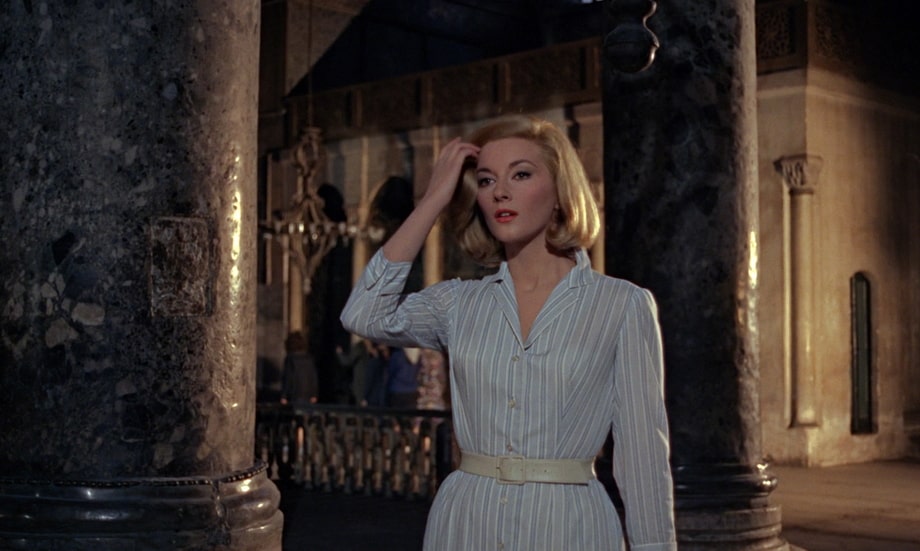
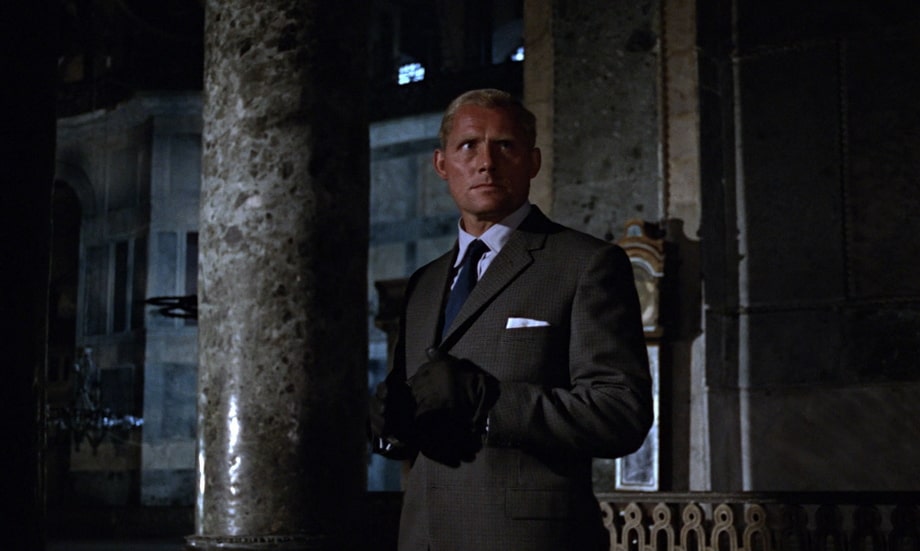
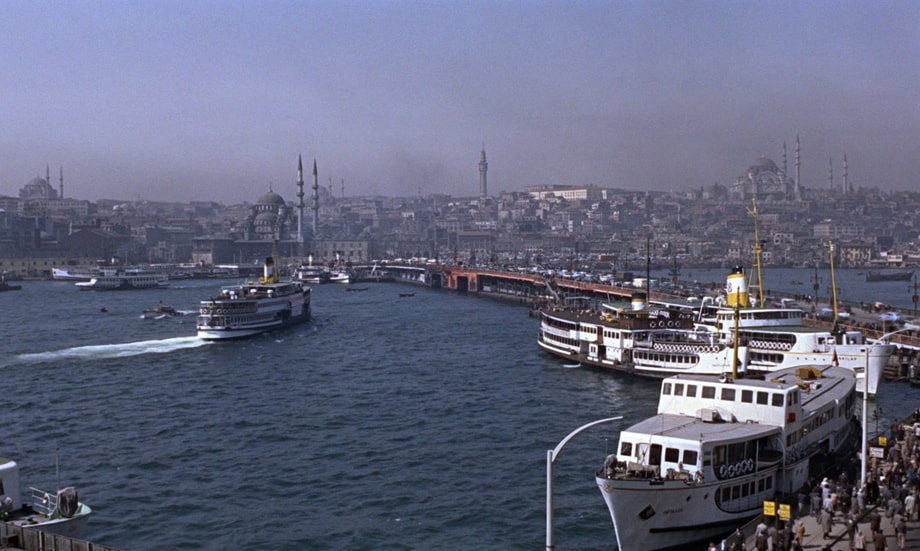
With the blueprints of the Soviet Consulate in his hands, Bond discusses the next moves with Kerim Bey and arranges another meeting with Tatiana Romanova, this time on board a boat in the Bosphorus. It is worth noting that the movie’s final version lacked another scene with Turkish actor Hasan Ceylan, who played a Bulgarian agent. In a scene, he watched 007 and Romanova, but during editing, the filmmakers understood that chronologically, his character had already been killed in Hagia Sophia, and another sequence with Ceylan was cut off. The sequence starts with another breathtaking panorama of Istanbul, this time an expanded version of the view over the Galata Bridge. The shot includes at least five mosques, among them: Nuruosmaniye Mosque, The New Mosque, Rüstem Paşa, and Süleymaniye Mosque.
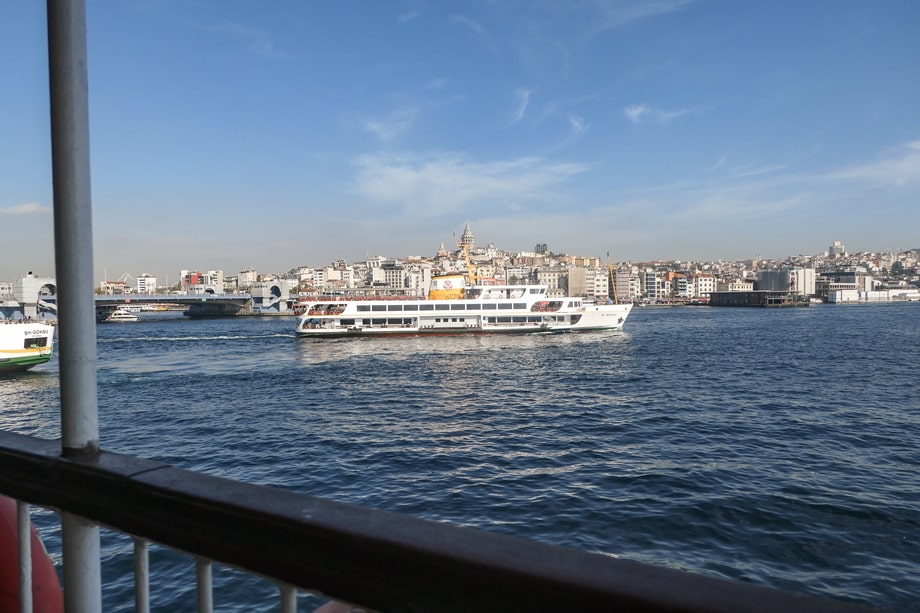
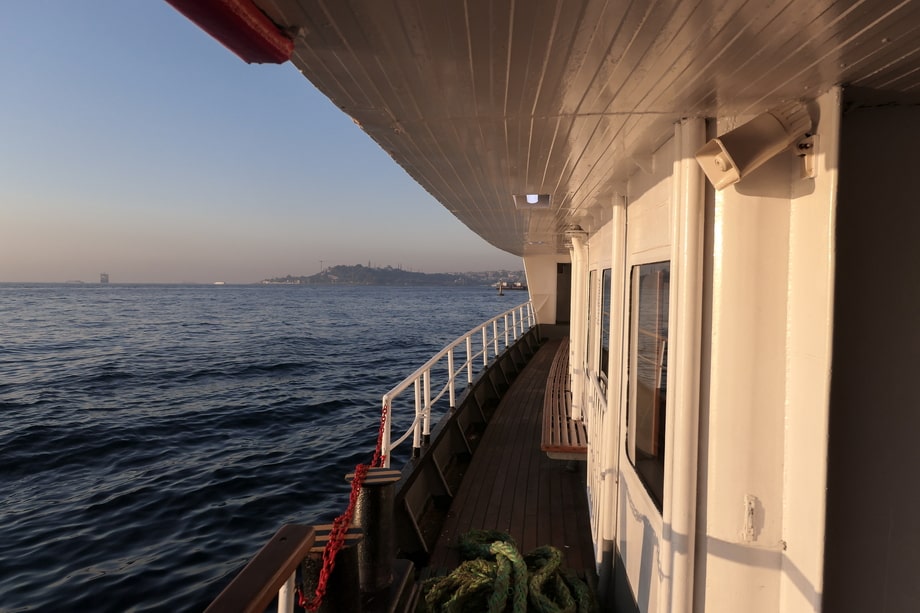
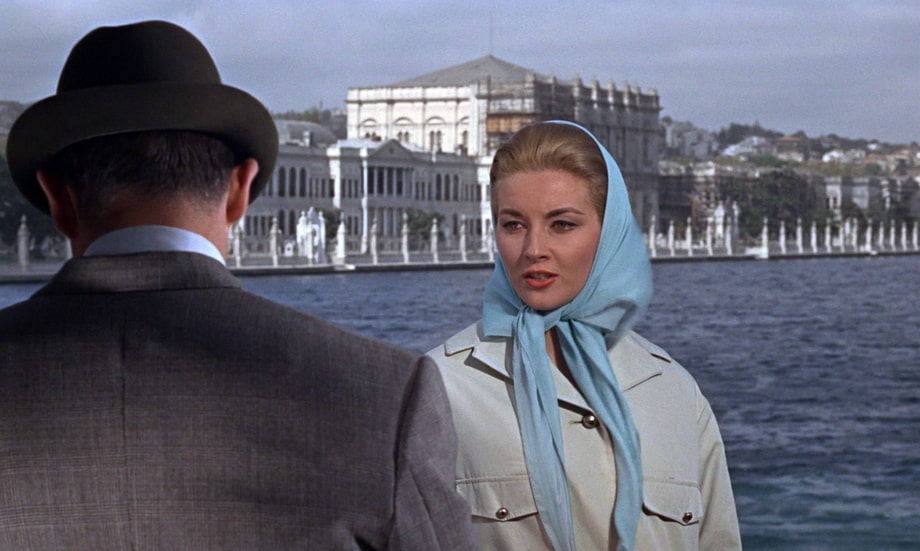
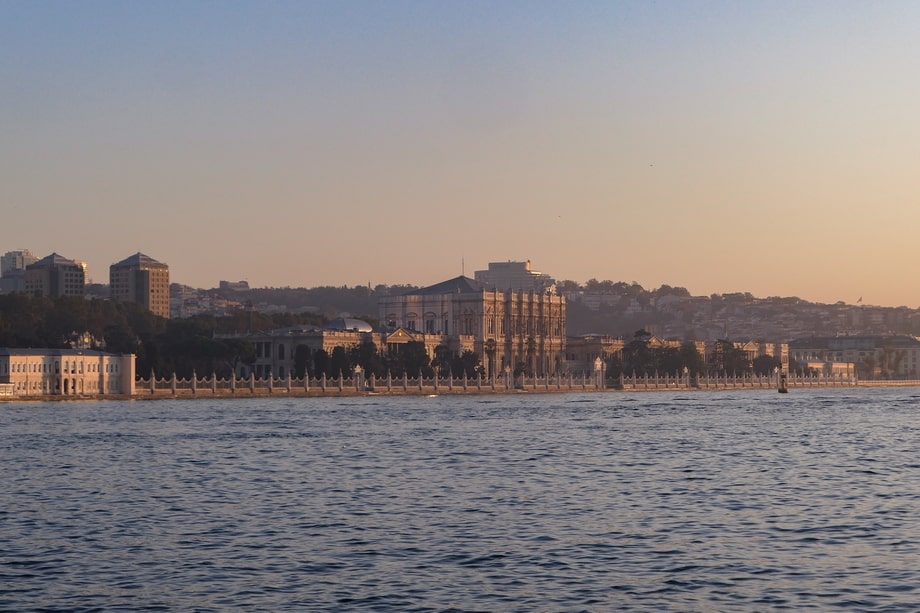
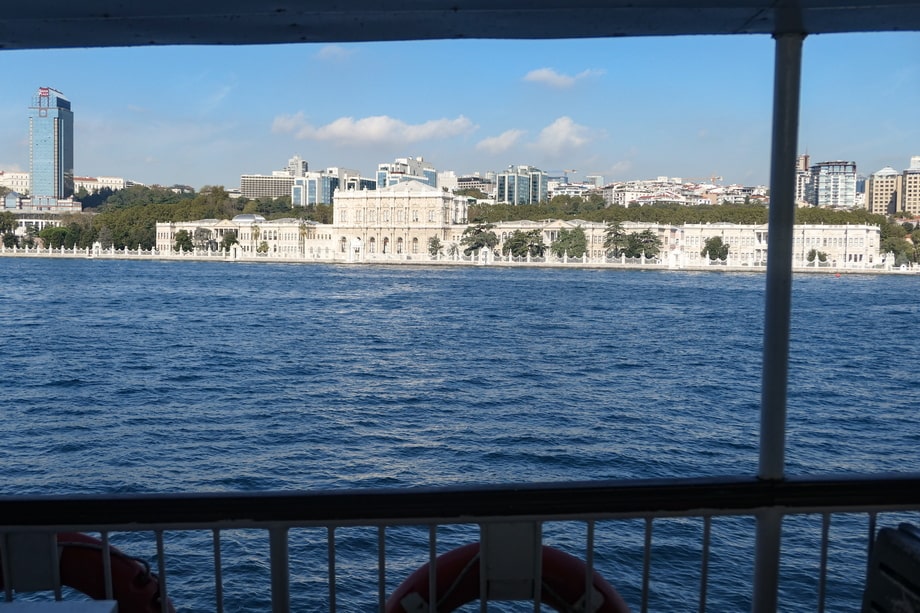
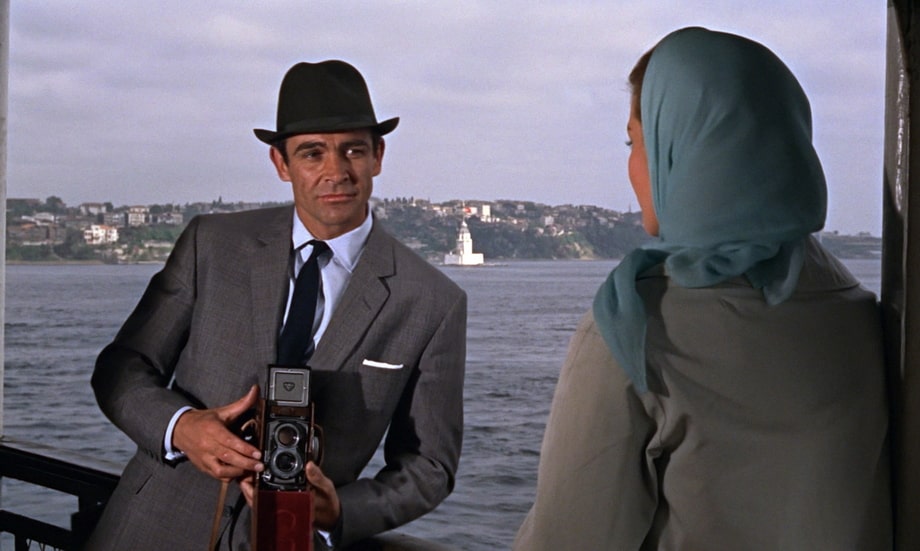
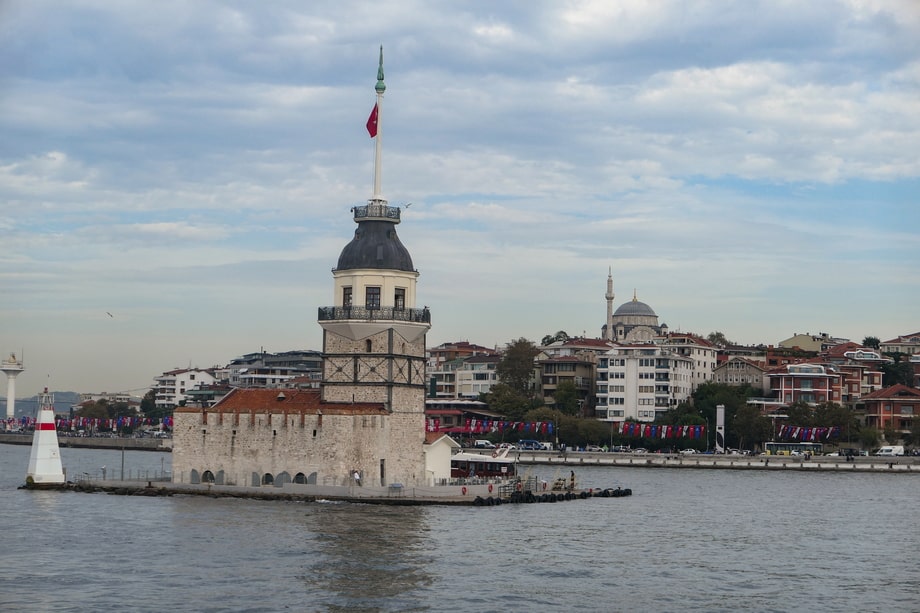
A sequence with Bond and Tanya at the ferry reveals not only an overall picturesque panorama over the Bosphorus but also includes two well-known landmarks. The first one, when Romanova approaches James, is a magnificent Dolmabahçe Saray (Dolmabahçe Palace). It should come as no surprise that the complex dominates the background panorama, as the total area of the palace is 45,000 m2 with 285 rooms. Dolmabahçe Palace is the largest palace in the whole of Turkey. A few moments later, we can identify another remarkable landmark in the distance behind James: the Maiden’s Tower. Ancient Greeks were the first ones who took advantage of a small rock approximately 200 meters from the bank, though the first tower, a wooden one at that time, was built in the 12th century. The modern tower appeared in its place in 1725 and since then has been renovated several times. All 007 devoted fans remember that the Maiden’s Tower played a significant role in another James Bond movie: ‘The World is Not Enough’ in 1999. In comparison to the look of the tower in both movies, in 1963, Maiden’s Tower was completely white, and since the renovation in 1998, it has been sandier.
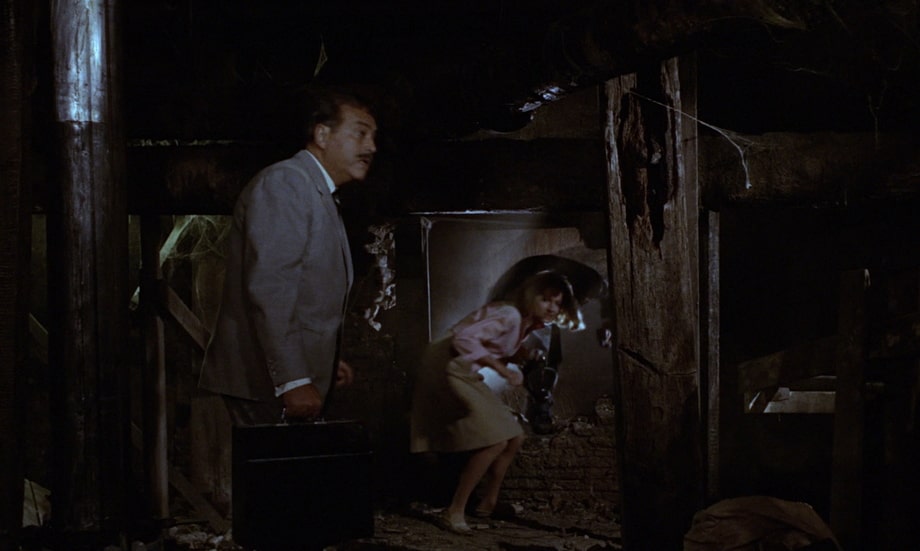
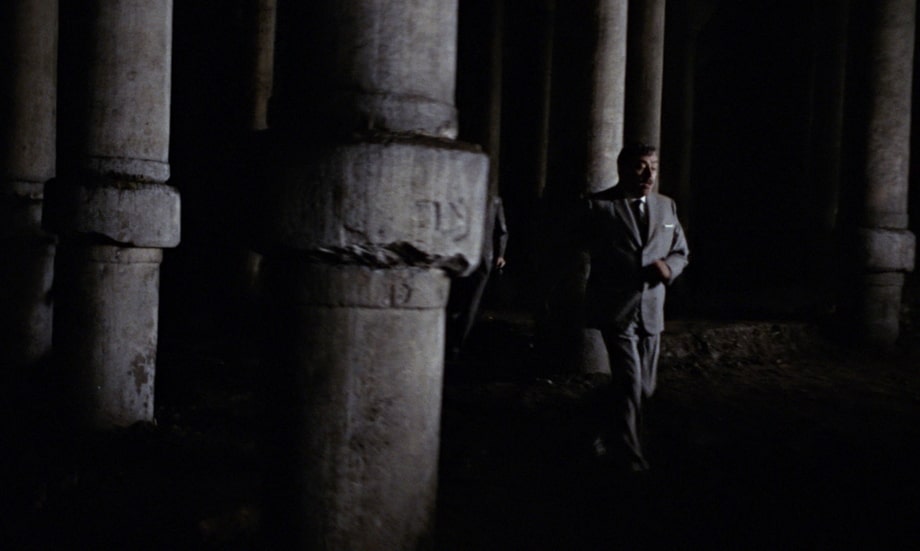
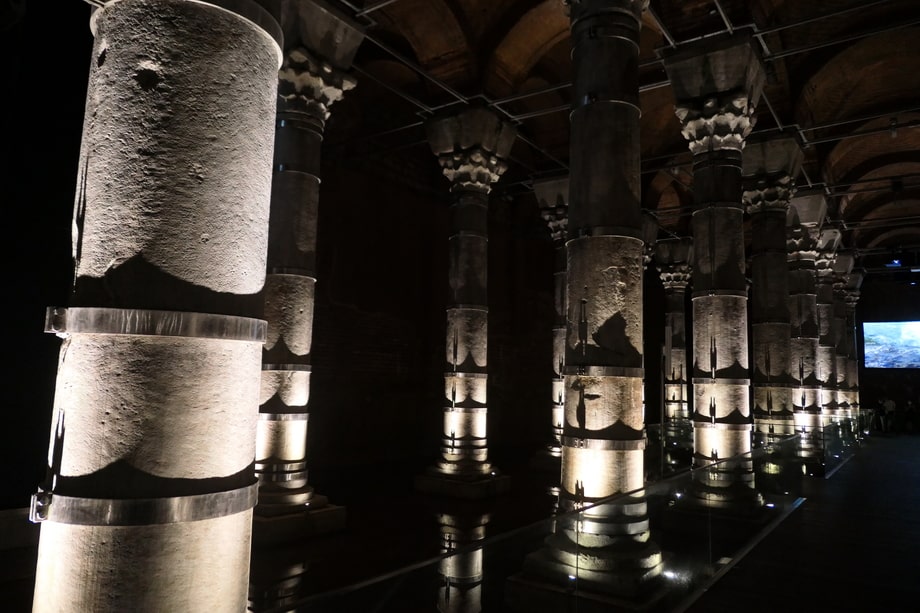
A few scenes after a calm ferryboat voyage, James Bond, Tatiana Romanova, and Kerim Bey activate a bomb under the Soviet consulate and make their way out of the place through the underground Istanbul. A few-second-long sequence with the rats in the catacomb was a bit of a challenge for the filming crew. The Turkish authorities restricted the use of wild rats due to health and safety precautions, and the same situation was in the UK. The crew went to Spain and created a section of the location in a local warehouse with hundreds of wild rats brought here by a Spanish ratcatcher. When the trio makes their way across a hall with columns, we are not in the Basilica Cistern anymore but inside another Istanbul underground facility called Theodosius Cistern. It is even older than the Basilica and was built in the 5th century under Emperor Theodosius II. The hall used for the filming is 45 meters long and 25 meters wide, with a ceiling 11 meters high.
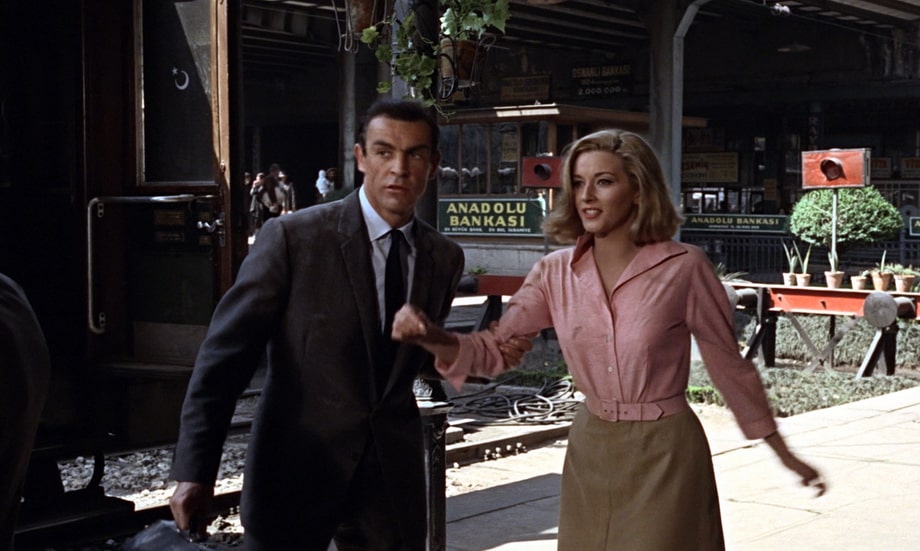
After a race against time, Kerim Bey, Tanya, and James leave the underground Istanbul for the last time and find themselves in a shop next to the local train station called Sirkeci Gare. It is not just a Turkish railway station but a world-renowned one-end station of the famous Orient Express route between Paris and Istanbul since 1889. The author of the Bond series, Ian Fleming, used the Orient Express on his way home to England while visiting Istanbul in 1955, but he was displeased by the lack of a separate restaurant car. The square in front of the station is one of the busiest in the city, and was the same in 1963. At this location, the filming crew faced the largest crowd of bystanders during their shooting in Istanbul, with several thousand people staring at the filming crew and the actors. Director Terrence Young made up a trick, asking one of his stuntmen to play a show across the road, pretending to be hanging on the balcony and asking for help. When the crowd was mainly distracted by this new event, the filming crew made the scene in one take, though we can still see crowds of people watching the actors.
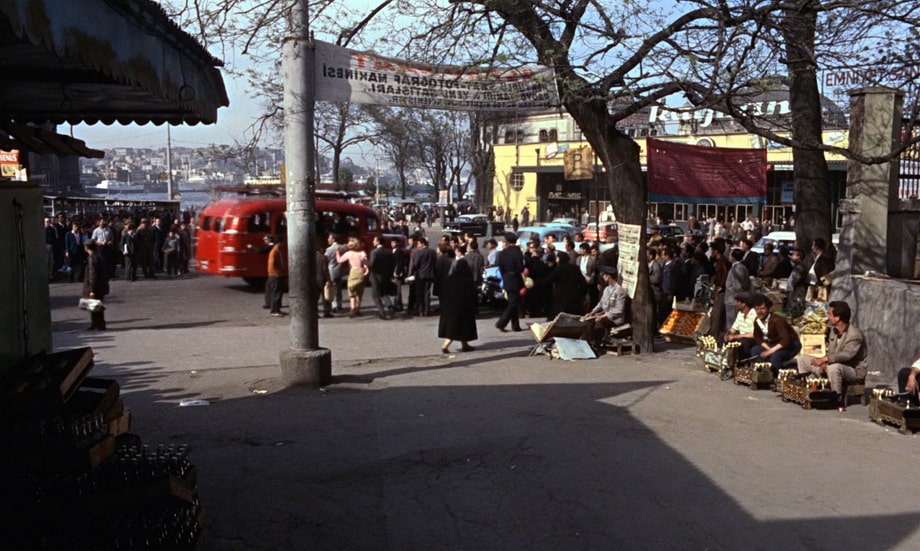
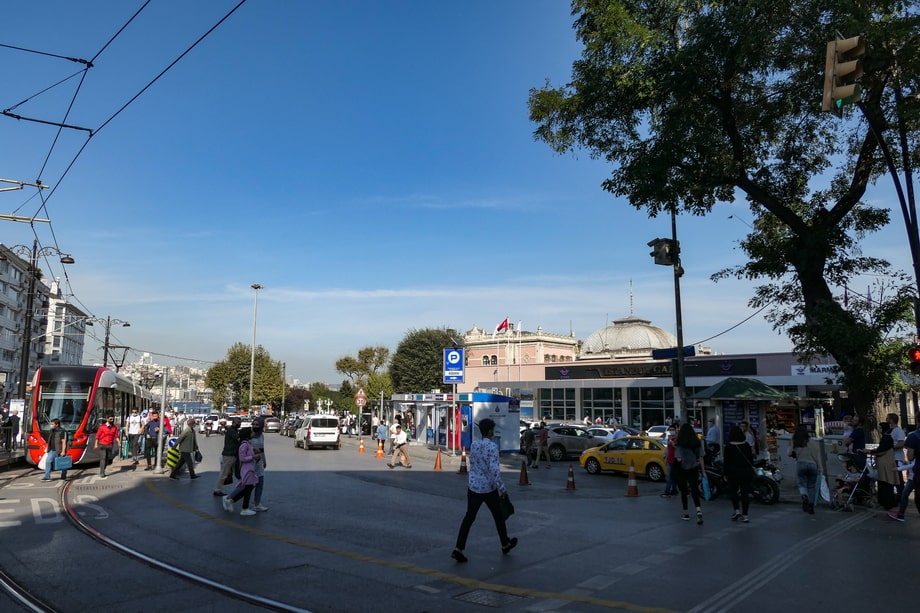
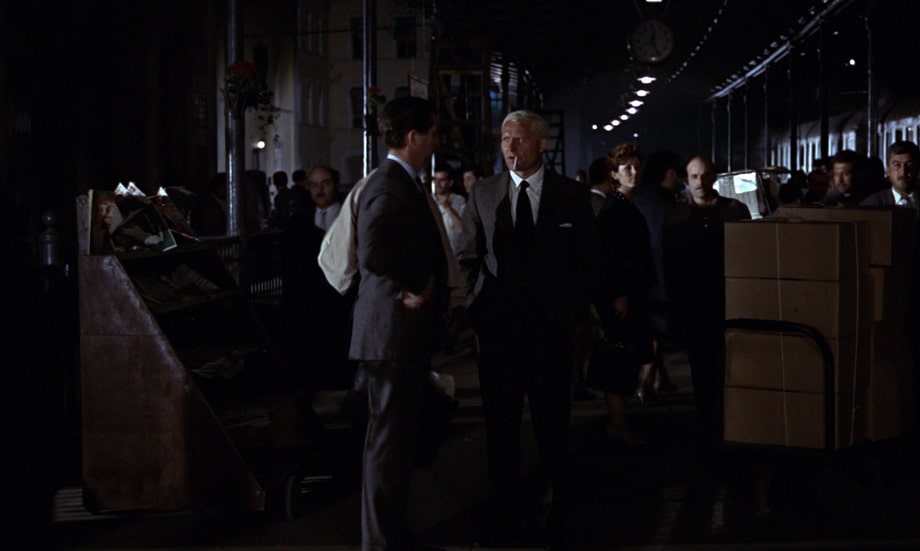
It is interesting to note that the Sirkeci Station played not only in the movie but also in the stations in Belgrade and Zagreb further down the story. Different platforms were used to depict the Balkans. It took the crew multiple takes inside the station, though they were more at ease with the crowds. Back in 1963, the Orient Express route was still in full service until being closed in 1977, though modern variations of it still exist, and people with money can take advantage of the journey to Venice in the restored carriages. Nowadays, the Sirkeci Station accommodates a small railway museum.
Read me
Let’s walk along with the main Hannibal filming locations in Florence, where a new movie on Hannibal Lecter was filmed in 2000. A rare walking tour for movie enthusiasts
Read me
Tim Burton’s Gothic story about a strange boy with Scissorhands reveals some common insecurities we feel toward the changing surroundings and other people and can teach us how to be human
Read me
The Prestige tells us a vivid story of two men, who delved into rivalry, and who paid the highest price for their obsession with being great and better than opponent
Read me
While mainly set and filmed in Florence, Venice, and Istanbul, the third adventure of Professor Robert Langdon, Inferno, was mostly filmed in Budapest, Hungary

Read me
The Green mile is one of the most cited and appreciated movies of all time and its characters deserve a grounded, insightful analysis as they have so much to teach us
Read me
Spike Lee’s Inside Man with Denzel Washington still remains one of the best-recognized hostage-taking movies with tricky plot, multi-level characters, and an open ending