


 5,00
5,00
Read me
Arrival explained
Denis Villeneuve’s Arrival stands out among the notable sci-fi movies of recent years and has pretty much to be discussed in regard of narration, scenery and characters
MOVIE EXPLAINED

Both the book by Kathryn Stockett and Th Help movie adaptation explore one of the most sophisticatedly written characters you have ever experienced in fictional stories
Even though Bryce Dallas Howard has many remarkable movies in her acting portfolio, Hilly Holbrook’s character from The Help (2011) is still the most recognizable. There is more to come. The antagonist of this movie is evidently among the most hated villains in movie history, not least because of the bookish original by Kathryn Stocketh. Both the novel and the cinematic adaptation of the same name do a good job of filling Hilly Holbrook with stereotypical ingredients of a character. Her villainy is so dominant throughout the story that we need not one but several protagonists (Skeeter, Aibileen, Celia, and Minny) to counterbalance and defeat her. It may sometimes seem that Howard’s acting is too predictive and cliched, but for the sole reason that her character serves as a personification of the whole generations of hatred, prejudices, narrow-mindedness, stubbornness, and opposition to change. The help goes deep into the topic of racism, but Hilly represents the rigidity that can be extended to many aspects of modern society. She had a beautiful appearance, but Hilly was rotten inside, and I will proceed with her in the Help character analysis.


Hilly Holbrook’s opening scene is in many ways self-explanatory. However, during the first viewing, the audience does not understand why this young woman makes markings on toilet paper with a pencil. As the story goes on, this little detail in the opening sequence tells us a lot about her obsession with racial segregation. I use the word segregation, not hatred, because she does not hate Afro-Americans until her dominant status is confronted, which she does regardless of the color of her skin. At the same time, she regards them as inferior to herself, under humans in the rhetoric of Hitler’s Germany two decades before her. When one of her maids, Yule May, asks for payment in advance to facilitate her children’s education, Hilly engages the woman in some kind of moralizing discourse. In her distorted scheme of things, God has already drawn roles for people in this world; some deserve enough money for their education, and some do not. Hilly wholeheartedly believes that she was born privileged and smart, and Afro-Americans in Jackson and elsewhere live less well because that is the way it has always been and should be. She regards black people as lazy and unwise in their attitude toward money.


The character of Hilly Holbrook was not an exception in the time and place when and where the events took place, and unfortunately, many white people shared her system of coordinates. On the other hand, Hilly differentiated herself from others in her surroundings, particularly other young women of her age, by establishing her dominance over other people. She may smile and look respectable at the dinners, but Hilly’s most urgent desire is to dominate Jackson’s society. She is the president of the Jackson Junior League and the key figure during women’s meetings. She decides who should be a part of a group and who should be ostracized. She does this both among her social surroundings and among Afro-Americans. If someone confronts her leading role, whether a black maid, her best friend Skeeter, or even her mother, Mrs. Walters, Hilly zealously tries to destroy that person, eliminating her from the local society. Getting back to my words from previous paragraphs, Hilly does not feel hatred for no reason but uses all her means to dominate Jackson’s society, including racial segregation as a means to establish her status at the expense of the black people. As old as the hills: pretend to be better by reducing the status of others, and afro-american maids serve as a victimizable asset for Hilly Holbrook: they are black in the segregated South, and they occupy maintenance staff jobs.
While bullying black maids at home, Hilly pretends to look like a respectable white woman, a cream of society, who organizes charitable donations, for example, raising money and goods for ‘The Poor Starving Children of Africa’. She sincerely believes that black people in Jackson, particularly her maids, Minny and Yule May, do not deserve better wages, but in public, she helps people from Africa. It is clear as a bell that she doesn’t care about poor people, whether in Africa or her native Jackson, and takes advantage of charitable activity as her means to gain even higher status. She will never send money to Africa because Hilly believes that people there are so stupid that they can’t even manage things they need, and it is Hilly Holbrook who decides what should be bought and sent. Above that, such a choice of charitable destination was not a coincidence, and in public, Hilly tries to look like a non-racist. In this vein, the movie makes us remember the high society from ‘The Green Book’ when former plantation owners tried to look respectable and civilized while not allowing an Afro-American to use a toilet in the house. We can safely assume that The Help was among the inspirators for that sequence.

In contrast to the movies where the so-called ‘toilet humor’ is generally regarded as a bad tone, The Help masterfully exploits the topic concerning its villain. Hilly Holbrook was so obsessed with ‘segregational hygiene’ that she used to leave markings on toilet paper to be sure that Minny did not use the bowl in the house. The heavy rain was not an argument as well. Hilly went even further and made some of her friends build separate toilets for black maids and advocated the adoption of a ‘disease-preventive bill’ in Jackson, where public toilets had already been segregated. At the appropriate moment, the movie leaves the audience speechless when we find out that Minny fed her ex-employer with ‘a special ingredient’ and many feel satisfied that such a bad person got her just deserts, while the issue is more nuanced.
Like many other inhumane, bullying, and humiliating laws or regulations in the history of the XX century, it sounds relatively harmless. Of course, Hilly Holbrook uses a ‘disease prevention bill’ as an euphemism for a new instrument for tightening racial segregation. She justified the need to build up a separate toilet by the grotesque assumption that black people, or ‘they’, carry different diseases. Drawing another line between ‘Us’ and ‘Them’ serves Hilly as a means to underline her exclusiveness and status. By diminishing the status of black servants even more, she tries to raise her own. Her arguments sound foolish and bizarre because Minny, Yule May, or any other African American maids do a hell of a lot of homework for white women. They cook dishes, touch every corner and household item in the house when cleaning, and kiss their children, but in Hilly’s worldview, it is too dangerous to use the same toilet bowl. Above all, Holbrook desires that every black maid in the city know that it was Hilly who advocated such a bill, and thus, in some way, she spreads her bullying and influence to each home.
Hilly Holbrook: They carry different diseases than we do. That’s why I’ve drafted the Home Health Sanitation Initiative.
Eugenia ‘Skeeter’ Phelan: The what?
Hilly Holbrook: A disease-preventative bill that requires every white home to have a separate bathroom for the colored help. It’s been endorsed by the White Citizens Council.


As I have stated above, crossing Hilly’s pass in Jackson, Mississippi, with no exception, causes delayed consequences for her opponents. When Minny pointedly used the bowl in Holbrook’s house, the loss of work was only the beginning, since Hilly made sure that her maid was ostracized from being hired by any white family in the city. Stealing a forgotten ring caused Yule May freedom for years in prison, and the harsh treatment by the police was used by Hilly as a reminder to other minds about who is in charge of their society. A loud laugh from her mother caused Mrs. Walters to lose her life in the house when Hilly sent her to an old people’s home. When Hilly identified that Aibileen wrote a chapter about Elizabeth Leefolt, she threatened the maid to turn her life into hell. Hilly made Celia Foote a non-gata person in Jackson for losing her ex-boyfriend. Even Skeeter, Hilly’s former best school friend, fell from grace for not publishing the bill in the newspaper, and later she hated her for writing a book.
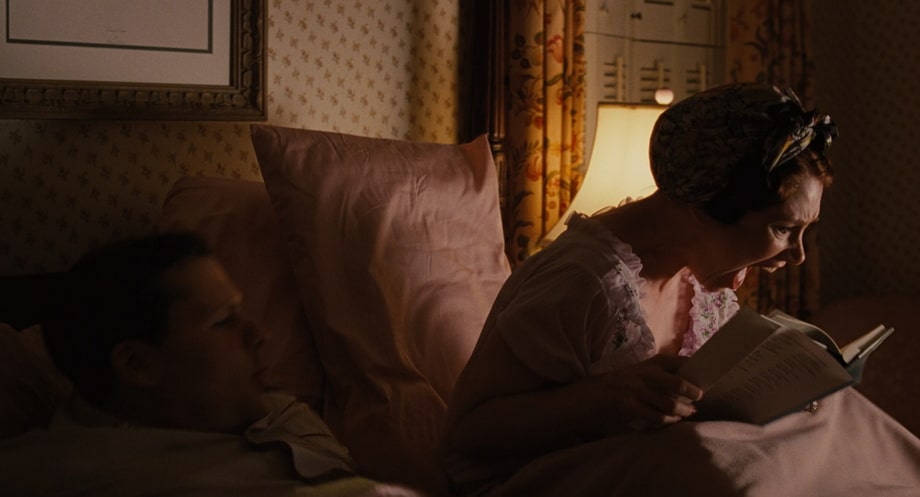
For several years, crossing Hilly Holbrook meant the end of a career and a social life in Jackson, Mississippi, but her made-up public image and self-made social status were her soft spot as well. Skeeter’s joke with the toilet bowls on Hilly’s lawn made a breach in Hilly’s dominance, and the situation for her only deteriorated as the story went on. She used to harm other people because no one dared to fight her back before Skeeter, Minny, and Celia. This is a common issue when dealing with aggressors, bullies, and other pathetic persons who live at the expense of other people’s suffering and humiliation: they can be destroyed by the same means they use against others, including a form of blackmail. As her persona deteriorates, the segregational policy Hilly pursued looks odious to others and has bad taste because, in no small part, it is associated with Hilly Holbrook and people like her. At the end of the story, as her previous status faded, we see her pathetic, pitiful, and desperate. The old order in the segregated South, which Hilly Holbrook’s character represented, faded as well.
Aibileen Clark: [to Hilly] All you do is scare and lie to try and get what you want.


The very first piece of information that The Help book by Kathryn Stockett gives us about Eugenia Phelan is that she is the kind that speaks to the help. Both the book and the movie adaptation draw a vivid line between Skeeter and her equals in age from Jackson, Mississippi. Similar to other girls, she was raised in one of the most segregated cities in the United States, and, more than that, her family has been cotton plantation owners for several generations. Her social status and family background are even superior to those of Elizabeth Leefolt or Hilly Holbrook because of the wealth of her family and of the fact that Skeeter’s mother, Mrs. Charlotte Boudreau Cantrelle Phelan, was the former first-runner-up as Miss South Carolina. From the beginning, she had all the means to feel important and better than others, though she lacked the beauty of her mother and other girls. Most importantly, neither Skeeter’s social background nor her school friends nor disappointments about her appearance made Skeeter a racist in this highly segregated community.
Stuart Whitworth: Isn’t that what all you girls from Ole Miss major in – professional husband hunting? I’ve never met a woman that says exactly what she’s thinking.
Eugenia ‘Skeeter’ Phelan: Well, I got plenty to say.


We met Eugenia after four years spent at the college, far away from Jackson. She tries to find her way to her former social surroundings, including school friends like Elizabeth and Hilly, but Skeeter’s worldview has changed dramatically, and she does not feel she belongs in their meetings and especially does not share their beliefs about racial segregation. She tries to put the former life on like a cloth, but it does not fit her anymore, neither with her mother nor with female friends nor with men of her age. It is worth noting that Eugenia has always been a white crow, an outlier here in Jackson because of both her lack of physical beauty and her attitude toward the way things go. She has always been the smartest person in the room with her peers, and instead of marrying and having children at a young age like others, she went to the university to improve herself and reveal new horizons. She follows the example of Elaine Stein, ruining the prejudices of a male boss in the newspaper. Even though the relationship with Stuart Whitworth was sincere and passionate, the man could not withstand the truth about Skeeter’s book, and the two broke up, leaving Skeeter open for new relationships in New York in the future.
Eugenia ‘Skeeter’ Phelan: The boys say I’m ugly. Mama was the third runner-up in the Miss South Carolina pageant…
Constantine Jefferson: Now you quit feeling sorry for yourself. Now that’s ugly. Ugly is something that grows up from inside you. It’s mean and hurtful, like them boys. Now you are not one of them, are you?


At the age of twenty-three, we see just how her misfitting to her peers gains momentum with every day spent in Jackson. In contrast to Hilly or Elizabeth, Skeeter does not need a husband to make herself a mature person, and she feels no need to search for a wealthy man to cover her needs. She stays in her parents’ house but applies for a job at the local newspaper. She ruins another stereotype of the era, a cliche that her major role in society is to be a good wife and raise children by being forever unemployed. Skeeter does not want to be a secretary, a typical role that men can suggest to her in the early 1960s. She fills the newspaper editor with surprise about her determination. Above all, Skeeter does not feel a need to humiliate other people, rule them, or peddle rumors to feel important like Hilly Holbrook. She treats people in Jackson regardless of the color of their skin, education, or wealth. A university degree has not made her imperious or patronizing toward the majority of people without proper education. For years, Skeeter has been a white crow in her social background, experienced the lack of boys’ attention at school, and listened to the preachings of her mother. In many ways, being an underdog herself, Skeeter does not feel a need to draw the line between white and black people, between employers and maids.


After returning from college, Skeeter feels that the division between people and segregation in the South are inappropriate issues that must go away. The abyss between white householders and black maids in Jackson and elsewhere triggers Skeeter to make something important and to write a book. Skeeter’s feeling that he does not belong to this place anymore, and the former life feels so different now, makes it easier to write about Jackson and the people she has known all her life. Eugenia has always been open to education, finding out something new, and above all, she knows how to think outside the box without cliches regarding other people, particularly afro-american maids. Being an outcast in her own mother’s eyes, Skeeter was raised by a black maid, Constantine, and she is the rare person in Jackson who can speak with black servants without feeling superior. She decides to write something unusual—a book that will change the world. Due to a difficult situation in childhood, because of her mother’s nagging and inattention from people of the opposite sex, the girl did not break down; she tries to prove to everyone that we are all humans, regardless of skin color, background, or occupation.


While Hilly Holbrook is the definite villain of this story, Skeeter serves as a positive counterbalance to her. Where Celia Rae Foote, and especially Aibileen, and Minny stand far away from Hilly, Skeeter was her best friend at school. They are both white children from respected families with lordy mothers. Apart from secretly writing a book about the relationships between white householders and black maids in Jackson, Skeeter can’t stand anymore with Hilly’s obsessive commanding attitude toward other people they both know. She starts by bringing Hilly’s worldview into question in the presence of their mutual friends, then postpones the publication of Holbrook’s ‘disease-prevention bill’ regardless of the latter’s numerous appeals. As the story goes on, Skeeter distorts Hilly’s message, and people from the whole neighborhood bring old toilets to Holbrook’s lawn. This act of disobedience with Hilly makes a breach in the villain’s image of an untouchable, powerful person who can command others, and Skeeter is the driving force of this little humiliation for Hilly. Finally, Skeeter not only writes a book about Jackson, but she also includes Minny’s story about a pie and Hilly, which drives the latter crazy. The more the main villain is driven, the further the just white knight in the person of Skeeter moves away from her. This makes it clear that the rights were initially equal; it’s just that one girl is a human and the other is a monster.

Skeeter’s idea about giving voice to black maids in Jackson appeared to be a hell of a challenge. On the one hand, these ladies have adopted a reasonable self-protection barrier against white householders and are trusting them. Generations of racial segregation and the social gap between people have intoxicated both sides with prejudices. Aibileen has her reasons not to put her safety and life into the hands of a white girl twenty-three years old, a daughter of a cotton plantation owner, even though she acknowledges Skeeter’s exceptional nature. The movie does a good job of melting the ice regarding Minny and her racial prejudices against white people. She has always been sharp-tongued, and at the beginning, Minny openly criticizes the idea of writing a book with real stories. As time went on, Skeeter became the second white girl, after Celia, toward whom Minny felt sympathy. After the hard-handed arrest of Yule May, other maids come to Aibileen’s house to talk to Skeeter and tell her their stories. It is worth noting that those revelations remained something very personal for decades and were previously not for the ears of white people.
Aibileen Clark: I ain’t never had no white person in my house before.


In a wider sense, Skeeter not only overcomes her fears and doubts but also helps maids overcome their stereotypes, fears, and doubts about white people. More than that, it is sometimes so important to be heard. Their real names and Jackson were never mentioned in the book, but Skeeter was the person who gave them a voice and who was patient and attentive to these stories and people who told and lived through them. Experience in personal life and awareness of one’s place in society strengthen the writer, and the maids feel support and patronage. And even though Skeeter is such a moderate and soft person, she can make the world around her speak and listen. Leaving Hilly Holbrook behind, other white householders like Elizabeth, Mrs. Walters, and Charlotte Phelan can now read about their attitude toward maids and see the situation from another perspective. In the end, Skeeter’s book gives segregation in the South a fight—not in a definite way, of course, but big things have small beginnings. The main message of The Help movie is that changes, no matter how great they may be, begin with small people and small deeds. Not everyone has courage, but once you have taken this path, there is no way back. After watching this story and reading Stockett’s book, you want to do something good, even if it’s not so loud. Maybe just do a good deed for those who live under the same roof as you. It makes us appreciate those close to us more.
Charlotte Phelan: Courage sometimes skips a generation. Thank you for bringing it back to our family.
Eugenia ‘Skeeter’ Phelan: Constantine didn’t do anything wrong. You love Rachel. I know you do.
Charlotte Phelan: [about Grace Higginbotham] She was our president. What was I supposed to do?


Even though this character is often regarded as a cliche blonde, and even the book introduces Celia as a ‘Marilyn Monroe’ type, this young woman is an inspiring and life-affirming personality. She does a good job as the second counterbalancing positive character to Hilly Holbrook’s villainy, way before the two finally clash at the ball. Celia is indeed a naive, poorly educated, and simple-minded person, which does not overshadow the fact that she is one of the kindest people you have ever seen in movies. She passionately loves her husband, desperately wants to improve herself to be a good wife, desperately wants to have a child with Johnny Foote, and desperately wants to make friends with other girls of her age. After a wet blanket of Hilly Holbrook’s arrogance and insolence, Celia is so kind to Minny that the latter does not believe that it is some kind of joke or a trick. Celia has neither racial prejudices nor bossiness, even though she is married to the richest and most desired man in the region, and she is the one who hires a servant.


Leaving aside her inborn natural kindness, Celia had her hard times in the past. Stockett’s book reveals that the girl was born and raised in Sugar Ditch, one of the poorest and most miserable districts in Mississippi, and even Minny acknowledges that Celia was the first white person she met who had lived in conditions inferior to black people. In one of the scenes of the movie, we even hear the humiliating ‘white trash’ characteristics as a reason why other girls treat Celia as a white crow. She not only lacked a black maid during her childhood but also lived in very restricted conditions, which saved Celia from the arrogance of most of her peers. She does not belong to the customs of the high society of Mississippi, which makes her more modest and open. Unfortunately, thanks to Hilly’s efforts, Celia is ostracized from the local community, ignored by other girls, and covered with rumors. She has to spend days and weeks in the huge castle-like house alone, being scared to meet other people in Jackson. In contrast to even Skeeter, who felt herself an outsider after returning from college, Celia felt she did not belong in this place from the very beginning.

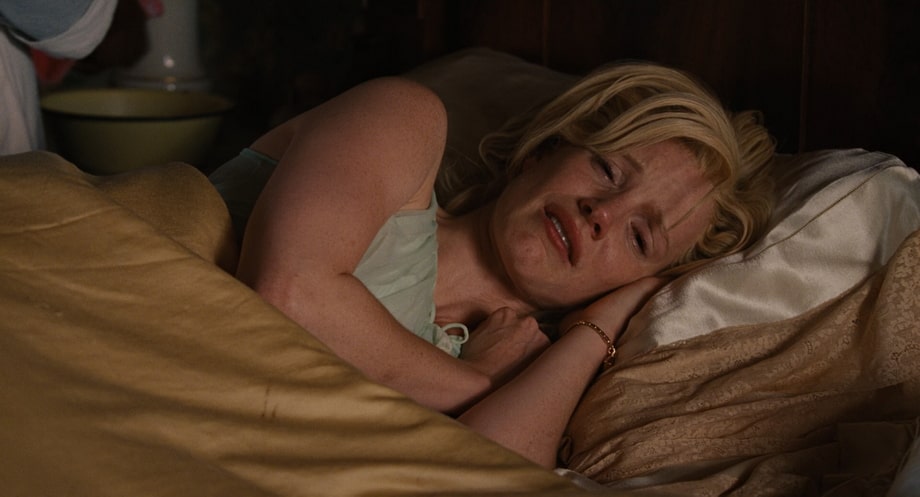
The decision to hire Minny was one of the most life-changing in Celia’s life, and their relationship shaped both characters for the better. In a narrow sense, Minny was the first person to whom Celia could speak in Jackson apart from her husband, Johnny Foote. After weeks or even months in solitude, alone with her sorrow about the lost children and her lack of gastronomic skills in the kitchen, Celia finally has a companion, even though they look so different. The two women start to spend hours and days together. Minny teaches Celia how to perform primitive housework and how to cook delicious food for Johnny, and this relationship makes Celia more confident, even though she experiences humiliation every time the local girls ignore her. Another aspect that is rarely mentioned is that these two characters are united by their antagonist, Hilly Holbrook, who excludes Minny and Celia from the local community.
In contrast to other white householders and black maids in Jackson, the relationship between Celia and Minny is a road with two-way traffic. Not only does Celia get something from Minny, but the latter reconsiders her former stereotypical attitude toward white people. In addition to Skeeter, Celia is another person who shows Minny that not all white people are arrogant and abusive. Minny has several children, and she feels sincere compassion toward Celia’s failed efforts to give birth to at least one child. When she was a child, Minny was told by her mother the rules of working next to white people, and Celia deconstructs many of those cliches. She treats Minny not as a servant but as a helping hand, as a human being with whom she can share her dinner at one table, as opposed to established segregated practices. As the story goes on, it is safe to assume that Minny starts to regard Celia Foote as her friend as well. It was Celia, not someone else, who told Minny what she would have done with a man who beat her like Minny’s husband did for years. This Marilyn Monroe-like girl showed Minny an example of personal strength and courage.


Celia is a vivid example of a character who evolves throughout the story. From a white crow who lived in solitude to the most sexy woman in the room at the ball. From a scared white girl who was shy about visiting local grocery stores to the person of the evening, when everyone talked about her. She has tortured herself with the thought that Johnny expected children from her and stayed with her only for this reason, and she came to realize that he truly loves her. When she finally opens up to him about Minny’s presence, her culinary teaching, and her lost unborn children, Johnny accepts this all with understanding and love. The truth did not discourage him, but on the contrary, their relationship became as close as never before. He loves her for being who she is, despite her poor background. In the end, Celia understands that some people, like Hilly and Elizabeth, do not deserve her, rather than she does not deserve their attention. Now, in many ways, thanks to Minny, she learned how to stand up for herself.
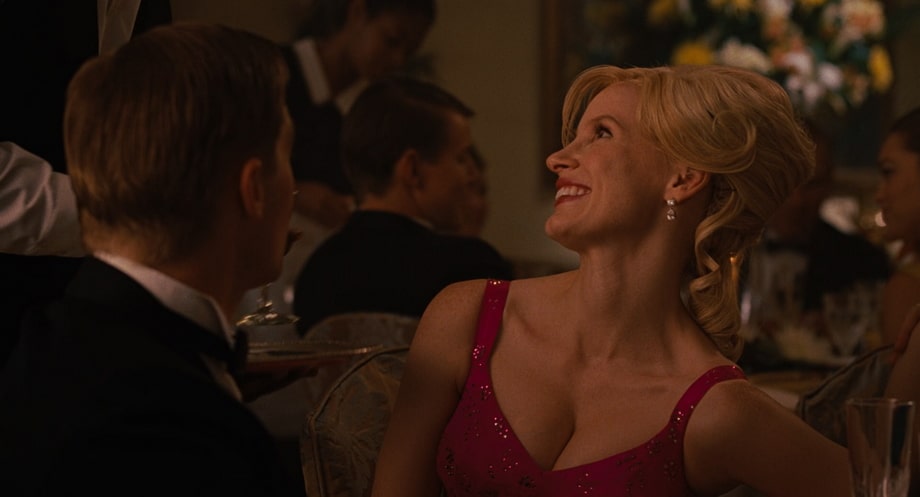

It comes as no surprise that many of the great movie stories can be regarded and analyzed through the prism of relations between two or more generations. In previous articles such as ‘Scent of a Woman’, ‘Eddie the Eagle’, ‘Whiplash’, ‘The Intern’, ‘American History X’, ‘Good Will Hunting’, and ‘Million Dollar Baby’, I explained those great stories in many ways concerning the so-called ‘father figure’. The story of ‘The Help’ by Kathryn Stockett in her book and later in the movie adaptation of the same name invests an enormous proportion of time in revealing the parents and children’s relations as a metaphor for the changes between the generations, the heritage of the nation, and the patterns of behavior. The characters of this story give birth to new lives before growing up. Some of them handle the responsibility for their children, while the latter do not have the time and resources for their children. Black maintenance staff were sometimes inherited by white householders, like furniture, by those whom they had brought up. Both sides are often too blind to change the way things are.
Aibileen Clark: My mama was a maid. My grandmama was a house slave.

Aibileen lost her son two years before the key events of the story, and since then, she has been feeling half-dead inside, with a hole in her heart and soul that can not be filled or healed. In the book, Minny strongly supports Aibileen, especially on the anniversary of Treelore’s death, to scare her away from a possible suicide. While he was a black man, he had much in common with Skeeter: the same will for self-education, and even writing. In the novel, Aibileen triggered Skeeter to write a book by telling about her son, who had written fifty pages about the true life of Afro-Americans in Mississippi. Later on, Aibileen says that at least one of their family members managed to become a writer. She helped Mrs. Skeeter with the project to commemorate her dead son, Treelore. She wanted not only to continue his idea, but her efforts in telling and delivering the truth are a tribute to him and every other man or woman in Mississippi who was killed, bullied, or discouraged from living full-fledged lives. At the end of the story, she wants to live further for them both, herself and Treelore, a boy who will forever be twenty-four years old. She brought eighteen white children and lost her only child.

The last white child Aibileen helped to care for was her ‘special baby’. The story of their relationship is also important for Aibileen’s motivation to help Skeeter write a book. Mae Mobley is about two years old and is the child of Elizabeth Leefolt, a woman who does not care about her daughter and who is under the strong influence of Hilly Holbrook. Little Mae Mobley once called Aibileen her real mother. This little girl does not know anything about the racial segregation in the American South, the status of her mother, or Aibileen’s background. The girl is not a physically elegant child, and she is mistreated by both her mother and father. Without support, she may be another misfit to the local society. She is so pure and innocent that it is twice as painful for her nanny to see Ezalibeth’s neglect toward the child, though it is the first child abused in the white families whom Aibileen cared for. In no small measure, love for this child prompts Aibileen to take extreme risks in telling her story to a writer.
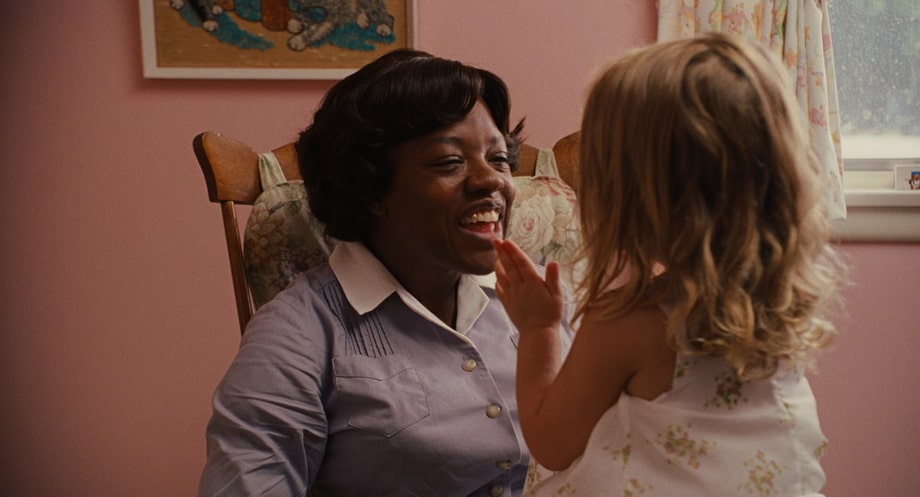
It is said that Mae Mobley is too young to preserve memories about her first nanny, while Aibileen tried to give this child her love, teach her self-respect against her mother’s bullying (you are a kind girl), and adopt the ideas of racial equality in this child amid this highly separated world, where children are not born with racism but are taught to follow some patterns. As Constantine did for Skeeter, Aibileen tried to shield Mae Mobley from prejudices, which are passed from one generation to another. Maybe years later, this child will grow up to be a young girl and find the book in many parts influenced by her first nanny and the story of their relationship. At the moment, Aibileen was fired from Leefolt’s house and may never see Mae Mobley again, but her courage on the pages will prevail and may influence the next generations. Maybe Mae Mobley will become a writer herself, like Aibileen and Skeeter, and change the world for good.

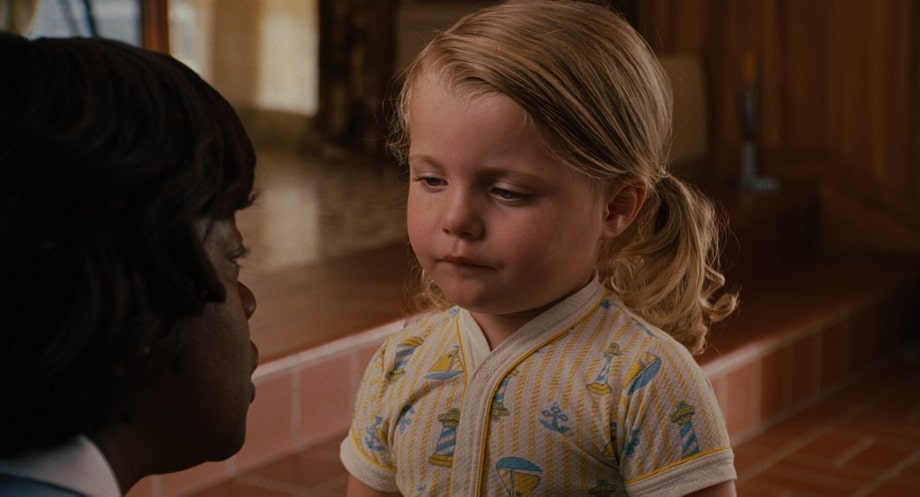
Aibileen uses the example of Elizabeth Leefolt to speak about children who make their children still immature. While Hilly’s villainy is directed against other adults, the audience regards Elizabeth Leefolt through her neglectful attitude toward her daughter, Mae Mobley. The book tells us more about the financial situation of the family: while Elizabeth’s mother is a wealthy woman, the daughter and her husband live in moderate conditions. Elizabeth has no money for new dresses, and she tailors garments on her own, desperately trying to fit the local society of girls, especially her best friend, Hilly Holbrook. In contrast to Celia Foote, who had lived in incomparably constricted conditions, Elizabeth is not a kind or generous person. Both the book and the movie have a scene where Elizabeth’s husband is quarreling with her about the idea of building another separate toilet for the maid. Her dependence on Hilly and even a fear of her best friend make Elizabeth make unreasonable choices. Toward the end of the story, she fires Aibileen in the presence of Holbrook and leaves her daughter, Mae Mobley, without proper care.

It is safe to assume that Elizabeth’s life and her attitude toward other people could have differed with Skeeter next to her rather than Hilly. The three girls had been closest friends since school, but after Skeeter left for college, Hilly Holbrook dominated Elizabeth. In this sense, her not very rich life for a white family in Jackson, her immaturity as a young mother, maybe hard relations with her mother, and toxic relations made her cold-hearted toward her daughter and other people. More than that, Mae Mobley is not the prettiest child, and she would not rise to become Miss Mississippi. Instead of investing all of her spare time into her not-perfect child, Elizabeth neglects and even abuses her, constantly telling the girl that she is neither pretty nor good. She spends so much effort pretending to look like an ideal wife and mother in her self-made dresses that she forgets to live her truth and life. The presence of a maid allows Leefolt to focus on other things rather than bringing her daughter love and comfort. Her drama also lies in the fact that she feels jealous of Aibileen and her relationship with Mae Mobley. At the end of the story, she fires Aibilleen to please Hilly but refuses to press charges, and, we hope, she will distance herself from Hilly Holbrook.
Aibileen Clark: Mrs. Leefolt should not be having babies. Put that in the book.
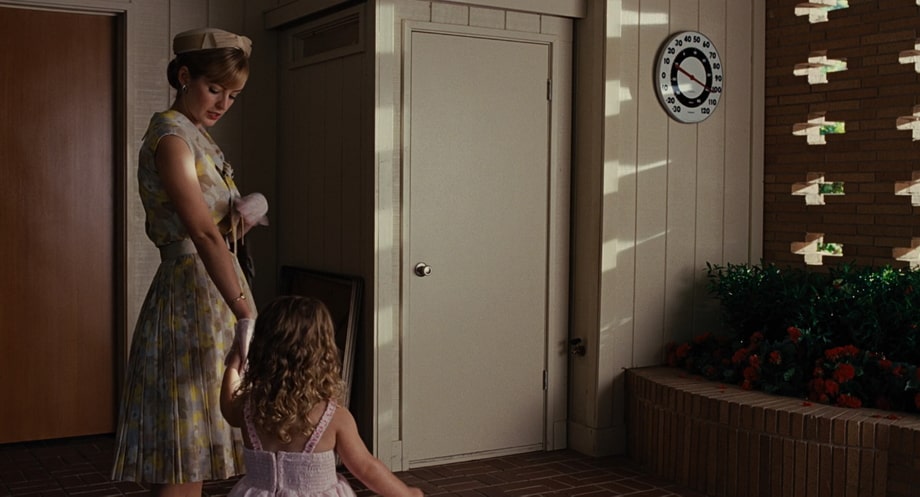
Minny Jackson had five children in the novel, and we see the four of them in the movie adaptation, leaving Leroy Junior off the story as an adult who works and lives separately. In strict contrast to many white women in Jackson, like Elizabeth Leefolt, Minny loves her children to bits, and for years, she has to tolerate her drunk husband and constant beating for the sake of her five children. Many years ago, she promised herself not to deal with drunk men like her own father was, but Leroy Jackson is a miserable, cruel husband. Like most of the African-American families in Jackson, Mississippi, they live in straitened conditions, but Minny never vents her anger on her children, regardless of how bad things get. She hates her abusive husband, but she does not see the continuation of him in her five children and regards them as a gift of fate rather than a burden, like Elizabeth Leefolt.
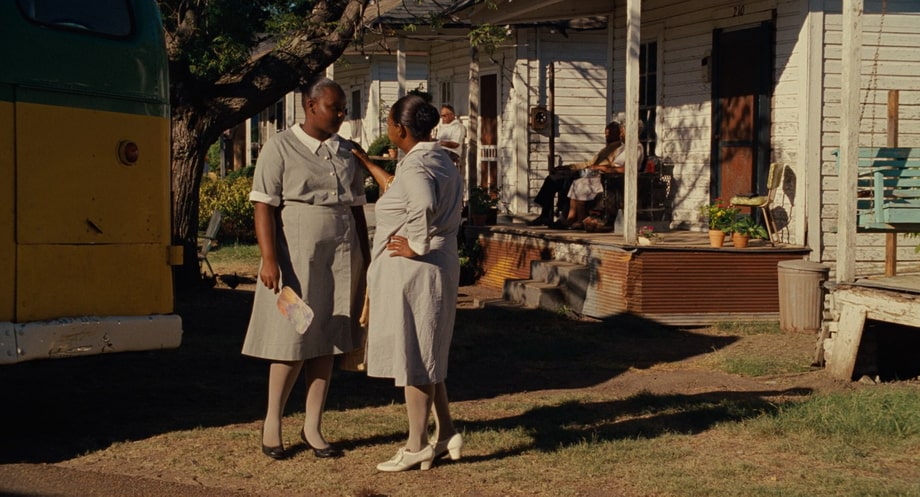
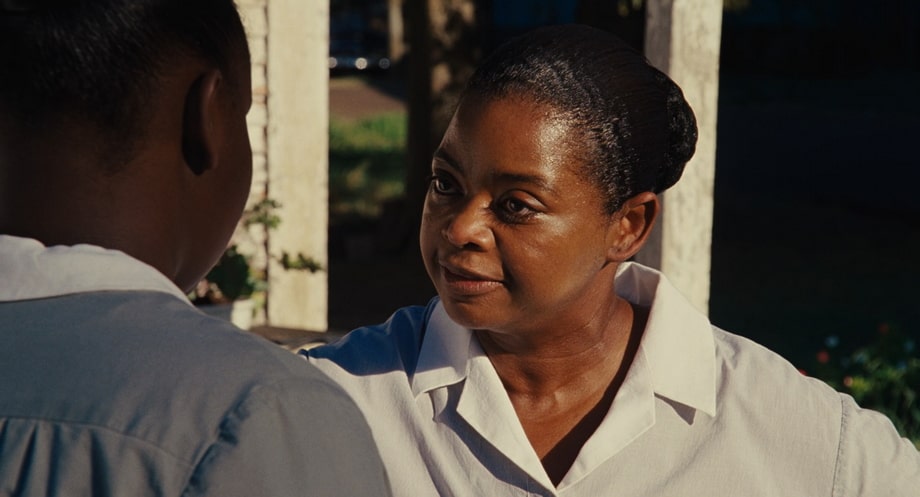
Like Aibileen, Minny Jackson is not the first maid in their family, and now she has to send her elder daughter to work in the house of white people. We see a scene where Minny sees off her daughter on her first working day as a maid, and the child resembles her mother in appearance to the slightest details. Minny instructs the girl to be careful with separate spoons and forks when dealing with white householders and never rip their children, not because it is bad, but because white people like to do this on their own. Minny’s daughter presents the sad succession of generations in a highly segregated American South in the 1960s, when, without proper education and abilities, African-American children had to follow the steps of their parents in often low-paid, low-classified jobs. As the story comes to an end, Minny finally leaves her abusive husband, and maybe she will be the one who leaves the endless circle for the sake of her children to give them better options than she had.
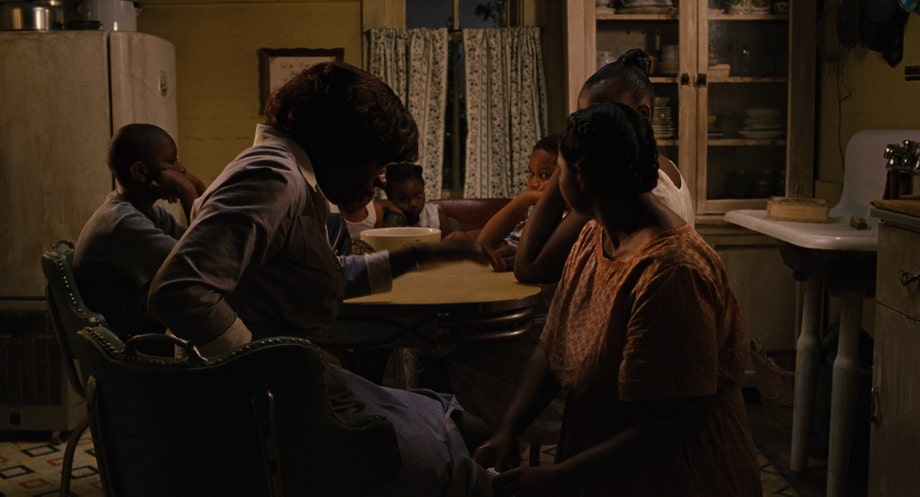
While we do not see Hilly Holbrook abusing her children, her relations with Mrs. Walters are far from perfect. Leaving the fact that the mother of a twenty-three-year-old girl is so old and has such severe mental problems, it is Hilly who makes the decision now, just a few years after being dependent on her mother. We can safely assume that her imperative attitude toward Mrs. Walters is a form of dominance she wants to establish against any human being except herself. Hilly’s obsessive need to assert herself above other people makes her shallow-hearted toward her mother, and the mental problems of the latter just make it easier for Hilly to rule Mrs. Walters. It is worth noting that the old lady herself does not lose a chance to shatter Hilly’s status. Toward the end of the story, it was Mrs. Walters who teased her daughter with a reminder of Minny’s pie. Above all, she has always treated Minny without bullying, and she laughs at Hilly’s racial prejudices regarding using a toilet and other segregationist things. As the story ends, Mrs. Walter is put in the old people’s home, and in several decades, Hilly Holbrook may experience the same attitude as her children.
I may have trouble remembering my own name, or what country I live in, but there are two things I can’t seem to forget: that my own daughter threw me into a nursing home and that she ate Minny’s shit.
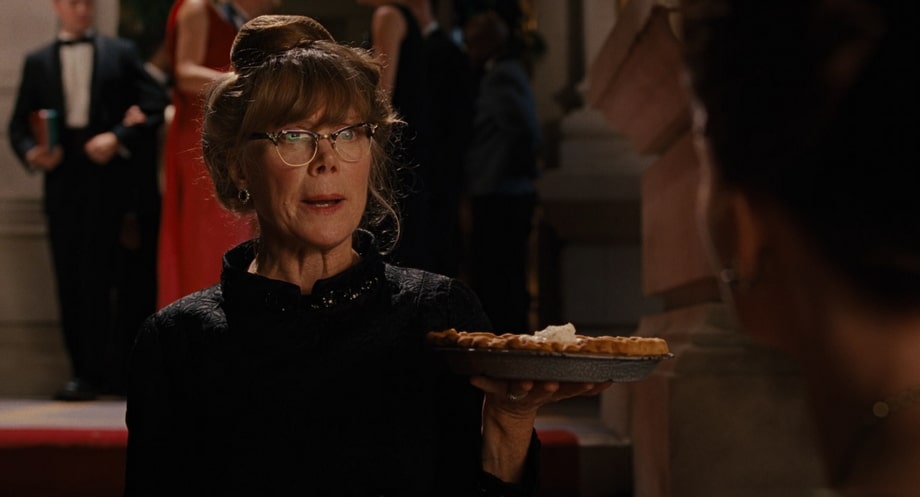
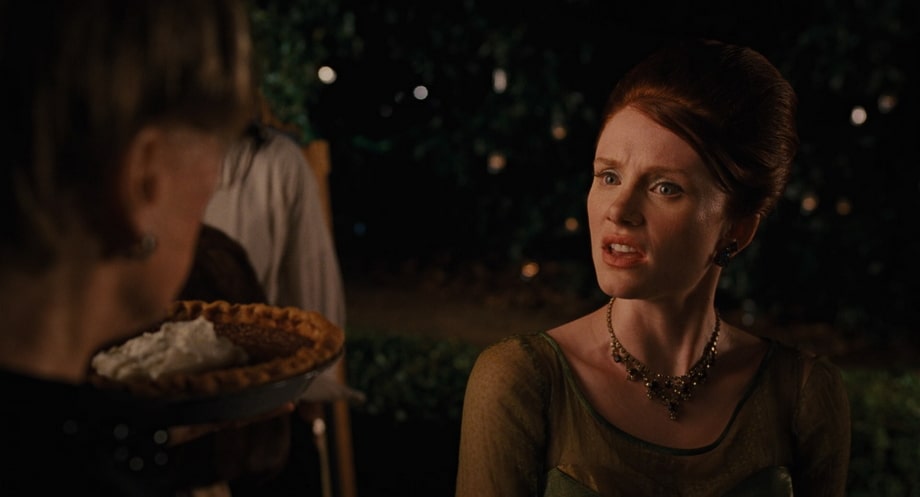
The relationship between these two is probably the most nuanced of all in both the book and the movie when it comes to parent-child relations. Like Mae Mobley, Eugenia Phelan was never a pretty child of her mother, and since early childhood, she lived at the home of the former first-runner-up as Miss South Carolina. Probably no one demanded Skeeter be equal to her mother, but their relations have always been constrained. Mrs. Charlotte Boudreau Cantrelle Phelan had high expectations and high demands toward her only child, while Skeeter differed so much from the established cliches of beauty and behavior. When Eugenia went to college, Mrs. Charlotte felt very lonely and miserable, and four years later, she was desperate to find a husband for Skeeter while not wanting to let her only daughter go forever. To inflict more dramatic notes on their relations toward the main events, Mrs. Phelan is severely sick, and Skeeter cannot be too harsh with her mother for that reason.
Apart from their former rough edges in communication, the main conflict both in the book and the movie is set around the disappearance of Constantine, a maid who worked in Phelan’s house for twenty-nine years. Mrs. Charlotte does not want to speak the truth to Skeeter, not to disappoint Skeeter, and because she feels guilty for what had happened. As we find out the circumstances, it becomes obvious that Mrs. Charlotte was never a racist; she loved Constantine and her daughter Rachel (Lulabelle in the novel). More than that, she respected Constantine’s contribution to the bringing up of Skeeter. On that day, Mrs. Phelan was influenced by the mob and had to expel two black women from her home in the presence of other respected white women and their leader, Gracie Higginbotham, who came from Washington. She felt desperately sorry for that incident and later made efforts to find Constantine, apologize, and get her back, but it was too late. At the end of the story, Charlotte praises Skeeter’s book and thanks her daughter for bringing courage back to their home—the courage she lacked.

While the character of Constantine appears only in flashbacks throughout the story, her relations with Skeeter and her influence on the latter are essential. All her childhood, Eugenia was compared with her mother, not in the girl’s favor, and like Mae Mobley, felt worthless in the presence of Mrs. Charlotte. Similar to the relationship of Mae Mobley and Aibileen, Skeeter and Constantine were very close, in their case for over twenty years until Eugenia’s last year at college, when Constantine disappeared. Both Skeeter and her mother, Mrs. Phelan, understand that it was the black maid who brought Eugenia up, while her father had always been busy with his work at the plantation, and her mother had been too strict and an important part of the local society. In a narrow sense, Skeeter gained her personality in many ways thanks to Constantine, an old servant who had worked in Phelan’s house for three decades.

The two shared secrets, though in the book, Constantine had her skeletons in the closet regarding her daughter. Skeeter was likely the closest person to Constantine in the absence of a daughter nearby, and Skeeter loved her maid more than she loved her real mother, Mrs. Phelan. This situation resembles Mae Mobley when she called Aibileen her real mother. Like Aibileen, Constantine taught Eugenia the ideas of racial equity, and the girl has not absorbed the segregational worldview like her closest friends, Hilly and Elizabeth. More than that, the old maid always told Skeeter that she was a special child, one of her kind, and she must not listen to cruel and rotten people who spread rumors and mean things. Being a more maternal figure than Mrs. Phelan, Constantine brought Eugenia the idea that real beauty lies inside every person and taught the girl to accept and respect herself. That’s why it is so difficult for Skeeter to come back home, where she has to spend her time with Mrs. Charlotte, and there is no Constantine to comfort her.
Only a person who cared so much about her maid could write a book about the hardships of black maids in Mississippi. The stories of Aibileen, Minny, and the others opened a completely new page for Skeeter, and she was frustrated and angry about the attitude that white householders, particularly her friends Hilly and Elizabeth, showed toward the afro-american maids who had brought them and how to take care of their children. The task of writing a book must become for Skeeter a journey of finding out what has happened to Constantine. A skillful publisher, Elaine Stein, felt this sore point and asked Skeeter to include a chapter about herself. Toward the end of the story, Skeeter has already lost one mother (Constantine) and can lose her biological mother because of cancer, which makes her reconsider the old family’s hard edges and take care of Mrs. Charlotte despite the latter’s conduct toward the maid. She can’t express her gratitude to Constantine, but Skeeter still has time to smooth things over at home.
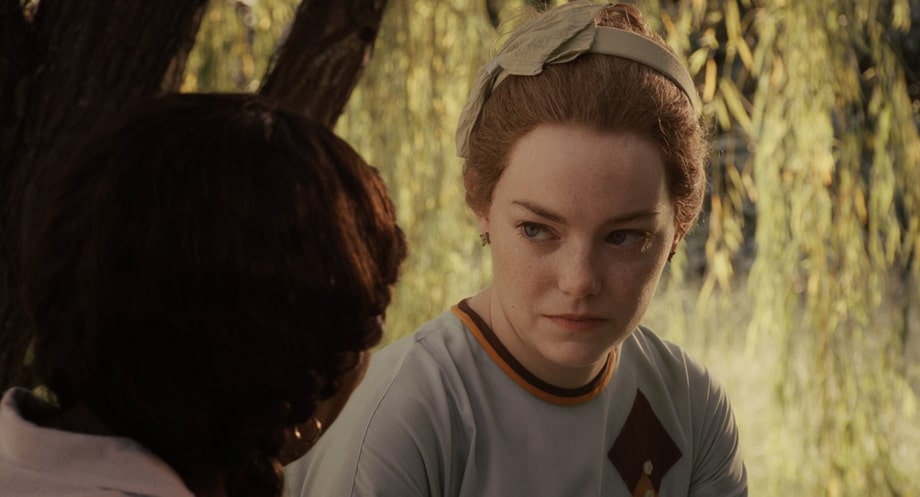
Another less obvious maternal figure in The Help is New York publisher Elaine Stein. Her advice to a twenty-four-year-old young woman to rent her apartment is not the only thing that matters in the story. Elaine Stein is a self-made woman who has made her way from being nobody like Skeeter at the moment to an influential figure in the publishing business who has time to pay attention to only exceptional manuscripts. Mrs. Stein shows admiration for Eugenia Phelan’s tenacity and support of the young girl with ideas and guidelines to make the book about black maids in Jackson potentially more interesting to readers in the United States during the time of the fight for civil rights. For Skeeter, Mrs. Stein serves not only as a helping hand in the world of big decisions but a role model for the girl in professional matters, her self-respect and confidence. In some way, Mrs. Stein shows Skeeter that she is special and important, just like Constantine did in the past, while Mrs. Charlotte is skeptical about being a journalist rather than a good wife.

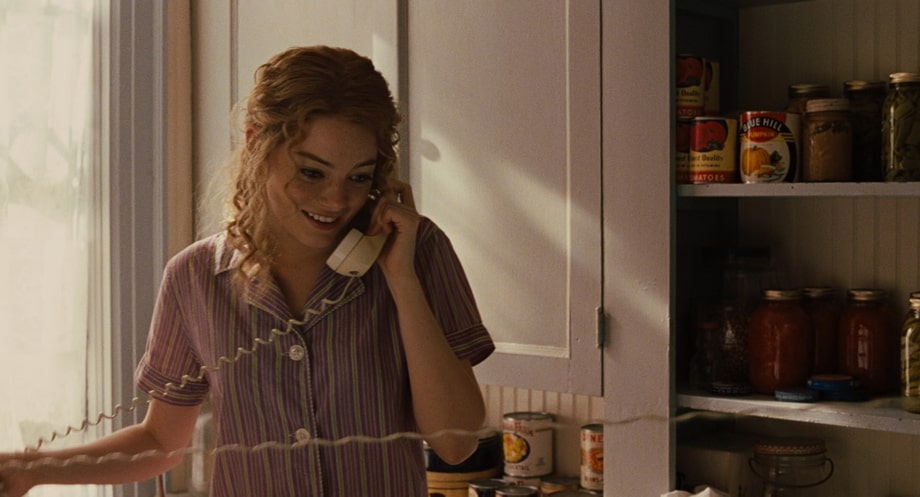
Minny Jackson was not the only black maid who worked for Hilly Holbrook and lived through the whole spectrum of humiliations. While Yule May’s stories never went into the book, her imprisonment made up the minds of other women to tell their stories to Skeeter as a tribute to the fate of Yule May, who just wanted to give a chance to her children a chance for education and a better future. For years, Yule May and her husband collected money for the college education of their two children, and at some point, the family lacked only 75 dollars to give equal chances to both boys. Instead of helping her maid by just giving some wage in advance, Hilly Holbrook showed her essence and not only rejected but also slung dirt at Yule May and her place in this world. More than that, Hilly even went so far as to claim that God knows who needs help.

Yule May was not a ‘female criminal’, the way Hilly said to everyone. The ring was almost worthless, and Hilly forgot about it until the day she found out that Yule May contradicted her wish. The truth is that Hilly Holbrook punished her maid for not accepting her word. If Hilly said that both of Yule May’s children did not deserve education, the mother had no right to stand up to Hilly. The book reveals that the family spent much of their money on the trial, and now none of the boys would go to college because of Hilly Holbrook. On the other hand, Yule May did all she regarded as just for her children. She made her sacrifice in this highly unjust world to give her children a better life, and despite the failure, her courage inspired other black maids to speak their truth, and in the end, make changes.
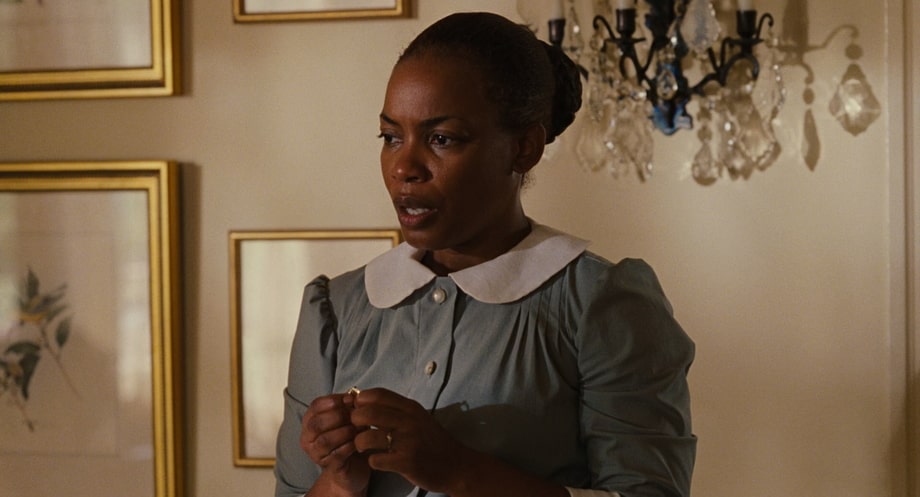

While in the movie Rachel is a minor character who appears only in one scene of the firing of Constantine off by Mrs. Charlotte, in the novel, Constantine’s daughter Lulabelle is a more tragic character. Constantine’s father was white, and his genes skipped one generation, and Lulabelle was born white to a black mother. Constantine gave her daughter to an orphanage and lost her for years after the adoption by another family. In many ways, Constantine felt miserable, and she invested her love and care into Eugenia. The story of a white child in the hands of a black mother is a story of drama in the highly segregated American South in the first half of the 20th century. When Lulabelle (Rachel in the movie) became a woman, she disguised the segregational environment in which her mother continued to work, and the dispute with Mrs. Phelan should come as no surprise. After years of being separated, Constantine and her daughter finally live together in Chicago, but not for long, as the old woman dies soon after she departs from Jackson.
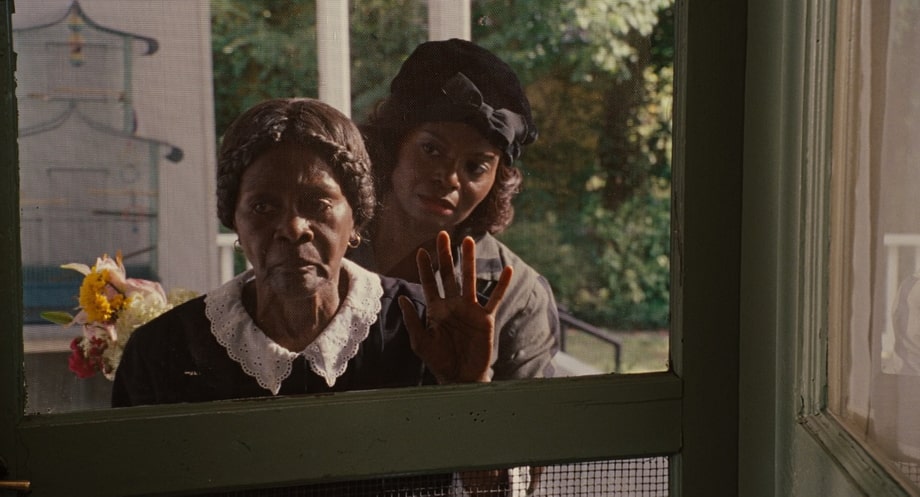
I have already said a lot about this character in a separate section above, but her efforts to have children are worth noting in this topic of parent-child relations. For months, she thought that her husband, Johnny Foot, expected the birth of a child as the only reason why he still had relations with Celia. In the book, she spent days and weeks in the bedroom, drinking Indian herbs and trying to give birth to a healthy child. Her drama in the story is set as opposed to Hilly Holbrook and Elizabeth Leefolt, the two young women who neglect their children, especially Elizabeth. They became mothers because that is the way things are, but they relied on their maids. Celia Foote is a much more decent and deserving woman for the role of mother, but the world is full of injustice.

Read me
Denis Villeneuve’s Arrival stands out among the notable sci-fi movies of recent years and has pretty much to be discussed in regard of narration, scenery and characters

Read me
Looking back into movie history, Phil Connors from Groundhog Day has blazed a trail among the most debated cinematic characters of all times

Read me
The story of Interstate 60 personifies the journey that each of us should early or later take to suit one’s existential coordinates

Read me
Let’s walk along the streets of Rome to reveal The Man from UNCLE 2015 filming locations, hidden-and-open in the very heart of the ancient city

Read me
A detailed guide across Inferno movie locations in Florence, Venice, and Istanbul. Robert Langdon is on his way to save the world

Read me
An unlooked-for inspirational romantic story of the Passengers movie correlates with SCI-FI origins and a space odyssey by those ‘lost in space.’