


 4,50
4,50
Read me
Mission Impossible Ghost Protocol Prague locations
The fourth movie of the Mission Impossible series, Ghost Protocol, comes back to Prague fourteen years after the first film and gives Ethan Hunt more space for action.
FILMING LOCATIONS

At the surface, another entertaining comedy with Jim Carrey, Yes Man appears to be a self-helping guide for seeking a balance between proactivity on the one side and staying close to people and our core values on the other
Like all stories, ‘Yes Man’ has its introduction part, pretty funny indeed, as must be the case for an entertaining comedy with Jim Carrey. When dealing with the Yes Man movie analysis, we are presented with Carl Allen, a mediocre bank worker from Los Angeles. It takes us only a few minutes to grasp the fact that Carl prefers to say no to different opportunities, rejects his friend’s suggestions to chill out, and is ignorant about his boss’s attentiveness and encouragement to work better. Our established praise for Carrey’s comedic genius and the overall entertaining tone of the opening sequence makes up our minds that all these rejections and self-limitations are amusing. The idea emerges with a scene in a video salon when Carl openly lies to his best and probably the only friend, Peter (Bradley Cooper), regarding his ‘extreme business’ and no way to find time to go out tonight. Peter sees Carl through the window, and the latter pathetically does not give up on his stupid explanations.
– We’re all going out tonight.
– Oh, man, that sounds great. I wish I could join you. I’m just so jammed up. I’m totally off the grid. Know what I mean?
– Uh, no I don’t at all.
– I have a bunch of stuff going on. There’s this thing I gotta do. Any other night would have been great. Darn, it to heck!
– Thing? What thing?
– A thing. You know? Just a thing. If I had my thing in front of me I could tell you what it is, but…
– A thing, huh? I don’t think there’s anything written down in your fake calendar.


If we take a closer look at Carl and those eight minutes of introduction, the movie gives us a hint about the character and Carrey as a leading actor. The hard truth is that the main character is being absorbed by a severe depression, which can still be revealed despite the entertaining surface. Lying to your best friend does not seem very amusing, nor does procrastinating on some efforts at work or building your personal life. Carl would rather spend his evening in front of a TV and a DVD than have a good time with other people. He would rather make up excuses to ignore Peter’s engagement than be happy for his friend. The ‘Yes Man’ story goes further than many stories about broken people. He had not lived through actual horrible events or losses, and Carl’s situation is still far from thoughts of suicide. Instead of being a victim, Carrey’s character has a normal life and all those possibilities around him. With all his excuses and lies, a few of his buddies are still nearby, waiting for his social recovery. The movie does not dramatize depression with dark tones; it shows us the average guy who has all he needs for happiness around, but never makes an effort to grab these opportunities.
Carl is neither a wounded war veteran, nor a widower, nor even a victim of economic crisis. He is a mediocre representative of our age of plentifulness of choices, when people have access to the means of being happy, but they do nothing with their lives except for basic patterns of existence. Carl has a job in a local bank; he has money to make his life more exciting, friends around him, welcoming neighbors, all those annoying SMS messages, internet advertising, and printed flyers to try something new. His tragedy lies in the fact that Carl has all the means to be social, but he prefers to spend his time watching DVDs alone. He lives on a very low level of exchange with the outer world, doing only the necessary things to live through another day without losing his life, health, or job. It’s a kind of ‘negative motivation’ when you do something for the thing not worth it rather than getting better. He does not take action and make efforts that can make his life better. In this vein, the Yes Man movie unexpectedly draws a very realistic picture of sadness, not dramatized but understandable by millions of people who have relatively the same kind of problem with their lives.
– A good show tonight. Come check us out. Hey man, want to rock out tonight? Oh, it’s you. Let me guess, no?
– Yes
– Yes?
– No, I meant ‘yes’ to your ‘no’.
– Oh, yeah, fine.


The movie gives us an obvious clue to Carl’s state by referring to his divorce three years before the main events. It is reasonable to assume that this event further aggravated his naturally anemic attitude toward life. As Terrence revealed, Carl’s wife couldn’t live with a man who did not live and love in a full sense. Carl’s sad life is not the fruit of the last three years without relations, nor a consequence of boring work without promotion. The divorce only jeopardized his natural habit of avoiding making efforts. Carl is a big believer in adaptation in its worthy sense of doing only the minimum to live further and of ignoring possibilities to make your life better. It is highly likely that at the beginning, after breaking up with his girlfriend, such an approach worked for a while to ignore pain, but later on, it entrenched itself as a leading pattern of behavior. Avoiding ‘additional’ things made Carl used to not living the way of life that may make sense and give joy, developing his personality. The hard truth for all people like Carl Allen is that they are used to such a joyless existence, and that’s why they do not make efforts to change anything. As years pass by, people start to believe that this is the only way to live and that nothing can be done to change the state of things.

One of the most obvious exhibitions of Carl’s lifeless existence is his daily routine at work. He does his job mechanically without any effort for improvement. His behavioral pattern of rejection harms other people when Carl rejects hundreds of loan appeals monthly, not because of their risks, but because of his attitude. Such a position for the leading character was not coincidental. Apart from indifference toward bank clients, Carl ignores his boss Norman, a man of geeky behavior but with a big heart and a friendly attitude toward Carl. Even leaving the loans behind, getting around with Norman could have made positive changes in Carl’s career if he had a bit of an interest in this. There is a scene when Norman informs Carl that he will not get a promotion, and the latter calmly and apathetically accepts the news. Five years in the same spot without either a promotion or a boost to his salary sounds normal to him; that’s the way it is for Carl. In a more narrow sense, he deprives Norman of the joy of getting a new friend, as the man is himself lonely, despite all his geek costume parties. Carl does not grasp the correlation between his actions and the possible joy as a result.
– I’m having a get-together at my place. It’s a funny hat and/or wig party.
– Oh, man! Sucks, I’m going to be out of town.
– You don’t know what day it is.
– When is it?
– Friday.
– I’m out of town.
– You spoke at the same time I did. It was almost as if you were committed to what you said regardless of what I was going to say.


Of two kinds of routines, Carl chooses the worst: doing nothing day after day instead of at least doing positive, useful things regularly. The example with Norman is a case of ignoring possibilities (getting a buddy, good relations with a boss, getting a promotion) in front of Carl’s nose. We often blame obstacles or circumstances while having opportunities in front of us, metaphorically and sometimes pretty clearly. We voice regret at just how ignorant bosses are toward our job and accomplishments, but the majority of people do nothing to improve. Many of us do not welcome some interesting suggestions, and often we are rude to people who come to take us out of our shells. We look down at our legs instead of looking in the face of events. In this broader sense, the story of Carl Allen should not be reduced to another funny comedy with Jim Carrey, as it reveals the state of things of millions of people, who neither dramatically suffer nor live in a full sense. Such a joyless, mediocre existence may be more dangerous just because it usually lasts for years. The choice of Jim Carrey seems evident when we recall his successes and failures, his wholehearted experiments with drama movies such as ‘The Truman Show’, ‘Man on the Moon’, and ‘Eternal Sunshine of the Spotless Mind’, and the state of depression the actor himself experienced.


The life of Carl has been stuck in a loop of joyless inactivity. During your next rewatch, take a closer look at Carrey’s face seconds before encountering Nick (played by John Michael Higgins). Carl uses lies not to look pathetic regarding his job in the same position in the bank and his relations with a girl, Stephanie. This is another damaging habit he has accustomed himself to, pretending to be a better version of himself rather than being one. He rejects the ‘Yes Man’ flyer, but Nick puts it in Carl’s pocket, brushing away all doubtful excuses. This encounter does not have an immediate impact as Carl continues to reject people and opportunities, except for a failed telephone call to a former girlfriend. The movie uses a tricky, sarcastic trigger point for the protagonist to break his comfort zone. The Nightmare with a fly is a naive comedian tribute to Carrey’s ability to play with his face, but if it worked out, so let it be. In the book of the same name by Danny Wallace, on which the story is based, he met a man on a bus who suggested, ‘Say yes more.’
– Hey, Rooney. Come here for a second. Does Carl look a little odd to you? Is it me, or does it look like he’s kind of dead?
– Nope, no more than usual.
– I do not know. I’m leaning towards thinking he might actually be dead dead.
– I guess I never saw him a lot so it’s hard for me to tell the difference.
– Yeah, that’s true. He never did much. He wasn’t a good friend. Wasn’t a good anything.


The movie chooses a more radical mentor: a self-help guru named Terrence, whose image is an obvious reference to TV preachers and all kinds of ‘give me your money and I will make you successful’ tricksters. Rather than recognizing the depth of his problems more mindfully, Carl is confronted by a professional manipulator in front of hundreds of other people, who yell ‘Yes Man’ or ‘No Man’ regarding using different words. The movie ridicules a modern trend of coaching and a reliance on ‘ magic pills’ and ‘magic words’, but when it comes to Carl, it worked out. In real life, we don’t need church seminars or nightmares to at least recognize the situation we are in. Being conscious that something is wrong with your life can give you a chance to do something and move forward, leaving a depressing route behind, or at least not your only way of living. Carl is impressed and ashamed that a stranger knows and voices his problems. While the main character has used himself to pretend that his life is normal, Terrence confronts Carl with the fact that it is not.
You are dead, Carl. You say no to life and therefore you are not living. You make up excuses to the people around you and to yourself. You are stuck in the same dead-end job. You do not have a girlfriend. You don’t have anything close to a girlfriend. And you lost the love of your life because she couldn’t be with someone who didn’t live theirs.


Leaving behind all the silliness of Terence’s image and the nature of most of such gurus in real life, he gives Carl a way out, a ticket from his shell with one word on it: yes. Coming to the seminar was already a kind of effort for Carl. Of course, an entertaining comedy movie with Jim Carrey starts this journey with a bold-faced hobo, who takes all the money, all the phone battery’s charge, and leaves Carl in a forest at night. Later on this night, the protagonist meets the girl of his dreams, and we understand that it became possible only because of saying yes to that hobo man, to say nothing of attending the seminar. Saying yes to even awkward suggestions opens new doors in front of Carl, both in his work and personal life. In a wider sense, while the overall tone and means of the Yes Man movie are exaggerated and sometimes ridiculous, it voices out serious topics. As it turned out, saying yes to opportunities and other people can give us a new experience and, in many ways, take people out of depressing stagnation.


I would say that it was more important for Carl to finally do things that he had been putting on a shelf than to take all those new possibilities, at least at the start. He finally finds time for his best friend Peter and other buddies. They hang around in the bar, and Carl stops to ignore the fact of Peter’s upcoming engagement with Lucy. He takes on the role of the main supporter of the wedding and helps the bride with all the preparations. Taking a flyer, which he has rejected for days, unexpectedly brings Carl to Allison one more time—a unique coincidence in Los Angeles. It is a powerful example of just how some little things and tiny possibilities can give you massive improvements in your life. Previously, I have discussed such a cinematic case in the ‘The Intern’ movie with Robert De Niro. Finally, of all his procrastinations, getting friends with Norman brings results to the work. It is important to note that Carl does not come up with an idea to leave the job, but instead, he says yes to all those people who come to him for loans. Once he approves a number of them, people form a line to get into the cabinet of such a welcoming loan officer, and he meets interesting people. Finally, he easily agrees to spend his weekend in the bank, and Norman promotes Carl rather than another employee.


The other side of saying yes to everything is Carl’s readiness to accept every appeal to him, whether it comes from the internet or someone else’s example. He does, one would say, a crime against the mindful usage of the internet nowadays: Carl stops ignoring ads. He accepted a suggestion to make an account on a website to meet with a Persian bride. After years of pretending that no one was at home, he finally opened his doors to discuss the Church of Jesus Christ for Buttercup Girls. Probably after years of saying ‘fine’ to inconvenient bad, Carl orders a super modern mattress and finds unexpected delight in testing its hardiness. He becomes probably the only man in the local restaurant who takes advantage of the advertising board to take guitar lessons, learn to fly, and learn Korean. At this stage of just being open to new opportunities, a reasonable choice is not as important as gaining experience. We could see that Carl finds pleasure in being involved in all these new activities.


In the best traditions of Forrest Gump, Carl focuses on the process rather than the outcomes. For example, he has no real plans to get married to a Persian woman, but he spends a joyful time with Faranoush. Carl even spends his free time performing volunteer work, which obviously can make the world a better place. Without being so hung up on what we get in the future, we start to live in the present, and Carl Allen fully commits himself to the process, whatever he chooses today. Gaining all this new experience makes him closer to other people, which has always been his inner barrier; now he quickly engages with others without depressing hesitation. After years of stagnation, Allen turned himself into an energetic, adventurous doer. He let the fear of something new go, and in this way, the unconditional ‘yes’ freed Carl from the constant state of standstill. More than that, saying yes to other people cultivates trust. Taking unconditionally all those givens of life without fear or remorse means taking failures as a part of the process, a step in the long journey of life. We can’t control how things are going on, and maybe this unconditional ‘yes’ is the way out. Your failure or success is are relative notion and individual in most cases. What is true for the dictionary character of Carl Allen is not relevant to other people.

Another intriguing idea that the movie provides is the time gap between your efforts and the possible (not automatic) outcome. The ‘Yes Man’ story explores both cause-and-effect models: immediate and delayed. The difference lies in the amount of effort and thus the importance of return. Taking a local hobo for a ride and giving him money leads Carl to a girl called Allison, but it is his new superpower of proactivity to offer her a kiss. He finally accepts the advertising flier and finds Allison, a member of the band playing in this bar, yet their journey to a relationship will take time. One holiday at work already convinces Norman to give Carl a promotion instead of a bank worker who refuses to come to work, but the story with microloans has a cumulative, prolonged effect. At the beginning of his saying yes to all bank clients, Carl had no idea that this practice would lead him to the big office. Instead, he was focused on tiny actions—microloans—that finally raised an evident profit for the company.
– You know what? I called Demco this morning to ask if he could work on Saturday. You know what he said?
– No.
– How did you know that?
– He’s not here.
– Oh yeah, but you are Car. And that’s why I’m giving the job to you


The main character ventures for several hobbies without the knowledge that his Korean will make sense to a local, depressed Korean girl. Guitar lessons looked like a useless whim until this skill or craft, even on an amateur level, helped Carl save the life of a potential suicider. It is important to remember that usually there is no synchronicity in our efforts if we do the right things in pursuit of changing our lives or the lives of other people for good. The outcomes may usually come in different spheres as well. Carl will never be a guitar star, but he uses music to save a man. An encounter with Allison becomes the most important and life-changing experience for Carl, an unexpected result of saying yes to the world. The character of Zooey Deschanel symbolizes the virtues Carl lacked for years. Sometimes an immediacy in taking action, eccentricity in doing what you like (playing weird music, riding a motorcycle, taking photos in motion early in the morning). Allison is a model of a person with positive thinking and an improved attitude toward her life and the opportunities around her. For Carl, Allison becomes a way out of his depression—in fact, more powerful, long-standing, and mindful than just saying yes to everything.


– You just say ‘Yes’ to everything? Are you kidding me?
– It’s not what it sounds like.
– Oh really? How does it sound, I’d really love to hear it.
For about forty minutes of screen time, it may seem that Carl’s new philosophy, or better to say, his recently undertaken pattern of living, brings only good and opens all doors. The truth is the opposite. Don’t get me wrong: Carl’s proactiveness, readiness to take action, and openness to other people are ten times better than his previous socially decaying existence. At the same time, similar to the book’s original, the main character turns the mindful advice of ‘saying yes more’ into ‘saying yes to everything’. The latter variant may work for a while if compared to a depressing existence, as any change here is for the better. Probing many opportunities may also be beneficial if the person does not know what he or she wants and where to move his/her life. In this case, being open to diversified opportunities gives options to choose from and an experience to learn from. In Carl’s case, he changes a deadlift to passivity for excessiveness in making choices. In a wider sense, he does not make choices anymore and once again abandons himself to control over his life in favor of some adopted philosophy from a seminar. In the first case, he preferred doing nothing with his life and drifting with the stream, and after becoming a ‘Yes Man’, Carl takes an uncontrolled ride down every stream he sees.


Beyond all doubt, Carl’s life dramatically changes after being brainwashed by the ‘Yes Man’ teaching elder Terrence, and he meets the girl of his dreams just a few hours later on the very first day. The point is that saying yes to everything—put it otherwise—too many things made Car’s life in some way disrupted and chaotic. Going outside your comfort zone occasionally is a good habit, but if not, turn it into an extremity, thus regarding every potential action as good. Uncontrolled pluralism of choices itself is a burden in our modern world, as we sometimes can’t make the right decision between only two variants, and Carl decided not to evaluate his choices at all. While ‘having a time’ with a seventy-year-old woman may look funny in the context of the movie, such an example is the least harmful among the choices Carl could have suggested. The original book starts with a rhetorical question: could the protagonist kill a person if someone had asked him to do this? A dangerous consequence of saying yes to every appeal is a situation in which someone else takes advantage of your mindless, fanatical behavior.
– So listen. I’ve got a job for you. We’re shutting down a bunch of branches and I need you to tell the managers.
– Shutting down branches?
– Uh huh
– Which ones?


We are all human beings and often have problems with saying not only ‘Yes’ but ‘No’ as well. Millions of people have no strength of will to say ‘no’ to illegal drugs, home violence and abusive behavior, alcohol and cigarettes, pornography, video games, gambling, and shopping, or being involved in criminal activity. In a broad sense, saying yes to everything without limitations may be even more harmful and even fatal for a person. Our brain is a tricky instrument that may easily lead our behavior based on passions and pleasures rather than on mindful choices. The ‘Yes Man’ story does not go into extremes because of its comedic nature, but voices important backside effects of any fanatical pattern of social behavior. Carl surprisingly got his promotion and a desk in the big office, but later he was ordered to fire his friend Norman and close his former bank division. Saying yes to big guys in suits with ties appears to be a little fun when you hurt the feelings of other people to make more money. The movie shows us two extremes: either Carl is depressed and pathetic, or he succeeds in the beginning and later feels miserable. This ‘either-or’, ‘black and white’ approach works badly in real life. Even Carl’s pluralism of hobbies and adventurous journeys without a plan makes him a suspect as a potential terrorist. He finally comes to understand that saying yes to everything may be as harmful as saying no to everything.
Several months ago, my client attended a self-empowerment seminar that requires him to say ‘Yes’ to any request that’s presented. So all the activity that appears suspicious, the flying lessons, … the spontaneous trip taking it’s all because he must say ‘Yes’ to any opportunity. He is really into it.


The movie makes fun of the fact that Carl believes that he is under some spell that can harm him badly once he refuses to say no. Carl thinks that Terrence hypnotized him into saying yes unconditionally, and the only way to be happy is to ignore negativism and rejection. Once he tries to reject the invitation of an old lady, a huge dog almost bites his face—a metaphor for his new fear of not following the rules. Of course, there was no hypnosis, and all those limitations live in Carl’s head. It is important that Carl rejected his ex-girlfriend Stephanie, even under the imagined fatal threat—a powerful clue to his affection for Allison instead. Carl hides in the back seat of Terrence’s vehicle to ask him for help and redemption from the spells. After a car crash, Terrence reveals to Carl the fact that there is no hypnosis and no limitation for him to be mindful of his choices. A promise to say yes was only a starting point in a journey to try to see opportunities next to him, and Carl can still say no if he feels that way.
– What if I say the other word?
– You will be a promise to yourself. When you break a promise to yourself things can get a little dicy.


As I have already stated before, every human being has their own character, sets of problems and inner barriers, desires, and potentially wrong directions. More creative people should follow their hearts and ideas, but be careful with distance themselves too much from their comfort zone and the things that work well already. The perfectionists should switch off from constant tension and be kind to themselves and other people, but not lose the habit of doing things right. Those who are too shy should try to be more open to other people and be proactive more often, but keep in mind that not all people around have our interests at heart and can take advantage of those who are too naive. One of the ideas and the outcome of the ‘Yes Man’ story is that finding a balance is more complicated than saying either yes or no to everything. Roughly speaking, you do not need many brains to unconditionally accept or reject all the possibilities, but it may take years to find the middle point suitable to you. Carl Allen did a great job of recalibrating his mind from being a pathetic naysayer, but a little tuning to his new philosophy could make even greater sense in the long run.
Carl’s balance lies in being more open to other people, putting effort into his job, and being a little more adventurous to have a future with Allison. He does not need to give all his money to strangers all the time, accept doubtful proposals from every elderly woman, or even approve every loan from bank clients. A noisy night party may wait for another week if you need to wake up early in the morning tomorrow. If you do not like Harry Potter, you may politely say no to a proposal to meet for a costume movie marathon. If you have not run for years, be mindful of your first experience. Listening to the voice of Carl’s heart also included saying no periodically, which would have made his journey to happiness smoother. Occasionally, saying no to irrelevant events or harmful people does not provoke contradictory morale-making. For Carl, the balance lies between being more social and not doing too much. It is Peter (Bradley Cooper) who voices such a pearl of obvious wisdom to Carl, but at that moment, the supposed spells look more important to him until he hears the same from Terrence.
There is a new ground rule, Carl. You can process things. You can weigh them individually and make decisions on a case-by-case basis, aka what normal people do.

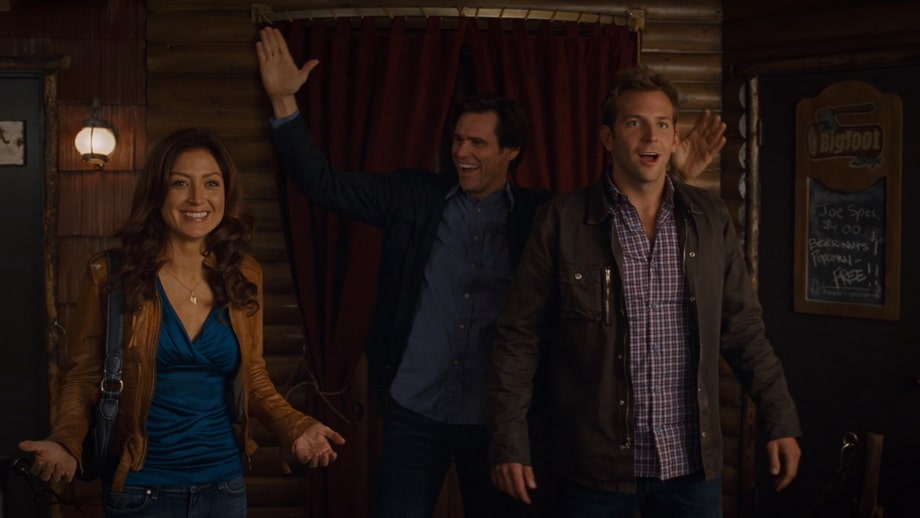
As stated above, Carl’s deal with himself for saying unconditionally yes finally brought chaos to his life after overstepping common sense. Whilst being a ‘Yes Man’ did not make him happy, maybe being an ‘Opportunity Man’ is a smoother solution: taking opportunities close to your heart rather than saying yes to everyone and everything. When it comes to choices, mindfulness and balance are no less important than actions. Carl finally came to understand that no matter how enthusiastic and proactive we are and how dedicatedly we push ourselves, we can’t catch every given opportunity in this world, and it is natural to miss some. Being open is not the same as being accepting, and leaving the comfort zone should come naturally rather than being a fixed idea. Living in a shell is like eating only apples every single day of your life, but buying every fruit on the shelf may provoke an allergy to some fruit that is not good for you. A balance can make us less accepting of excessiveness. The joys of life may be found in playing guitar or learning a new language, journeys, saving other men’s lives, having time with friends, or early running with a panoramic view over the still-sleeping city.

The movie story stops where we know it, but for Carl saying yes to everything, he could have distanced himself from people he cares about, just because constantly pushing yourself forward does not leave you time to take joy in the little things of life. So, it is essential to appreciate the new things in your life, but it is also important to stay with the people who matter most to you. Occasional saying no to other people and opportunities and being close to loved ones is the balance Carl Allen needs, and it seems he has finally found it. There is never enough time for everything in the world, but we always have enough for the most important things. Carl frankly says no to Allison’s suggestion to live together, but it does not mean it will take long for such a decision. He opened his heart to her with his insecurities and inner barriers, and thus demonstrates just how important Allison is to Carl, and such an openness shows the true Carl: we all want to be accepted for our faults. He demonstrates that he can be proactive even against all odds, but due to the voice of his heart rather than someone else’s words. Carl did not run away after the first conflict and troubles in their relationship; he took his takeaways from the situation, made improvements to his philosophy, and showed Allison that he cared for her so much. In the finale of the story, we truly see that Carl Allen has made a great journey and has grown as a character.
– So the whole thing ‘Yes’ thing is all bullshit?
– No, you just don’t know how to use it. That’s all.
– Yeah, I did. Say yes to everything. Real tough to grasp.
– No, that’s not the point. Well maybe at first it is. That’s just to open you up to get you started. Then you are saying ‘yes’ not because you have to, not because a covenant told you to but because you know in your heart that you want to.


Read me
The fourth movie of the Mission Impossible series, Ghost Protocol, comes back to Prague fourteen years after the first film and gives Ethan Hunt more space for action.

Read me
The morality of the ‘Green Book’ story goes way beyond just facing the prejudices, social or racial. The friendship of the two key characters inspires confidence in human relations at large.

Read me
Enthusiastic movie walking tour along the Casino Royale filming locations in Venice for your personal travel with photos, map, history of the historical sites.

Read me
Jason Bourne franchise has taken us across dozens of locations in Europe and the Bourne Identity Paris locations have their own cinematic atmosphere

Read me
Scent of a Woman analysis presents two memorable characters in movie history. Lieutenant Colonel Frank Slade and Charlie Simms gave us one of the most prominent monologues ever acted

Read me
Detailed movie and psychological analysis of the Good Will Hunting movie and defining the protagonist by means of his social environment: Sean, professor Lambeau, Skylar, Chuckie and his friends